
Rodney Timson: The Private Husband of Penelope Keith and the Quiet Strength Behind a British Television Legend

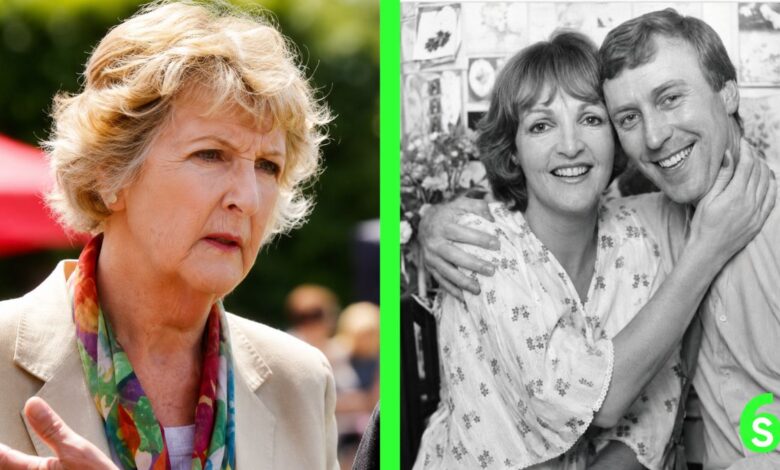
Dame Penelope Keith belonged to a rare group of British performers whose screen presence became part of national memory. From Margo Leadbetter in The Good Life to Audrey Forbes-Hamilton in To the Manor Born, she shaped an image of polished comic authority that audiences remembered for decades. Rodney Timson, her husband, was a former police officer and later a professional supporter. Their marriage began in 1978 and lasted until Keith’s death from cancer on June 29, 2026, at the age of 86. She was survived by Timson and their two adopted sons.
This article examines Rodney Timson using verified public information. Because he is a private person, the aim is to explain what is known and why his quiet presence remains part of Keith’s wider story.
Quick Bio
| Field | Details |
|---|
| Full Name | Rodney Timson |
| Relationship | Husband of the late Dame Penelope Keith |
| Public Profile | Private figure, publicly known through his marriage to Penelope Keith |
| Profession | Former police officer; later associated with managing Keith’s career |
| Age | Not reliably confirmed in major mainstream public sources |
| Residence | Public reports connect the family with Milford, Surrey |
| Children | Two adopted sons with Penelope Keith |
| Known Philanthropic Interests | No separate public philanthropic profile is widely documented for Timson; the family’s public footprint is mainly linked to Keith’s arts, heritage, and charity work |
| Social Media Presence | No verified public social media presence identified in major public reporting |
Who Is Rodney Timson?
Rodney Timson is best known as the husband of Dame Penelope Keith, the acclaimed British actress whose work in television, theatre, and public life made her a national figure. Timson’s own identity is not built around celebrity. Public reporting identifies him as a former police officer who met Keith while on duty at Chichester Theatre, where she was performing. The couple married in 1978, and later adopted two brothers in 1988.
His significance lies in the steadiness of his role. Timson did not become a public personality, but he remained closely connected to Keith’s life during the most established decades of her career. His story is defined by restraint and long-term partnership rather than publicity.
The Private Life of Rodney Timson
Rodney Timson’s private life has remained exactly that: private. Unlike many people connected to famous entertainers, he did not use his relationship with Keith as a platform for personal fame. Public knowledge of Timson is limited because the couple’s family life was carefully separated from Keith’s professional identity.
This approach is especially clear in how their children were treated. Keith and Timson adopted two young brothers in 1988, but their sons were kept out of public view. The Times reported that the boys were the one subject Keith treated as off-limits in interviews, showing how firmly the couple guarded family boundaries.
That decision reflects a consistent value: public success did not require public exposure of the household. Timson’s private life should not be treated as a gap to fill with guesses. It is better understood as a deliberate boundary around marriage, parenting, and home, which leads naturally into his background.
Early Life and Background of Rodney Timson
Publicly confirmed details about Rodney Timson’s early life are limited. What reliable reporting does establish is his professional background as a police officer before his marriage became widely associated with Penelope Keith’s public career. The Guardian describes him as a former police officer who later became Keith’s manager.
That background matters because it placed Timson outside the entertainment world when he met Keith. He was not introduced to the public as an actor, agent, broadcaster, or media figure. He came from a profession associated with discipline, duty, and public service.
Early-life details such as his childhood, education, and family background are not widely documented in reliable mainstream sources. For a private person, that is not unusual. The responsible focus is on the verified turning points: his police background, his meeting with Keith, their marriage, and the family life they built. From there, the relationship itself becomes easier to understand.
Marriage and Partnership with Penelope Keith
Rodney Timson and Penelope Keith married in 1978, the same period in which Keith was already one of Britain’s best-known comic actresses. The Good Life had ended that year, and her television status was rising rapidly. Their marriage began as Keith’s public identity was expanding, while Timson remained outside the entertainment spotlight.
Public reports state that they met at Chichester Theatre while Timson was on duty and Keith was performing. That meeting has often been repeated because it feels almost theatrical: an actress on stage, a police officer working in the building, and a relationship that would last nearly five decades.
Their marriage is notable not because it was heavily publicized, but because it endured with relatively little public drama. Keith continued to act, present, support charities, and serve in civic roles. Timson’s presence appears in the background of that life rather than at the center of press attention.
Rodney Timson’s Role Behind the Scenes
One of the most important verified facts about Rodney Timson is that he later became Penelope Keith’s manager. This detail gives his role more depth than simply “celebrity spouse.” Management in an acting career can involve schedules, negotiations, professional decisions, appearances, and practical coordination. Public sources do not provide a full account of his day-to-day work, so it would be wrong to invent specifics.
That behind-the-scenes position fits the wider pattern of his public identity. He was close to the center of a major career without becoming the face of it. Timson’s contribution was quieter, but the public record suggests he was part of the structure around those later years.
Behind every long artistic career there are often people who handle the ordinary pressures that audiences never see. Timson occupied that kind of space: steady, practical, and intentionally low-profile.
Family Life: Raising the Next Generation
Family life became a central part of Rodney Timson and Penelope Keith’s shared story in 1988, when they adopted two brothers. The fact that the children were brothers is publicly known, but their private lives have not been made public. The adoption is part of the couple’s known biography, while the sons’ personal details deserve the privacy their parents clearly protected.
The couple’s family life was connected to Surrey, particularly Milford, near Guildford, where Keith was known to have lived for many years. The Guardian also notes her attachment to village life, gardening, and the countryside, themes that later connected naturally with her television work.
For Timson, this family setting reinforces the image of a man whose role was rooted in stability rather than celebrity performance. He was married to a famous actress, yet the household appears to have been built around privacy and careful separation between public work and domestic space.
Philanthropy and Community Engagement
There is no strong public record of Rodney Timson as an independent charity campaigner, unlike Penelope Keith. The responsible way to discuss philanthropy is therefore to focus on the family’s public philanthropic footprint through Keith. She was closely associated with the Actors’ Benevolent Fund, the National Trust in south-west Surrey, the Yvonne Arnaud Theatre in Guildford, and broader cultural and heritage causes.
Keith’s charity and community commitments were not minor additions to her career. Transform Housing describes her as a former High Sheriff of Surrey, president of the South West Surrey National Trust, and president of the Actors’ Benevolent Fund, while noting her 2014 damehood for services to the arts and charity.
Timson’s role in this area should not be overstated. What can be said is that he shared a life with a woman whose public service was substantial and long-running. His privacy means there is little evidence of a separate public philanthropic identity, but his place within Keith’s home life forms part of the context in which she carried out those public roles. From that context, his broader influence becomes easier to see.
The Power of Privacy: Influence Without Publicity
Rodney Timson’s story is a useful reminder that influence does not always look public. Some people shape a life by giving interviews, founding organizations, or appearing on stage. Others do it through consistency, loyalty, and private support. Timson belongs to the second category.
His privacy is especially meaningful because Penelope Keith’s fame was not small. She starred in The Good Life, one of the defining British sitcoms of the 1970s, and then in To the Manor Born, another major television success. AP records her BAFTA-winning work, her theatre career, her later documentary presenting, and her 2014 damehood.
To remain largely private beside that level of fame takes discipline. It suggests a clear boundary between public admiration and personal life. Timson’s influence, where publicly visible, came through marriage, family, and professional support, not through personal branding. That distinction prepares the discussion of public curiosity that follows.
Public Curiosity and Misconceptions About Rodney Timson
Public curiosity about Rodney Timson often increases because he is connected to a much-loved public figure. Readers search his name to understand the private life of Penelope Keith, especially after her death. That curiosity is natural, but it can also create misconceptions. A private person is sometimes wrongly treated as a mystery to be solved, when the more accurate view is that he simply did not live as a public celebrity. This is why the article returns to verified facts.
Another misconception is that limited information means limited importance. Timson’s public record is small, but the length of the marriage and the fact that he became Keith’s manager show that he was not merely a passing biographical detail. He was part of the personal and practical framework around her later life.
The safest and most respectful approach is to separate verified facts from online repetition. His marriage, former police background, role as manager, family life with two adopted sons, and connection to Surrey are all central. Beyond that, details should not be invented simply to make his biography longer.
Legacy and Future
Rodney Timson’s legacy will likely remain tied to Penelope Keith’s public memory. That does not reduce him; it reflects the nature of his public identity. He was not a performer competing for attention, but a private husband connected to one of Britain’s most respected actresses.
After Keith’s death, many tributes focused on her performances, honors, charity work, and the affection audiences felt for her characters. Within that wider remembrance, Timson stands as part of the human story behind the career: the long marriage, the protected family, and the home life that remained separate from the stage and screen.
The future public record may remain modest, and that would be consistent with the life he appears to have chosen. For readers, the most meaningful way to understand Rodney Timson is not to search for scandal or hidden drama, but to recognize a private partner whose steady presence formed part of a remarkable public life.
Conclusion
Rodney Timson’s life, as far as it is publicly known, is a story of privacy, partnership, and quiet support. He was a former police officer, the husband of Dame Penelope Keith, the father of two adopted sons, and later a behind-the-scenes figure in Keith’s professional world. His importance does not come from celebrity status. It comes from the endurance of a 48-year marriage and the clear boundary he and Keith maintained around family life.
In an age where fame often demands constant exposure, Rodney Timson represents a different model. His public profile is small, but his place in Penelope Keith’s life was clearly significant. The facts that are known are enough to show a life defined by loyalty, discretion, and steadiness.
(FAQs)
Who is Rodney Timson?
Rodney Timson is the widower of Dame Penelope Keith. He is publicly known as Keith’s husband and, later, her manager.
Was Rodney Timson married to Penelope Keith?
Yes. Rodney Timson married Penelope Keith in 1978. Their marriage lasted until her death on June 29, 2026.
How did Rodney Timson meet Penelope Keith?
Public reports state that they met at Chichester Theatre while Timson was on duty as a police officer and Keith was performing.
Did Rodney Timson and Penelope Keith have children?
Yes. They adopted two boys in 1988. The couple kept their children’s lives private.
What was Rodney Timson’s profession?
Rodney Timson was a former police officer. Public reporting also states that he later became Penelope Keith’s manager.
Where did Rodney Timson and Penelope Keith live?
Public records link the couple to Milford, Surrey, where Keith lived for many years.
Is Rodney Timson a public celebrity?
No. Rodney Timson is not known as a celebrity in his own right. His public recognition mainly comes through his marriage to Penelope Keith.
Did Rodney Timson have public philanthropic work?
No separate public philanthropic profile for Rodney Timson is widely documented in major sources. The family’s public charity and community footprint is mainly connected to Penelope Keith’s work in the arts, heritage, and civic service.