John Kappas: The Hypnotherapist Behind Florence Henderson’s Private Second Act

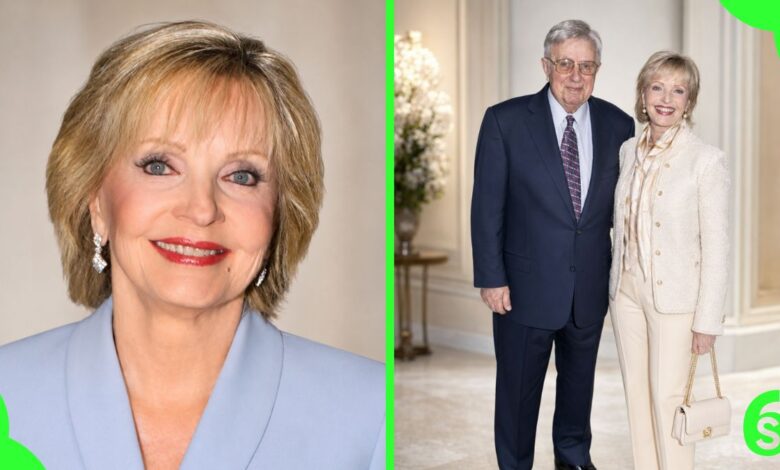
Dr. John George Kappas was a hypnotherapist, author, and founder of the Hypnosis Motivation Institute, but he is best known to entertainment readers as the second husband of Florence Henderson, the actress who played Carol Brady on The Brady Bunch. Their marriage began in 1987 and lasted until Kappas’s death in 2002. The public story is not simply a celebrity marriage. Henderson’s connection to Kappas grew from hypnotherapy, a field she later studied seriously after struggling with stage fright, fear of flying, and depression. The result was a late-life chapter that linked television fame, private anxiety, therapeutic practice, and a husband whose professional identity existed well beyond Hollywood.
Quick Bio
| Field | Details |
|---|---|
| Full Name | Dr. John George Kappas |
| Known As | John Kappas |
| Profession | Hypnotherapist, psychotherapist, author, educator |
| Best Known For | Founder of the Hypnosis Motivation Institute and second husband of Florence Henderson |
| Institution Founded | Hypnosis Motivation Institute |
| Founded HMI | 1968 |
| Spouse | Florence Henderson |
| Marriage Year | 1987 |
| Death Date | September 26, 2002 |
| Age at Death | 77 |
| Cause of Death | Cancer |
| Notable Book | Improve Your Sex Life Through Self-Hypnosis |
| Legacy | Remembered for his role in professional hypnotherapy education and his influence on Florence Henderson’s later interest in hypnotherapy |
Who Was Dr. John Kappas?
Dr. John Kappas was publicly described by the Hypnosis Motivation Institute as a psychotherapist, hypnotherapist, author, and the founder of HMI, the Tarzana, California-based institution he established in 1968. The Los Angeles Times also identified HMI as a Tarzana-based school founded in 1968 by psychotherapist John George Kappas.
That professional record matters because Kappas is often introduced only through Florence Henderson. In reality, his work had an institutional footprint of its own. HMI trained hypnotherapists, operated in a field still trying to separate clinical practice from stage-show stereotypes, and became part of a larger public conversation about whether hypnotherapy should be treated as a serious helping profession. The Los Angeles Times article captured that tension, noting that hypnotherapists often had to distinguish their work from stage hypnotism and from the public’s lingering suspicion of the field. That context helps explain why Kappas’s work mattered beyond his marriage.
Kappas’s public importance, therefore, lies in two places at once. In entertainment history, he is tied to Henderson’s later life. In hypnotherapy history, he is tied to the growth of an institution that presented hypnosis as a structured therapeutic practice rather than a novelty act.
The Professional Legacy of the Hypnosis Motivation Institute
Kappas founded the Hypnosis Motivation Institute in 1968, and the school became the central public expression of his professional work. HMI’s own institutional page credits him with founding the organization and describes him as a psychotherapist, hypnotherapist, and author whose concepts were shaped by decades of experience. Because this is HMI’s own description of its founder, it should be understood as an institutional account rather than a fully independent assessment.
The stronger independent confirmation comes from the Los Angeles Times, which reported in 1999 that HMI was founded by John George Kappas in 1968 and that Florence Henderson was among the school’s graduates. The article also noted that Henderson was married to Kappas and that HMI presented itself as an accredited hypnotherapy school.
This is where the story becomes more nuanced. Kappas was not operating in a field with simple public acceptance. Hypnotherapy carried both clinical promise and cultural baggage. Many people associated hypnosis with performance, control, and entertainment. Practitioners, including those connected to HMI, had to argue that therapeutic hypnosis was different from stage hypnosis. That distinction shaped the public environment in which Kappas built his work and also frames how his later connections are understood.
Mayo Clinic describes hypnosis as a changed state of awareness and increased relaxation that can improve focus and concentration, adding that people generally do not lose control over their behavior during a session.
That context helps explain why Florence Henderson, a mainstream television star with a wholesome public image, could become interested in hypnotherapy without contradiction. For her, it was not show-business spectacle. It became a method of coping, self-regulation, and later personal study. From there, her background makes the next part of the story easier to follow.
Florence Henderson Before John Kappas
Florence Henderson was already a major public figure before her marriage to John Kappas. Born in Dale, Indiana, in 1934, she came from a large family and built a career on stage before becoming a household name on television. Masterworks Broadway notes that she was the last of ten children and studied at the American Academy of Dramatic Arts after moving to New York. Her early career included Broadway work, touring productions, and major musical theatre roles before The Brady Bunch made her internationally recognizable.
Her public persona became inseparable from Carol Brady, the calm mother of a blended television family. The Brady Bunch originally aired from 1969 to 1974, but the show’s syndicated afterlife kept Henderson in the public imagination for decades. ABC News later described the role as the one that made her a household name.
That famous image can flatten the real person. Henderson was not only a sitcom mother. She was a trained performer, singer, Broadway actress, television host, commercial spokesperson, and working entertainer who had to manage the pressures of public life for more than six decades. Her later interest in hypnotherapy makes more sense when seen against that career: a performer’s body and mind are part of the job, and fear can become a professional obstacle. That is the setting for how she met Kappas.
How John Kappas and Florence Henderson Met
Masterworks Broadway states that Henderson sought help in hypnotherapy while struggling with depression in the mid-1980s, later became a licensed therapist in that field, and married Dr. John Kappas, who died in 2002.
The Los Angeles Times also reported that Henderson was a graduate of HMI. This is an important detail because it shows that her involvement with hypnotherapy went beyond being a celebrity client. She studied within the institution Kappas founded, which brings the relationship into sharper focus.
Their marriage began in 1987. ABC News confirmed that Henderson married hypnotherapist John Kappas in 1987 and that he died in 2002.
What should not be overstated is the private emotional narrative. Some online retellings turn the relationship into a dramatic healing romance. Reliable sources support a narrower and more useful version: Henderson turned to hypnotherapy during a difficult period, became professionally interested in the field, and married Kappas. That framing keeps the story grounded unless direct interviews or credible reporting show more.
A Marriage Connected by Work, Not Just Celebrity
John Kappas and Florence Henderson’s marriage is notable for not being built around Hollywood publicity. He was not an actor or producer, and he did not become famous through the entertainment industry in the usual way. His public connection to Henderson came through a therapeutic and educational field that was central to her later life.
That made their relationship different from a standard celebrity-spouse profile. Henderson’s first marriage to Ira Bernstein lasted from the 1950s until their divorce in the mid-1980s, and she had four children from that marriage. ABC News reported that Henderson’s children were Barbara, Joseph, Robert, and Lizzie.
Her second marriage came after a personal and professional transition. By then, she had already lived through Broadway success, television fame, motherhood, divorce, and the lasting public identification with Carol Brady. Kappas entered her life not as part of her original rise, but during a period when she was rethinking how to manage fear, performance, and emotional pressure. That timing helps connect her earlier career to this later chapter.
This is the real information gain in the Kappas-Henderson story. Kappas was not merely attached to Henderson’s fame. His work gave Henderson a practical language for problems that the public rarely associated with her: fear, anxiety, depression, and the cost of performing confidence for a living. That is what makes the story more than a celebrity footnote.
John Kappas as an Author
Kappas also left behind published work. One of his best-known books was Improve Your Sex Life Through Self-Hypnosis, published in 1984 by Prentice-Hall. The Internet Archive listing identifies John G. Kappas as the author, gives the publication date as 1984, and lists the publisher as Prentice-Hall in Englewood Cliffs, New Jersey.
The title can surprise readers who know Kappas mainly through Florence Henderson’s family-friendly television image. But it reflects the broader scope of his professional interests. Kappas’s work dealt with suggestibility, behavior, self-hypnosis, relationships, and personal change. His subject matter was private, psychological, and sometimes intimate. Henderson’s public image was warm, maternal, and mainstream. Their marriage therefore sits at an unusual cultural intersection: the wholesome face of American television and the therapeutic exploration of the subconscious mind. That contrast helps transition to his larger legacy.
That contrast does not make the relationship strange. It makes it more revealing. Public figures often become symbols that erase complexity. Henderson’s connection to Kappas restores some of that complexity and closes the story on a clearer note.
Death of John Kappas
John Kappas died on September 26, 2002, at the age of 77. The obituary reporting identified him as a hypnotherapist and husband of Florence Henderson and reported that he died after cancer.
His death ended a marriage that had lasted about fifteen years. Henderson continued to work publicly after his passing, remaining active in television, interviews, hosting, and entertainment appearances. She also continued to be remembered primarily for The Brady Bunch, although her career was much broader than a single role.
Florence Henderson’s Final Years and Death
Florence Henderson died on November 24, 2016, at age 82. ABC News reported her death and noted her long career, her children, and her marriages to Ira Bernstein and John Kappas.
Her death produced tributes from colleagues and fans who remembered her as a television mother figure. Yet the Kappas chapter shows a more private side of her legacy. Henderson was not simply the woman who played emotional stability on screen. She was also someone who sought help, studied a therapeutic discipline, and publicly acknowledged that performance anxiety and fear could affect even highly successful entertainers.
That honesty is part of why her later life remains interesting. She did not discard the Carol Brady image, but she lived beyond it.
What Is Publicly Known and What Remains Private
A responsible biography of John Kappas must be clear about the limits of the public record.
Verified financial data for Kappas has not been publicly disclosed by major reputable sources. Any exact net worth figure should be avoided unless supported by credible financial documentation.
Detailed information about his early childhood, formal education, and private family history is also limited in mainstream sources. HMI’s official material identifies him professionally as John G. Kappas, PhD, LMFT, psychotherapist, hypnotherapist, author, and founder, but independent mainstream reporting focuses mainly on his institution, his connection to Henderson, and his death.
The same caution applies to the emotional details of his marriage. Public sources confirm the marriage, the hypnotherapy connection, and Henderson’s later involvement in the field. They do not provide a full private portrait of their day-to-day relationship. A serious article should not invent one.
Why John Kappas Matters Today
John Kappas remains relevant because his story connects several topics that still interest readers: celebrity identity, mental health, alternative therapy, public image, and the private struggles behind famous careers.
For readers searching his name because of Florence Henderson, the answer is straightforward: he was her second husband, a hypnotherapist, and the founder of HMI. But the deeper answer is more valuable. Kappas was part of the process by which Henderson found a method to confront fears that could have limited her work. Through HMI, he also helped shape an institution that trained others in hypnotherapy at a time when the profession was still negotiating public credibility.
His legacy is therefore split but connected. Entertainment audiences remember him because of Henderson. Hypnotherapy audiences remember him because of HMI. The two stories meet in Henderson’s late-life transformation from patient to student to practitioner.
Final Assessment
Dr. John Kappas should not be treated as a footnote in Florence Henderson’s biography, nor should his life be inflated with unsupported claims. The verified record is strong enough without exaggeration. He founded the Hypnosis Motivation Institute in 1968, built a career around hypnotherapy, authored books on self-hypnosis, married Florence Henderson in 1987, and remained her husband until his death from cancer in 2002.
His public meaning lies in the bridge he formed between therapeutic practice and celebrity life. Henderson’s image was one of effortless warmth. Kappas’s work reminds us that even people who appear composed on screen may be privately searching for tools to manage fear, pressure, and emotional strain.
That is the reality behind the public persona: not a glossy celebrity romance, but a documented relationship between a beloved actress and a hypnotherapist whose professional world helped shape her second act.
Read this too:Bobby Horan: The Quiet, Principled Father Behind Niall Horan’s Global Success
(FAQs)
Who was John Kappas?
John Kappas was a hypnotherapist, psychotherapist, author, and founder of the Hypnosis Motivation Institute. He is also widely known as the second husband of actress Florence Henderson.
When did John Kappas marry Florence Henderson?
John Kappas married Florence Henderson in 1987. ABC News confirmed the marriage in its obituary coverage of Henderson.
How was John Kappas connected to hypnotherapy?
Kappas founded the Hypnosis Motivation Institute in 1968. The Los Angeles Times identified HMI as a Tarzana-based school founded by psychotherapist John George Kappas.
Did Florence Henderson become a hypnotherapist?
Yes. Public profiles report that Henderson studied hypnotherapy and became a licensed therapist in that field after seeking help during a difficult period in the mid-1980s.
When did John Kappas die?
John Kappas died on September 26, 2002, at age 77, after cancer, according to obituary reporting.
When did Florence Henderson die?
Florence Henderson died on November 24, 2016, at age 82. ABC News reported that she was best known to many viewers for playing Carol Brady on The Brady Bunch.