
Eva Ein: The Overlooked Lyricist Behind a Defining Chapter of Kenny Loggins’ Career

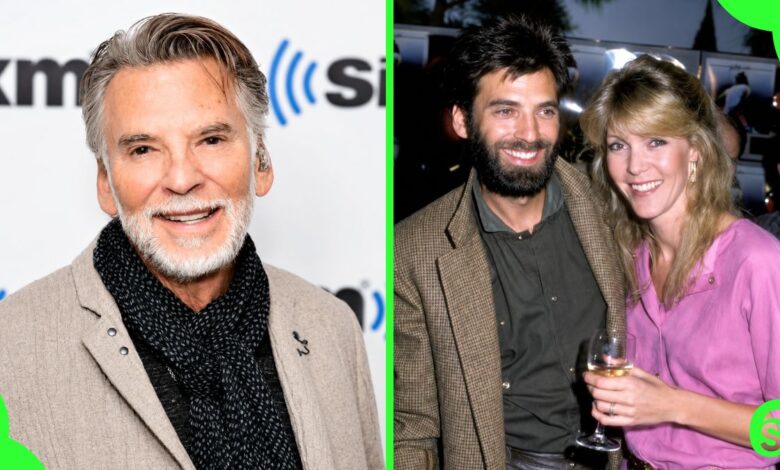
Eva Ein is an American lyricist and songwriter whose public identity has too often been reduced to a single label: Kenny Loggins’ first wife. The recorded evidence tells a fuller story. Between 1977 and 1985, Ein received writing credits across five of Loggins’ solo albums, contributing to songs including “Keep the Fire,” “Wait a Little While,” “Forever” and “Vox Humana.” Her work deserves renewed attention following Loggins’ June 2026 induction into the Songwriters Hall of Fame, an honour that has prompted a fresh assessment of the collaborators behind his catalogue. Ein was not a celebrity seeking an independent spotlight. She was a largely private lyricist whose words became part of commercially successful, enduring recordings.
Quick Bio
| Field | Details |
|---|
| Full Name | Eva Ein |
| Also Credited As | Eva Ein Loggins, E. Ein Loggins |
| Nationality | American |
| Profession | Songwriter and lyricist |
| Known For | Co-writing songs with Kenny Loggins |
| Former Husband | Kenny Loggins |
| Marriage | 1978–1990 |
| Children | Crosby, Cody and Isabella Loggins |
| Notable Songs | “Forever,” “Keep the Fire” and “Wait a Little While” |
| Career Highlight | Contributed lyrics to several Kenny Loggins albums between 1977 and 1985 |
Why Eva Ein’s Story Has Been Misunderstood
Celebrity biographies frequently introduce Ein only through her marriage. That framing is understandable—Kenny Loggins became one of the most recognisable voices of American soft rock and film soundtracks—but it obscures the professional evidence printed on his records.
Album credits identify Ein as a co-writer from the beginning of Loggins’ solo career. Her name appears on Celebrate Me Home, released in 1977 after the dissolution of Loggins and Messina, and continues through Nightwatch, Keep the Fire, High Adventure and Vox Humana.
Across those five albums, the available credits connect her to at least 15 compositions. Some databases use the general term “composer,” but surviving records are more revealing. On several releases—most clearly Vox Humana—the credits distinguish Ein’s lyrical contribution from music written by Loggins, David Foster and other collaborators.
This distinction matters. Ein should not be described merely as a spouse who occasionally offered suggestions. Her repeated billing as a lyricist places her inside the formal creative process.
The Private Life Before the Famous Marriage
Reliable biographical information about Eva Ein’s childhood, parents, schooling and early professional development has not been published by authoritative sources. Entertainment databases provide a reported birth date, but it has not been sufficiently corroborated through an official interview, public record or established biographical profile to treat it as definitive.
There is similarly little dependable information explaining how Ein first became interested in writing or how she met Loggins. Claims that assign her a particular school, degree, hometown or career before songwriting should therefore be treated cautiously.
What can be established is that Ein was already receiving professional credits before—or at approximately the same time as—her marriage to Loggins. That chronology challenges the assumption that her creative identity arose only after she became his wife.
A Songwriting Partnership Begins on Celebrate Me Home
Kenny Loggins released his first solo album, Celebrate Me Home, in 1977. It represented a crucial transition: he was leaving the collaborative identity of Loggins and Messina and establishing himself as an individual recording artist.
Ein participated in that transition.
The album credits connect her to three songs:
- “Set It Free”
- “Why Do People Lie”
- “Daddy’s Back”
“Daddy’s Back” was written with Loggins and David Foster, beginning an association among the three writers that would become especially significant on Vox Humana eight years later. The original release information identifies Ein as a lyricist on the three tracks rather than as an instrumental performer or producer.
The titles also complicate the cheerful public image commonly attached to Loggins’ music. “Why Do People Lie,” in particular, belongs to a recurring strand in the Ein-Loggins collaborations: songs concerned with honesty, emotional uncertainty and the difficulty of sustaining trust.
It would be irresponsible to claim that every lyric reflected their marriage. Songs are constructed works, not sworn testimony. Nevertheless, the subjects Ein repeatedly explored were more psychologically unsettled than the simplified image of Loggins as an uncomplicated purveyor of uplifting soft rock.
Nightwatch and the Expansion of Her Role
Ein’s contribution continued on Nightwatch in 1978. The album became an important commercial release for Loggins, driven by songs such as “Whenever I Call You ‘Friend’” and “What a Fool Believes.”
Her credited songs were:
- “Down ’N’ Dirty,” written with Kenny Loggins and Brian Mann.
- “Wait a Little While,” written with Loggins.
- “Angelique,” written with Loggins.
Of these, “Wait a Little While” achieved a life beyond Loggins’ own recording. Jazz singer Al Jarreau included the song on his 1978 album All Fly Home. Digital liner credits identify Ein specifically with the lyrics while naming Loggins as a composer and songwriter.
That outside recording is important evidence of Ein’s professional reach. Her work was not limited to material heard only by listeners examining deep cuts in her husband’s catalogue. A respected vocalist in contemporary jazz selected one of the compositions for his own album, giving Ein a credit in a separate musical context.
“Wait a Little While” also demonstrates the emotional restraint that characterised some of her strongest work. Rather than presenting certainty as the answer to loneliness, the song advises patience. Its underlying idea is not dramatic conquest but the willingness to leave space for life to change.
“Keep the Fire” and a Publicly Successful Credit
The 1979 album Keep the Fire produced two more Ein collaborations:
- “Keep the Fire”
- “Will It Last?”
The title track was released as a single in 1980 and reached No. 36 on the Billboard Hot 100. It remains one of the clearest examples of Ein’s contribution entering the commercial mainstream under a formal writing credit.
The pairing of “Keep the Fire” and “Will It Last?” is striking. One title expresses the determination to preserve emotional energy; the other asks whether preservation is possible. They should not be interpreted as a coded account of the marriage without supporting testimony, but together they reveal the kind of tension Ein and Loggins were willing to place inside polished pop songs.
Ein also received a photography credit for Keep the Fire, indicating that her involvement with the album extended beyond composition.
Writing During the Height of Loggins’ Fame
By the early 1980s, Kenny Loggins’ career was widening. He was becoming associated not only with soft rock but with forceful pop singles, prominent collaborators and eventually blockbuster film music.
Ein remained part of the writing network.
On the 1982 album High Adventure, original credit information confirms her involvement in:
- “The More We Try”
- “If It’s Not What You’re Looking For”
The second song was written with Loggins and David Foster. Original liner-note transcriptions identify Ein as a writer and list the composition on an album featuring performers and arrangers such as Michael McDonald, David Sanborn, and James Newton Howard.
Some secondary track listings also attribute “Swear Your Love” to Ein. Other album databases credit that song solely to Kenny Loggins, creating a discrepancy that cannot be responsibly resolved without consulting a definitive publishing registration or the precise original edition in question. It is therefore safer not to include “Swear Your Love” among her confirmed works.
This small inconsistency illustrates a larger problem in music biography. Credits can be altered, duplicated or mislabelled when transferred from vinyl sleeves to compact discs and digital databases. A cautious account should distinguish between a recurring database attribution and a clearly documented original credit.
Vox Humana: Eva Ein’s Most Concentrated Contribution
Ein’s largest visible role came on Loggins’ 1985 album Vox Humana. She contributed lyrics or shared lyrical credit on five of its nine songs:
- “Vox Humana”
- “I’ll Be There”
- “Forever”
- “At Last”
- “Loraine”
The original album information is unusually specific. “Vox Humana” credits Ein with the lyrics and Loggins with the music. On “I’ll Be There,” “Forever,” “At Last” and “Loraine,” Ein and Loggins share lyrical credit, while the music credits include Loggins, David Foster, Nathan East and Tom Snow in different combinations.
This division of labour provides the clearest evidence for describing Ein as a lyricist rather than using only the broader term “songwriter”.
“Forever,” written with Loggins and Foster, became the best-known song bearing her name. Released as a single in 1985, it reached the US Top 40 and remained part of Loggins’ concert repertoire.
The album’s lead single, “Vox Humana,” also reached the Top 40. The title refers to the human voice, an apt theme for an album on which Ein’s verbal contribution was unusually extensive.
Her importance to the project was not incidental. She supplied or co-supplied lyrics for more than half of the record.
Marriage to Kenny Loggins
Public sources differ slightly over the beginning of the marriage. Many established profiles round the timeline to 1978–1990, while IMDb lists a wedding date of December 31, 1977 and a divorce date of November 20, 1990. Without an independently accessible marriage record, the most accurate formulation is that Ein and Loggins married around the end of 1977 or the beginning of 1978 and divorced in 1990.
They had three children: Crosby, Cody and Isabella Loggins. Their eldest, Crosby Loggins, became a singer-songwriter and later won MTV’s music competition Rock the Cradle in 2008.
The family existed alongside an unusually demanding period in Loggins’ career. His records, tours and soundtrack successes required prolonged travel and public exposure, while Ein remained far less visible.
That contrast partly explains why her identity became compressed into “the first wife.” Loggins was the performer standing onstage and appearing in interviews; Ein’s contribution usually appeared in small type on an album sleeve.
What Kenny Loggins Has Said About Their Divorce
Much of the public narrative surrounding the marriage comes from Loggins rather than Ein. That imbalance must be acknowledged. Ein has not published a comparable memoir or given a substantial series of interviews presenting her version of events.
In 2022, Loggins discussed the marriage while promoting Still Alright, the memoir he wrote with Jason Turbow. He said that he had shown Ein the chapters concerning their relationship before publication. She suggested several changes, and he adjusted parts of the text. He also told The Washington Post that he had softened some language while retaining details he considered necessary to his account.
That editorial consultation is significant. It does not make the memoir a jointly authored account, but it shows that Loggins sought Ein’s response rather than publishing his recollections without warning.
He also accepted responsibility for his behaviour during the marriage.
“I take the rap for the dissolution of my marriage.” — Kenny Loggins.
Loggins acknowledged that the touring lifestyle and the couple’s understanding of relationships on the road were incompatible with the marriage he ultimately wanted. He described his own conduct as sufficient to damage the relationship, while adding that any marriage contains more than one perspective.
The responsible conclusion is not that Ein caused, tolerated or endorsed every circumstance described in his memoir. It is that Loggins’ later account places substantial responsibility on himself.
The Divorce and Leap of Faith
The divorce was finalised in 1990. Loggins released Leap of Faith the following year, making it his first studio album after the separation. His official discography explicitly identifies it as the first album released after a divorce, while the Recording Academy has described the record as one of the most vulnerable projects of his career.
It is tempting to treat every song on the album as a direct message to Ein. That approach would be too simplistic. By then, Loggins was entering another relationship and writing about parenthood, spirituality, environmental responsibility and personal reinvention as well as romantic upheaval.
The album nevertheless belongs to the emotional aftermath of their marriage. It marked a point at which the private instability behind a highly polished career became part of Loggins’ public artistic language.
Ein did not receive writing credits on the album.
Where Is Eva Ein Now?
Eva Ein has maintained a private life since her divorce from Loggins. Reliable sources do not provide a verified account of her current residence, relationship status or day-to-day work. No authoritative publication has established a substantial recent public career.
That absence should not be filled with speculation.
There is also no verified public information supporting estimates of Eva Ein’s personal net worth. Songwriting can generate royalties, particularly when compositions are released as singles, covered by other performers or included on compilations, but her publishing agreements, ownership percentages and royalty income have not been publicly disclosed.
Verified financial data has not been publicly disclosed.
Eva Ein’s Place in Kenny Loggins’ Legacy
Kenny Loggins’ 2026 induction into the Songwriters Hall of Fame recognises a catalogue built through both individual writing and collaboration. His best-known partners include Michael McDonald, Jim Messina, Dean Pitchford and David Foster. Eva Ein belongs within that creative history as well.
Her contribution was narrower in public scale but deeper than most summaries suggest. The credits establish a sustained pattern:
- Three songs on Celebrate Me Home
- Three on Nightwatch
- Two on Keep the Fire
- At least two confirmed songs on High Adventure
- Five on Vox Humana
These were not scattered honorary acknowledgements. They formed an eight-year body of work that followed Loggins from his solo debut through the commercial peak of his 1980s career.
Eva Ein remains difficult to describe through conventional celebrity-biography categories because she did not build a public brand around her work. She gave few interviews, did not pursue fame comparable to her husband’s and appears to have withdrawn from public attention after their marriage ended.
The records speak more clearly than the publicity.
They identify Eva Ein as a working lyricist whose writing helped shape the emotional vocabulary of Kenny Loggins’ early solo career—sometimes hopeful, sometimes doubtful, and often concerned with the fragile distance between promising lasting love and asking whether it can last at all.
Read this too:Isabella Loggins: The Private Daughter Behind Two of Kenny Loggins’ Family Recordings
(FAQs)
Who is Eva Ein?
Eva Ein is an American lyricist and songwriter best known for her creative collaborations with singer-songwriter Kenny Loggins. She was also Loggins’ first wife and received writing credits on several of his albums between 1977 and 1985.
Was Eva Ein a professional songwriter?
Yes. Album credits identify Eva Ein as a lyricist and co-writer on numerous Kenny Loggins songs. She was sometimes credited as Eva Ein Loggins or E. Ein Loggins.
Which Kenny Loggins songs did Eva Ein help write?
Her best-known credits include “Forever,” “Keep the Fire,” “Wait a Little While,” “Vox Humana,” “The More We Try,” “Set It Free,” “Angelique” and “Why Do People Lie.”
Did Eva Ein write “Forever”?
Eva Ein co-wrote the lyrics to “Forever” with Kenny Loggins, while David Foster was also credited as a composer. The song appeared on Loggins’ 1985 album Vox Humana and became one of her most recognisable songwriting credits.
Did Eva Ein write “Keep the Fire”?
Yes. Eva Ein and Kenny Loggins are credited as the writers of “Keep the Fire,” the title track from his 1979 album. The song was later released as a single and reached the Billboard Hot 100.
When did Eva Ein marry Kenny Loggins?
Public sources differ slightly on the exact date. Some report that they married on December 31, 1977, while others say the marriage began in 1978. They divorced in 1990.
How many children do Eva Ein and Kenny Loggins have?
Eva Ein and Kenny Loggins have three children together: Crosby, Cody and Isabella Loggins.
Is Crosby Loggins Eva Ein’s son?
Yes. Crosby Loggins is the eldest son of Eva Ein and Kenny Loggins. He followed his parents into music and became a singer-songwriter.
Why did Eva Ein and Kenny Loggins divorce?
Kenny Loggins has publicly accepted substantial responsibility for the breakdown of the marriage, particularly regarding the pressures and behaviour associated with his touring life. Eva Ein has not given an equally detailed public account, so the divorce should not be presented solely through Loggins’ perspective.
Did the divorce influence Kenny Loggins’ music?
The end of the marriage formed part of the emotional background to Loggins’ 1991 album Leap of Faith. The record explored divorce, family change, personal responsibility and rebuilding, although not every song should be interpreted as a direct account of Eva Ein.
What is Eva Ein doing now?
Eva Ein has largely remained outside public life since her divorce from Kenny Loggins. Reliable information about her current work, residence or personal relationships has not been publicly confirmed.
What is Eva Ein’s net worth?
No reliable financial information about Eva Ein has been publicly disclosed. Although she may receive songwriting royalties, the value of her publishing rights and personal assets remains private.
Why is Eva Ein important to Kenny Loggins’ career?
Eva Ein contributed lyrics to songs across several important Kenny Loggins albums, from Celebrate Me Home to Vox Humana. Her credits show that she was a recurring creative collaborator during a formative and commercially successful period of his solo career.