Jessica Blyth Barrymore: The Private Life Behind Drew Barrymore’s Older Half-Sister

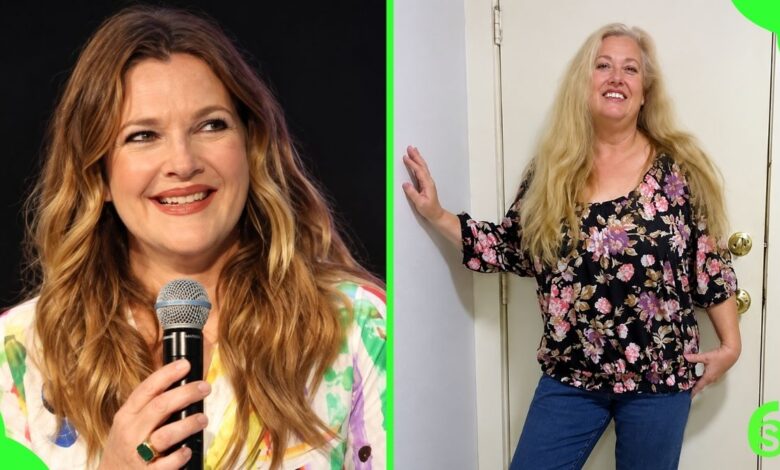
Jessica Blyth Barrymore was Drew Barrymore’s older half-sister, linked to one of Hollywood’s most famous acting families through their father, actor John Drew Barrymore. Yet Jessica’s life followed a markedly different path from Drew’s: she did not build a public entertainment career, rarely appeared in mainstream media, and remained largely outside celebrity culture. Most reliable public information about her emerged only after her death at age 47 on July 29, 2014, in National City, California. The San Diego County Medical Examiner later determined that she died from acute drug and alcohol intoxication and classified her death as accidental.
That contrast is central to understanding Jessica Barrymore. She carried a surname associated with generations of American stage and film history, but the documentary record of her own life is surprisingly small.
Quick Bio
| Detail | Information |
|---|---|
| Full Name | Jessica Blyth Barrymore |
| Known For | Drew Barrymore’s older half-sister |
| Father | John Drew Barrymore |
| Mother | Nina Wayne |
| Half-Sister | Drew Barrymore |
| Residence | Bonsall, California |
| Age at Death | 47 |
| Date of Death | July 29, 2014 |
| Place Found | National City, California |
| Cause of Death | Acute drug and alcohol intoxication |
| Manner of Death | Accidental |
Who Was Jessica Blyth Barrymore?
Jessica Barrymore was the daughter of John Drew Barrymore and former actress Nina Wayne. Through her father, she was a member of the wider Barrymore acting family and a half-sister of Drew Barrymore. Contemporary reports published at the time of Jessica’s death consistently identify John Drew Barrymore as the father shared by Jessica and Drew, while noting that the women had different mothers.
Drew was born to John Drew Barrymore and Jaid Barrymore and went on to become one of the most recognizable performers of her generation. By comparison, Jessica lived mostly outside the entertainment press.
That difference matters because many online accounts retroactively treat Jessica as a conventional celebrity simply because of her surname. The available evidence does not support that framing. She was a member of a famous family, but she was not known for maintaining a comparable acting career or public-facing Hollywood identity.
Reliable contemporary reporting described her as living in Bonsall, California, in northern San Diego County, and working at a pet store when she died. The Los Angeles Times reported that she worked at a pet store, while other local reports identified her as employed by Petco.
The Barrymore Family Connection
Jessica’s father, John Drew Barrymore, belonged to a theatrical dynasty extending back generations.
Born in 1932, he was the son of legendary actor John Barrymore and actress Dolores Costello. His screen career included films such as The Big Night and Fritz Lang’s While the City Sleeps, though his professional life was far less consistent than that of some earlier family members. John Drew Barrymore died in Los Angeles in November 2004 at age 72.
His children consequently inherited one of the most recognizable surnames in American acting, but they did not share identical lives or careers.
Drew Barrymore became internationally famous as a child after appearing in Steven Spielberg’s E.T. the Extra-Terrestrial, later establishing herself as an actress, producer, and director. Jessica remained largely private. The sisters’ biological connection therefore did not translate into the kind of highly visible sibling relationship sometimes assumed in celebrity-family coverage.
Jessica Barrymore and Nina Wayne
Jessica’s mother, Nina Wayne, had her own period in the entertainment industry.
Wayne worked as an actress during the 1960s and early 1970s, appearing in productions including Camp Runamuck, Dead Heat on a Merry-Go-Round, Luv, The Comic and The Night Strangler. Contemporary reporting following Jessica’s death identified Nina Wayne as her mother.
Some secondary sources offer conflicting or confusing descriptions of the precise chronology of Wayne’s relationship with, and later marriage to, John Drew Barrymore. Because those details aren’t necessary to establish Jessica’s parentage—and because reputable contemporary reporting clearly identifies Wayne and Barrymore as her parents—the safer biographical conclusion is that Jessica was their daughter.
This distinction is important in serious biography. Family relationships should not be reconstructed from poorly sourced online family trees when stronger contemporary evidence is available.
Was Jessica Barrymore Close to Drew Barrymore?
Apparently not.
The strongest evidence comes directly from Drew Barrymore herself. After Jessica’s death became public in July 2014, Drew issued a brief statement indicating that the sisters had barely known each other.
“Although I only met her briefly, I wish her and her loved ones as much peace as possible.”
Both the Los Angeles Times and NBC San Diego reported the statement.
Those words are more informative than years of speculation about their relationship. They establish that the biological sisters had met, but they do not support portraying them as having shared a close adult bond.
John Drew Barrymore’s complicated family structure meant that his children grew up in different households and circumstances. Mainstream reporting identifies multiple children born through different relationships, which helps explain the substantial differences in age and upbringing among the siblings.
Little reliable evidence documents sustained contact between Jessica and Drew before 2014. Claims about private conflicts, emotional estrangement, or specific reasons for their limited relationship should therefore be treated cautiously unless supported by first-hand testimony.
A Life Mostly Outside the Spotlight
One challenge in writing about Jessica Blyth Barrymore is separating legitimate biography from the information vacuum her famous surname created.
No well-established public records show that Jessica pursued a major acting career. Reliable newspapers did not report a substantial filmography, high-profile business career, or celebrity lifestyle. Instead, coverage following her death described a woman living an ordinary life in San Diego County and working in retail.
Major sources have not reliably documented her educational history. Details about marriages, long-term romantic relationships, children, property holdings, or personal finances are similarly not established well enough to present as fact.
Verified net-worth information has not been publicly disclosed.
A responsible biography should not try to fill that absence of data through assumption. Jessica’s relative privacy is itself a defining fact of her public record.
July 29, 2014: Jessica Barrymore Is Found Dead
Jessica Barrymore was found unresponsive inside a vehicle in National City, California, on the morning of July 29, 2014.
Early reports described the car as parked in a way that blocked a residential driveway. Residents attempting to leave contacted authorities after discovering Jessica inside. Emergency personnel subsequently confirmed her death. She was 47 and was only days away from turning 48.
Initial reporting understandably generated speculation. Various items were reportedly discovered inside or around the vehicle, but at that stage authorities had not yet determined how Jessica died.
That distinction matters.
The appearance of a death scene does not establish either cause or intent, and initial news stories published before toxicology testing should not be treated as the final medical conclusion.
The official findings came later.
What Did the Medical Examiner Determine?
On August 25, 2014, the San Diego County Medical Examiner’s findings were reported publicly.
Jessica died from acute drug and alcohol intoxication. According to the medical examiner information reported by the Los Angeles Times and NBC San Diego, substances detected included alcohol, methamphetamine, methadone, tramadol, and nordiazepam, a metabolite associated with certain benzodiazepines.
Most importantly, her manner of death was officially classified as accidental.
That finding provides an essential correction to some early speculation surrounding Jessica’s death.
Before the toxicology results became public, family members and acquaintances had offered differing impressions about what might have happened. Such comments reflected their personal beliefs at the time rather than medical conclusions. Once the medical examiner completed the investigation, the authoritative classification was accidental death.
A careful biography should preserve that chronology rather than blending early conjecture with the eventual official finding.
Jessica Barrymore’s Final Days: What Is Known and What Is Not
Public reporting provides only a narrow view of Jessica’s final period.
The available record establishes where she was found, her age, her employment, the substances identified through toxicology testing, and the medical examiner’s conclusion. It does not provide enough credible evidence to reconstruct her private thoughts, intentions, or emotional state before her death.
Accordingly, descriptions suggesting that she deliberately intended to die should not be presented as fact. The official determination was an accident.
Likewise, reports discussing earlier substance-related difficulties require care. Some contemporaneous stories repeated claims from relatives, friends, or secondary publications, but the documentation varies considerably in strength. Without medical documentation, such material should not be turned into a definitive lifelong psychological narrative.
The verified endpoint remains clear: Jessica suffered fatal acute intoxication involving multiple substances, and authorities classified the death as accidental.
The Public Reaction From Drew Barrymore
Drew Barrymore’s response was strikingly restrained.
Rather than presenting the relationship as closer than it had been, she acknowledged that she had only met Jessica briefly while expressing compassion toward Jessica and those who loved her.
That statement helps place Jessica’s death outside the familiar celebrity-media template.
This was not the death of a sibling who regularly accompanied Drew to premieres, worked with her professionally, or maintained a heavily documented public relationship with her. It was the death of a biological half-sister whose life had unfolded largely elsewhere.
The distinction does not diminish the tragedy. It simply respects the factual record.
Why Jessica Blyth Barrymore’s Story Is Often Misunderstood
Jessica’s biography exposes a recurring problem in celebrity reporting: proximity to fame is often mistaken for fame itself.
As the daughter of John Drew Barrymore, Jessica grew up in a celebrated American theatrical family. As Drew Barrymore’s half-sister, her name became instantly recognizable when news of her death broke. But neither fact means that Jessica lived a celebrity life.
Most of her existence appears to have unfolded beyond cameras.
That limited public record also explains why online biographies sometimes become overloaded with dubious birth details, supposed relationships, estimated fortunes and invented accounts of family dynamics. Much of that material cannot be traced to reputable reporting or first-hand documentation.
A more accurate portrait is necessarily narrower.
Jessica Blyth Barrymore was a daughter, sister, and working woman whose family name connected her to Hollywood history, yet whose personal life remained overwhelmingly private. Her story became national news not because she had cultivated public fame, but because of the family into which she was born and the sudden circumstances of her death.
Jessica Barrymore’s Place in the Barrymore Story
The Barrymore name has carried extraordinary cultural weight for more than a century, spanning theater, classical Hollywood and modern film.
Jessica represents a less visible branch of that history.
Her father inherited the Barrymore acting legacy but experienced a far more uneven career than the great performers who came before him. Drew turned that inheritance into a highly successful modern entertainment career. Jessica, meanwhile, appears to have largely avoided—or lived outside—the machinery of celebrity.
That contrast is more revealing than attempting to manufacture a conventional fame narrative around her.
Her biography is ultimately defined by two realities that can coexist: Jessica belonged to one of America’s best-known acting families, and she remained a private person for most of her life.
When she died on July 29, 2014, the Barrymore connection brought intense attention to someone who had rarely sought or received it while alive. The later medical investigation provided the clearest documented conclusion about her death: acute intoxication involving drugs and alcohol, officially ruled accidental.
That is where responsible reporting should leave the matter—grounded in evidence, without turning a sparsely documented private life into something it was not.
Read this too:Catherine Faylen: The Actress, Hollywood Daughter, and First Wife of Regis Philbin
(FAQs)
Who was Jessica Blyth Barrymore?
Jessica Blyth Barrymore was the daughter of actor John Drew Barrymore and Nina Wayne. She was best known publicly as the older half-sister of actress Drew Barrymore.
How was Jessica Barrymore related to Drew Barrymore?
Jessica and Drew Barrymore shared the same father, John Drew Barrymore, but had different mothers. Jessica’s mother was Nina Wayne, while Drew’s mother is Jaid Barrymore.
Was Jessica Barrymore an actress?
Reliable reporting does not establish that Jessica had a significant professional acting career. Unlike several members of the Barrymore family, she lived largely outside the Hollywood spotlight.
How did Jessica Blyth Barrymore die?
Jessica died from acute drug and alcohol intoxication. The San Diego County Medical Examiner classified her death as accidental.
Was Jessica Barrymore close to Drew Barrymore?
Available public evidence suggests they were not close. After Jessica’s death, Drew Barrymore said that she had met her half-sister only briefly.