
Davey Detail: The Artist Behind CYRCLE, His Marriage to Rose McGowan, and His Independent Career

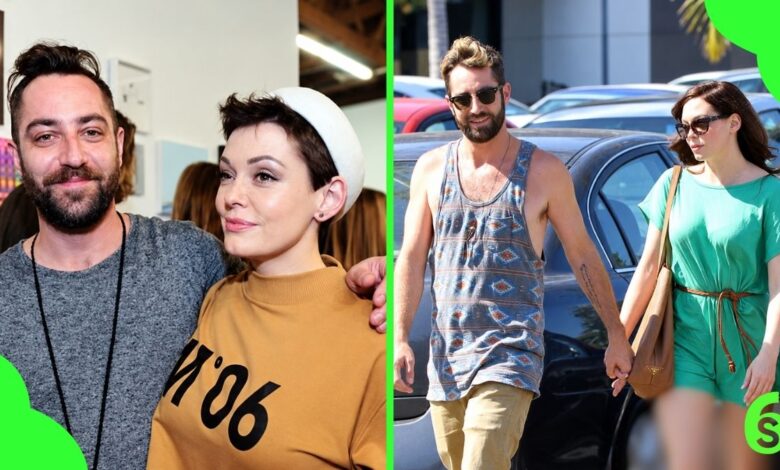
Davey Detail, born David Morgen Leavitt, is an American visual artist and designer known for co-founding the Los Angeles art collective CYRCLE and for his former marriage to actress Rose McGowan. The couple married on October 12, 2013, separated in 2015, and finalized their divorce in November 2016. Although that relationship brought him wider celebrity attention, Detail had already established a career in public art, installations, and graphic design. His subsequent work under the name Davey Leavitt has explored masculinity, identity, and personal experience. After the divorce, his artistic practice continued, including solo exhibitions and new work documented through 2026.
Quick Bio
| Detail | Information |
|---|---|
| Full Name | David Morgen Leavitt |
| Professional Name | Davey Detail / Davey Leavitt |
| Birth Year | 1983 |
| Birthplace | Bellevue, Washington, USA |
| Nationality | American |
| Profession | Visual Artist and Designer |
| Known For | Co-founding CYRCLE |
| Education | Graphic Design, Art Institute |
| Former Wife | Rose McGowan |
| Marriage Date | October 12, 2013 |
| Divorce Finalized | November 10, 2016 |
| Net Worth | Not publicly verified |
Who Is Davey Detail?
Davey Detail is a multidisciplinary artist whose career spans painting, sculpture, installation, graphic design, and large-scale public artwork. He gained wide recognition through CYRCLE, the Los Angeles-based collective he helped establish in 2010.
Unlike artists working exclusively within conventional gallery settings, Detail developed his reputation through projects that moved between public streets, exhibition spaces, commercial environments, and collaborative productions.
His professional identity has also evolved. During CYRCLE’s most prominent years, he was commonly identified as Davey Detail. More recent exhibition materials and interviews use Davey Leavitt, reflecting the name he has used for much of his independent work.
His marriage to McGowan remains one of the most frequently reported aspects of his personal life, but it represents only a portion of his professional history.
Early Life, Background, and Education
According to gallery biographical records, Davey Leavitt was born in Bellevue, Washington, in 1983. He has described himself as originally being from the Seattle area.
In a July 2021 interview with LA Weekly, he said he moved to Oakland, California, in 2001 before moving to Los Angeles in 2005. Southern California subsequently became the center of his professional career.
His interest in making art developed long before he established himself in Los Angeles.
During the same interview, Leavitt recalled experimenting with sculpture as a young child. He also described exhibiting paintings at Muddy Waters, a coffee shop on Haight Street in San Francisco, in 2002.
These early experiences preceded the larger exhibitions and international projects that later brought wider recognition.
Did Davey Detail Attend Art School?
Leavitt discussed his formal education directly with LA Weekly.
He said he studied graphic design at the Art Institute and graduated in 2003. Although he received formal instruction, he also described himself as self-taught in developing his artistic practice.
This distinction helps explain the combination of disciplines visible throughout his career. Graphic design supplied a foundation in composition, typography, and visual communication, while his independent experimentation expanded into sculpture, painting, and installations.
Detailed information about his parents, siblings, and wider family background has not been extensively established through reliable public reporting.
The Formation of CYRCLE
One of the defining developments in Detail’s career occurred in 2010 with the formation of CYRCLE. The art collective brought together David Leavitt, David Torres (known professionally as Rabi), and artist Devin Liston.
The collective emerged in Los Angeles as street art increasingly attracted attention from galleries, collectors, and major cultural institutions.
CYRCLE developed a visual language combining bold lettering, historical imagery, symbolism, and references to contemporary society.
Rather than treating murals as decoration alone, the artists frequently incorporated messages about power, conflict, identity, and the relationship between individuals and their surroundings.
Liston subsequently departed to pursue independent work, leaving Leavitt and Torres as the collective’s principal creative partnership.
Early Exhibitions and Public Recognition
CYRCLE’s early projects demonstrated an interest in changing how audiences encountered artwork.
One prominent example was We Never Die!, a mural created in Culver City in 2011. The project drew attention partly because the building that carried the artwork was scheduled for demolition.
Its temporary existence reflected an important characteristic of street art: a work can have cultural value without being permanent.
In 2012, the collective completed Magic Is Real, an approximately 11,000-square-foot mural at Bedrock: LA, a recording and rehearsal facility in Los Angeles.
The project’s scale demonstrated CYRCLE’s ability to work beyond conventional canvases and transform entire architectural surfaces.
That same year, the collective presented Organized Chaos!, an interactive exhibition in Hollywood.
The exhibition included movable cubes featuring sections of images. Visitors could rearrange these elements to produce different compositions.
Instead of simply observing finished artwork, visitors arranged it.
This approach became a defining feature of CYRCLE’s work: its exhibitions invited physical interaction while encouraging audiences to consider the ideas the imagery represented.
International Exhibitions and Creative Collaborations
As CYRCLE’s reputation expanded, its members pursued projects beyond Los Angeles.
The collective’s exhibition history includes presentations associated with London, Hong Kong, Lisbon, Montreal, and other international locations.
Documented projects included Capture the Flag: Conquer the Divide! in Lisbon in 2013, Capture the Flag: Home Is Where Your Heart Is! in Hong Kong later that year, and Overthrone: Pooring Reign! in London in 2014.
These exhibitions increased the collective’s visibility in contemporary urban art.
CYRCLE also developed relationships with artists, musicians, and commercial brands.
A 2014 Los Angeles Times feature described how technology entrepreneur and art supporter Oliver Luckett helped introduce CYRCLE’s work to influential collectors and figures in the entertainment industry.
The reporting documented connections with music producer Pharrell Williams and entertainment executive Ari Emanuel.
The collective’s gallery biographies also credit collaborations involving brands and cultural organizations, including HBO, Reebok, Audi, and other commercial partners.
These collaborations illustrate how Detail’s work crossed boundaries between fine art, public installation, graphic communication, and commercial creative production.
Art Beyond Traditional Murals
CYRCLE’s experimental approach was particularly evident in a project featured during a Google street-art event in Los Angeles in 2015.
The collective constructed an interactive installation containing a private space where visitors could speak into a microphone.
Their words were transformed into visual patterns displayed outside the structure.
The project connected personal expression with digital technology, demonstrating that the collective’s creative interests extended beyond paint and physical surfaces.
This interest in participation and transformation later took a different form in Leavitt’s independent work.
Davey Detail and Rose McGowan: How Their Relationship Became Public
As Detail built his artistic reputation, his relationship with actress Rose McGowan drew increasing media attention.
McGowan was already established in Hollywood through her film career and her role as Paige Matthews in the television series Charmed.
Their relationship became public in the early 2010s, with contemporary reporting indicating they had been dating for more than a year before they became engaged in July 2013.
In a September 2013 interview with Us Weekly, McGowan spoke positively about their relationship and described Detail as someone who had personally influenced her.
At that stage, the couple was preparing for an October wedding.
Their relationship connected two prominent cultural environments: Hollywood entertainment and the Los Angeles contemporary art community.
However, neither person’s professional identity should be reduced to that connection.
Their October 2013 Wedding
Rose McGowan and Davey Detail married on October 12, 2013, in Los Angeles.
The ceremony took place outdoors at the Paramour Mansion in Silver Lake, with about 60 guests.
Contemporary reports from the Los Angeles Times, Us Weekly, and E! News described a rabbi officiating the ceremony beneath a traditional Jewish wedding canopy known as a chuppah.
McGowan wore a Monique Lhuillier wedding gown featuring lace and tulle.
The celebrations included New Orleans-inspired music, and the couple reportedly planned to travel to Tahiti for their honeymoon.
This was McGowan’s first marriage. She had previously been engaged to musician Marilyn Manson and filmmaker Robert Rodriguez.
The wedding drew substantial entertainment-media coverage, reflecting McGowan’s public profile and interest in her relationship with an established visual artist.
Why Did Davey Detail and Rose McGowan Divorce?
Despite the optimism surrounding their wedding, the marriage did not last.
According to divorce documents reported by the Los Angeles Times, McGowan identified May 1, 2015, as the couple’s date of separation.
She subsequently filed for divorce in Los Angeles Superior Court in February 2016.
The legal filing cited irreconcilable differences.
That phrase identifies the legal grounds presented for the divorce. It does not, by itself, establish the specific personal circumstances that led the relationship to end.
Although celebrity coverage sometimes encourages speculation about private relationships, reliable public documentation does not provide a comprehensive account of the couple’s personal disagreements.
Therefore, without additional verified evidence, there is no sound factual basis to attribute the separation to a particular private incident.
Divorce Settlement and Finalization
The divorce was finalized on November 10, 2016.
According to E! News, neither party sought spousal support, and the couple had arranged the division of their assets outside court.
The marriage lasted about three years legally, although they had separated much earlier.
The distinction between separation and divorce matters because reports describing a three-year marriage do not mean the couple remained together throughout that entire period.
The publicly documented legal process offers a clear timeline, but it does not justify speculation about blame or private motivations.
Life and Career After the Divorce
After the marriage ended, Detail continued working within the arts.
He remained involved with CYRCLE until approximately 2020, when his decade-long collaboration with David Torres concluded.
This professional transition matters because it separated the artist’s later work from the collective identity that had defined much of his earlier career.
By 2021, Leavitt was presenting work independently.
His solo career also demonstrated a shift in subject matter.
CYRCLE’s projects frequently addressed shared cultural experiences, social imagery, and public communication. His later solo exhibitions placed greater emphasis on personal identity and the relationship between outward appearances and inner experience.
The transition was not a complete rejection of his earlier practice. He continued using a multidisciplinary approach, combining graphic elements with sculpture, painting, design, and unconventional materials.
What changed was the emphasis.
His independent projects allowed personal questions to occupy a more central position.
Solo Exhibitions and Artistic Development
Everything Is Fine Keep Swiping / How to Cage a Wagging Tail
In July 2021, Leavitt presented a solo exhibition titled Everything Is Fine Keep Swiping / How to Cage a Wagging Tail.
The exhibition opened on July 15 and was scheduled to run through August 15.
Speaking with LA Weekly, he described the work as an exploration of his mental health experiences, expressed through conceptual art.
The exhibition included works such as Anxiety Mirror: Smiling on the Outside, which used reflective surfaces and manufactured materials to examine the relationship between external presentation and internal experience.
Another documented work, The Fragility of Machismo: White Fright, reflected his interest in social expectations and representations of masculinity.
These projects marked a more explicitly autobiographical direction.
Rather than producing a single recognizable visual style, Leavitt emphasized working across mediums according to the ideas he wanted to express.
A(MEN) and the Examination of Masculinity
In 2022, Eastern Projects Gallery in Los Angeles presented Everything Is Fine Keep Swiping / A(MEN).
The exhibition combined earlier 2021 work with newer pieces addressing masculinity, inherited expectations, and social identity.
An artist’s statement accompanying the exhibition considered the influence of traditional masculine roles and the possibility of developing more compassionate approaches to identity.
The work examined how ideas about gender and behavior can be passed between generations.
Importantly, the exhibition material provides insight into Leavitt’s publicly expressed artistic concerns without requiring assumptions about his private experiences.
His stated interests and the artworks themselves offer a more reliable basis for interpreting his professional development than speculation drawn from his previous marriage.
Davey Detail’s Recent Work and Professional Identity
Gallery documentation available in 2026 shows that Leavitt’s practice has continued beyond the early-2020s exhibitions.
BELHAUS, a contemporary art gallery representing his work, lists pieces including I Am Not My Father No. 10 / Coal (2025) and I Am Not My Father No. 17 / Sarsaparilla (2026).
These paintings incorporate materials such as acrylic, charcoal, and inlaid glass mirror.
Their titles and material choices are consistent with the artist’s broader exploration of identity, family influence, and reflection.
His gallery biography also notes that his creative practice extends into furniture design, product design, and large-scale environments.
Additionally, the gallery credits him with founding dl/s, Davey Leavitt Studio, a creative-direction and design practice, and with work associated with major music tours.
These credits indicate an ongoing effort to operate across fine art and commercial design, although individual commercial projects should be distinguished from independently reviewed gallery exhibitions.
The available documentation establishes an active artistic practice. It does not provide a complete financial account of his studio or business operations.
Davey Detail’s Net Worth and Financial Background
No sufficiently reliable public financial disclosure establishes Davey Detail’s precise net worth.
His career has involved gallery exhibitions, collaborative installations, commercial design, and artistic commissions, but these activities do not provide enough evidence to calculate his personal wealth.
Gallery representation and relationships with prominent collectors also do not establish an artist’s earnings, assets, or liabilities.
Verified financial data has not been publicly disclosed.
Any precise net worth figure circulating without financial documentation should therefore be treated as an unverified estimate rather than a fact.
Personal Life and Privacy
Public interest in Detail’s personal life has largely centered on his former marriage to Rose McGowan.
However, he has received far more media attention for his professional collaborations and artistic work than for his private relationships.
In interviews, he has discussed creative influences, education, artistic development, and personal themes he explores in his work.
Reliable public reporting does not establish a comprehensive account of his current relationship status or family arrangements.
The absence of such information should not be interpreted as confirmation of any particular personal circumstance.
His documented career provides more substantial material for understanding his life than unsupported claims about relationships or finances.
The Broader Significance of His Artistic Career
Detail’s career illustrate how contemporary artists can move between public art, commercial creativity, and traditional exhibition spaces without confining themselves to one medium.
His early collaborations with CYRCLE emphasized scale, interaction, and communication with audiences outside conventional art institutions.
Works such as Organized Chaos! encouraged viewers to rearrange physical elements, while the collective’s later interactive installations connected participation with digital technology.
In his solo practice, he made similar questions about perception and identity more personal.
The reflective surfaces, textual references, and conceptual themes in his later work suggest continuity between his earlier interest in audience engagement and his more recent exploration of self-perception.
This artistic development better reflects his professional identity than his association with celebrity culture alone.
While the marriage to McGowan introduced his name to a wider entertainment audience, his exhibitions and creative collaborations provide an independently documented account of his work.
Conclusion
Davey Detail’s public biography encompasses two distinct forms of recognition: his role in the contemporary art community and his former marriage to Rose McGowan.
The marriage, which began in October 2013 and legally ended in November 2016, remains part of his documented personal history. Yet the available evidence reveals a longer professional narrative, from his graphic-design education and early exhibitions to the formation of CYRCLE and his development as an independent artist.
His projects have explored participation, cultural symbolism, masculinity, and identity through different materials and environments.
The clearest account of his career comes not from speculation about his private life but from his documented exhibitions, professional collaborations, and statements about his own creative work.
Read this too:Sherrill Redmon: The Historian, Feminist Archivist, and Mitch McConnell’s First Wife
(FAQs)
Who is Davey Detail?
Davey Detail, born David Morgen Leavitt, is an American visual artist and designer. He is best known for co-founding CYRCLE and for his former marriage to actress Rose McGowan.
When did Davey Detail marry Rose McGowan?
Davey Detail married Rose McGowan on October 12, 2013, at the Paramour Mansion in Los Angeles. Approximately 60 guests attended their outdoor ceremony.
Why did Rose McGowan and Davey Detail divorce?
McGowan filed for divorce in February 2016, citing irreconcilable differences. The public record does not fully explain their private disagreements. Their divorce was finalized on November 10, 2016.
What is Davey Detail’s real name?
The Los Angeles Times reports his name is David Morgen Leavitt. He has used Davey Detail professionally and has also exhibited artwork under the name Davey Leavitt.
What is Davey Detail doing now?
Gallery documentation through 2026 shows he continues to create and exhibit artwork as Davey Leavitt. His recent work includes pieces from the I Am Not My Father series, alongside his broader creative-direction and design practice.
What is Davey Detail’s net worth?
His exact net worth has not been established through reliable public financial records. Any specific amount presented without supporting documentation remains speculative.