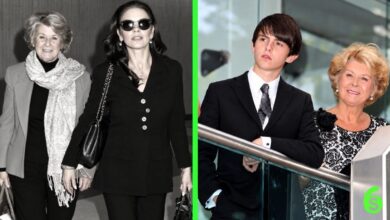
Tressa DiFiglia: The Untold Career and Life Beyond Nicholas Brendon’s First Marriage


Tressa DiFiglia is an American actress, screenwriter, and producer whose public recognition has often centered on her Marriage to Nicholas Brendon, the actor who portrayed Xander Harris in Buffy the Vampire Slayer. Following Brendon’s death on March 20, 2026, at age 54, their former relationship attracted renewed attention. Yet DiFiglia’s professional history extends far beyond that association. She appeared in established television dramas and comedies, contributed to the award-winning screenplay of Illusion (2004), and participated in independent film production.
Her story is not one of constant celebrity exposure. It records credited creative work, two marriages documented in public sources, and a personal life about which she has disclosed relatively little.
Quick Bio
| Detail | Information |
|---|---|
| Full Name | Tressa DiFiglia |
| Date of Birth | July 25, 1971 |
| Age in October 2026 | 55 years |
| Birthplace | Carlsbad, California, United States |
| Nationality | American |
| Occupation | Actress, screenwriter, producer |
| Known For | Illusion, Weeds, ER, Monk |
| First Husband | Nicholas Brendon |
| First Marriage | September 1, 2001 – May 30, 2006 |
| Second Husband | Don Handfield |
| Second Marriage | February 14, 2008, according to published biographical records |
| Children | Two with Don Handfield |
| Net Worth | No verified public figure available |
Early Life and the Limits of Her Public Biography
Industry biographical listings identify Carlsbad, California, as DiFiglia’s birthplace and July 25, 1971, as her birth date. Beyond those details, reliable accounts of her upbringing are limited.
Her parents’ names, educational background, and any formal dramatic training are not adequately documented in the reputable sources reviewed. Therefore, any claim that she attended particular acting schools or followed a specific academic route would be speculative.
Her association with Carlsbad continued into adulthood. IMDb’s biographical entry reports that she married Nicholas Brendon at her parents’ ranch in the area, although independently published details of the ceremony are limited.
What can be established more confidently is the development of her professional career. By the late 1990s, she had secured television appearances, and her later credits show an interest that extended beyond acting into writing and production.
Building an Acting Career Across American Television
DiFiglia’s acting work followed a familiar but demanding Hollywood path: episodic television appearances, supporting film roles, and collaborations on smaller productions.
Rather than becoming a regular lead on a major network series, she accumulated credits across different genres and production environments.
One early documented role was Hannah in the medical drama ER. She appeared in the episode “Split Second,” broadcast on October 1, 1998. The series provided an established television credit during a period when its ensemble cast was among the best-known in American drama.
In 1999, she was credited as a college student in The West Wing. The appearance formed part of her early television work rather than an extended character arc.
Film roles followed, including Sara in Chance (2002), directed by Amber Benson, and Connie in the horror film Survival Island, also known as Demon Island.
A more substantial television appearance came in 2005 when DiFiglia played Maggie in Showtime’s comedy-drama Weeds. Television episode records document her participation in six episodes of its first season.
That recurring credit matters because it shows more sustained screen work than a single guest appearance.
Her later credits included:
- Monk (2007): A duty nurse in “Mr. Monk and the Daredevil”.
- Party Down (2009): Lorraine in “James Rolf High School Twentieth Reunion”.
- New Girl (2012): Karen in the episode “Bully”, broadcast on February 21, 2012.
A small distinction matters when examining these credits. Filmography databases sometimes list a television program’s original launch year next to an actor’s name rather than the year of their appearance. ER began in 1994, but DiFiglia’s documented episode aired in 1998. Similarly, New Girl premiered in 2011, while her credited appearance aired in 2012.
Her career should therefore be assessed using episode records, not just the dates attached to series titles.
Illusion (2004): Her Most Significant Screenwriting Achievement
Although her acting credits are frequently cited, DiFiglia’s contribution to Illusion provides stronger evidence of her work as a storyteller.
Released through the festival circuit in 2004, Illusion was directed by Michael A. Goorjian and featured veteran actor Kirk Douglas. The film concerns Donald Baines, an aging filmmaker confronting his estrangement from his son and reflecting on the personal consequences of his choices.
The screenplay drew inspiration from Pierre Corneille’s L’Illusion Comique, adapting elements of the earlier dramatic work into a contemporary cinematic story about memory, regret, and family relationships.
DiFiglia shared screenwriting credit with Goorjian, Ron Marasco, and Chris Horvath.
The production received recognition at the 2004 Hamptons International Film Festival, where it earned the Zicherman Family Foundation Award for Screenwriting. A contemporary festival report identified DiFiglia among the screenplay’s collaborators, using the credit Tressa Di Figlia Brendon.
The award was presented to Goorjian on behalf of the film. It should therefore be understood as recognition for a collaborative screenplay rather than an individual award presented solely to DiFiglia.
Her contribution remains meaningful. The screenplay represented a creative achievement distinct from the acting work for which she had previously been credited.
It also shows why describing her only as Nicholas Brendon’s former wife omits an important part of the public record.
Independent Production Work With Don Handfield
Another revealing part of DiFiglia’s professional history appears in a first-person account published by Filmmaker magazine in August 2008.
Her husband, filmmaker Don Handfield, discussed developing Driver’s Ed, a proposed web series that he had initially struggled to sell. Instead of waiting for a conventional production agreement, he arranged an independent shoot in San Diego County.
The project operated with limited resources, a small crew, and family involvement.
Handfield explicitly credited his wife with production work:
“My wife produced, her family pitched in to help.”
That statement matters because it provides direct, contemporary evidence of DiFiglia’s behind-the-camera involvement.
Handfield’s account describes a grassroots production that relied on improvisation, cooperation, and practical filmmaking decisions. He also discussed efforts to generate industry interest in the concept.
This evidence supports describing DiFiglia as having production experience without exaggerating her role into that of a major studio executive or attributing unrelated productions to her.
IMDb also lists a writing credit for a 2009 project titled Driver’s Ed. The published accounts do not establish the precise division of writing responsibilities among collaborators, and assigning her sole authorship would be misleading.
Nevertheless, the available evidence identifies involvement in both screenwriting and independent production.
Marriage to Nicholas Brendon: 2001–2006
DiFiglia’s best-known relationship was with Nicholas Brendon, whose portrayal of Xander Harris made him a recognizable figure in American television during the late 1990s and early 2000s.
According to their published biographical records, the couple married on September 1, 2001.
By then, Buffy the Vampire Slayer was already a major part of Brendon’s career. The series began in 1997 and ran until 2003, building a devoted audience and securing its place in supernatural television.
DiFiglia was pursuing her own professional work during the Marriage.
The couple’s relationship also overlapped with a difficult period that Brendon discussed publicly.
In April 2004, the actor announced that he had voluntarily entered treatment for alcohol addiction. Contemporary reporting by TV Guide preserved part of a statement in which he acknowledged the support he was receiving:
“I’m grateful for the love and support I’ve gotten from my wife, Tressa; my entire family; my business associates; and my friends.”
The statement directly shows that Brendon publicly recognized DiFiglia’s support at that time.
It does not, however, explain the private circumstances of their Marriage or why it eventually broke down.
Their divorce was finalized on May 30, 2006, approximately four years and nine months after their wedding.
No sufficiently reliable public account reviewed for this profile establishes a definitive reason for the separation. Connecting it directly to addiction, professional pressures, or alleged private disputes would go beyond the available evidence.
Their Marriage ended, but DiFiglia’s professional history and later family life continued independently.
A New Chapter With Don Handfield
After divorcing Brendon, DiFiglia married writer, director, and producer Don Handfield.
Published industry biographical records give their marriage date as February 14, 2008.
Handfield’s career includes independent filmmaking and later projects such as The Founder and Knightfall. His relationship with DiFiglia is supported by more than an entertainment database.
In his August 2008 contribution to Filmmaker, Handfield confirmed he was married to Tressa and that they had welcomed their first child, a daughter.
He described how Marriage and fatherhood had changed his approach to working, presenting the experience as a personal turning point.
Those remarks matter because they come from Handfield himself rather than an anonymous celebrity-profile summary.
Published biographical records identify the couple as parents of two children. Details about the children’s private lives aren’t necessary to establish their family relationship and shouldn’t be expanded without reliable public information.
DiFiglia has also maintained a relatively limited public profile compared with many performers associated with major Hollywood franchises.
That absence of frequent interviews or social-media publicity does not establish that she has married; it simply means a comprehensive, independently verified account of her current professional activities is not publicly available.
Nicholas Brendon’s Death in March 2026
Nicholas Brendon died on March 20, 2026, at the age of 54.
His death was reported by established entertainment publications, including The Hollywood Reporter, TheWrap, and the Los Angeles Times.
According to the family statement circulated to the press, Brendon died in his sleep from natural causes.
He had experienced significant health problems in preceding years, including a congenital heart defect and spinal complications. His family emphasized his recent interest in painting, his ongoing creativity, and the importance of remembering the person beyond the difficulties he faced.
Brendon’s enduring public recognition came primarily from Buffy the Vampire Slayer, although his credits also included Criminal Minds, Kitchen Confidential, and the independent science-fiction film Coherence.
His death prompted renewed discussion of his career and personal history, including his former marriages.
For DiFiglia, however, an important distinction remains: a past marriage does not define her present private life.
No verified public response from DiFiglia to Brendon’s death was identified in the sources reviewed for this article. Any account that assigns her specific emotions, conversations, or reactions would therefore be unsupported.
Her connection to him is documented in her biography, not a basis for inventing a personal account of grief.
What Is Known About Her Life in 2026?
As of October 2026, published biographical records continue to identify Don Handfield as DiFiglia’s husband.
The material reviewed contains no adequately verified public announcement indicating a change in that marital status.
Her most readily documented screen credits belong to earlier stages of her career. That does not justify claiming that she has permanently retired from acting, writing, or production.
It means reliable public sources have not covered her recent activities in sufficient detail.
The distinction applies equally to financial information.
Verified financial data has not been publicly disclosed. No dependable figure for DiFiglia’s personal net worth can be established from the available evidence. Estimates appearing on unsourced celebrity-finance websites should not be treated as confirmed facts.
No reliable public basis supports detailed claims about her current residence, business interests, or private family routines.
A factual biography should acknowledge those limits rather than fill them with attractive but unsupported details.
Understanding Her Place in Hollywood
DiFiglia’s work illustrates a category of creative professional often overlooked in celebrity coverage: a performer whose public credits span several recognizable productions but whose career doesn’t depend on headline status.
Her appearances in ER, The West Wing, Weeds, Monk, and New Girl established her as a regular in different forms of television storytelling.
Illusion added a substantial collaborative screenwriting accomplishment, recognized through a festival award.
Handfield’s 2008 account also shows she took part in independent production work, where responsibilities can extend well beyond what audiences see.
Together, these details create a more useful professional picture than a biography assembled entirely around her former Marriage.
Her history deserves to be evaluated through the projects in which she participated, the credits that can be substantiated, and the limited but reliable statements made about her work.
Conclusion
Tressa DiFiglia’s public story includes Marriage to a familiar television actor, but it extends meaningfully beyond that relationship. Her acting credits show a working career across American film and television, while Illusion provides evidence of a recognized screenwriting contribution. Don Handfield’s direct testimony also establishes her involvement in independent production.
Nicholas Brendon‘s death in 2026 renewed attention to a relationship that ended two decades earlier. The Marriagee account, however, describes a creative professional whose work can be evaluated independently and whose private life should be described only where reliable evidence permits.
Read this too:Alexis Boozer: Her Acting Career, Production Work and Partnership With Maury Sterling
(FAQs)
Who is Tressa DiFiglia?
Tressa DiFiglia is an American actress, screenwriter, and producer. She is known for work associated with Illusion, Weeds, ER, and other television productions. She was also married to actor Nicholas Brendon.
When did Tressa DiFiglia marry Nicholas Brendon?
Published biographical records give their wedding date as September 1, 2001. Their divorce was finalized on May 30, 2006.
What is Tressa DiFiglia’s biggest career achievement?
One of her most notable documented achievements is co-writing Illusion (2004). The film received a screenwriting award at the Hamptons International Film Festival, recognizing a screenplay developed collaboratively by several writers.
Who is Tressa DiFiglia married to now?
Industry biographical records identify filmmaker Don Handfield as her husband. According to those records, they married on February 14, 2008, and have two children together.
Did Tressa DiFiglia comment on Nicholas Brendon’s death?
Reputable sources reviewed found no authenticated public statement from DiFiglia responding to his March 20, 2026, death. Her personal reaction should not be assumed.