Lenny Hirshan: The Influential Hollywood Agent Behind Clint Eastwood’s Career and Susan Dey’s First Marriage

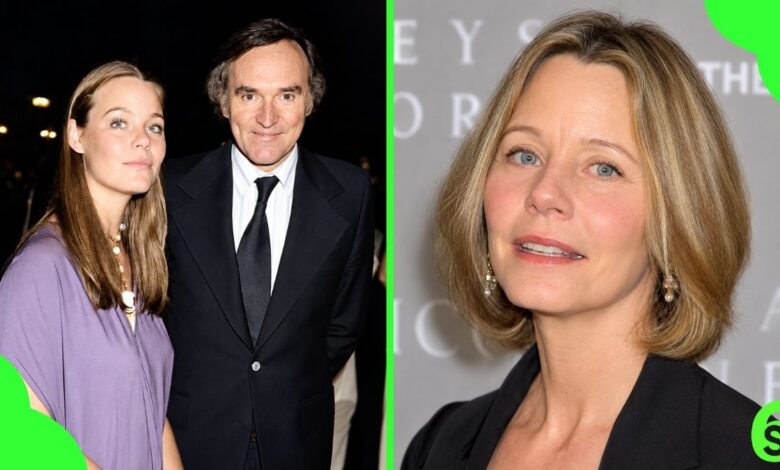
Lenny Hirshan, born Leonard Hirshan, was an influential American talent agent and entertainment manager best remembered for his extraordinary professional relationship with Clint Eastwood and his marriage to actress Susan Dey. Although the public often identifies him as Dey’s first husband, Hirshan had built his Hollywood reputation long before their November 1976 wedding. He spent about five decades at the William Morris Agency, representing celebrated performers and negotiating major film contracts. They married in 1976 and had a daughter, Sara Dey-Hirshan. Hirshan died on January 31, 2014, at 86, leaving behind a career that showed how much influence an agent could wield without becoming a household name.
Hirshan belonged to a generation of Hollywood representatives whose authority rested on professional relationships, industry knowledge, and direct access to studio decision-makers. His work connected performers with opportunities as the American entertainment business underwent considerable change. Unlike the actors he represented, he rarely occupied the center of public attention, but his influence could be measured through the careers he helped manage.
His association with Susan Dey offers one chapter of that history. His enduring partnership with Clint Eastwood better explains his professional standing.
Quick Bio
| Detail | Information |
|---|---|
| Full Name | Leonard Hirshan |
| Known As | Lenny Hirshan |
| Date of Birth | December 27, 1927 |
| Birthplace | New York City, United States |
| Nationality | American |
| Profession | Talent agent and entertainment manager |
| Education | New York University |
| Major Employer | William Morris Agency |
| Later Business | Leonard Hirshan Management |
| Notable Client | Clint Eastwood |
| Former Spouses | Isobel Chanin and Susan Dey |
| Marriage to Susan Dey | November 1976 |
| Reported End of Marriage | 1981; IMDb lists a January 1983 divorce date |
| Children | Karen Hirshan and Sara Dey-Hirshan |
| Major Recognition | Talent Managers Association Lifetime Achievement Award, 2012 |
| Date of Death | January 31, 2014 |
| Age at Death | 86 |
| Place of Death | Beverly Hills, California |
| Reported Cause of Death | Merkel cell carcinoma |
Early Life and the Road to Hollywood
Leonard Hirshan was born in New York City on December 27, 1927. His early life preceded the era of modern celebrity management, when powerful agencies served as important intermediaries between performers, producers, and film studios.
According to his obituary in the Los Angeles Times, Hirshman served two years in the United States Navy and earned an undergraduate degree from New York University. His interest in theater eventually directed him toward the entertainment business.
His daughter Karen later explained that a relative encouraged him to begin at the bottom of an established talent agency rather than expect an immediate position of influence. Hirshan followed that advice and joined the New York office of the William Morris Agency in 1951.
He began in the mailroom.
That detail matters because it helps explain the professional culture Hirshan emerged from. The mailroom was a well-established entry point into the agency business, exposing ambitious young employees to correspondence, contracts, executives, and the mechanics of representation. Hirshman advanced through professional development rather than inherited Hollywood celebrity.
Within a few years, he was negotiating opportunities for performers whose names would become familiar across American film and television.
Building a Career at William Morris
One of Hirshman’s early career achievements involved actress Eva Marie Saint. He helped negotiate her involvement in On the Waterfront, the acclaimed 1954 film that earned Saint an Academy Award for Best Supporting Actress.
The association put the young agent at the center of an important moment in American cinema.
Hirshan subsequently developed professional relationships with actors including Jack Lemmon and Walter Matthau. His work on Lemmon’s studio arrangements brought him to the attention of William Morris executives, and he moved to Hollywood in 1955.
Other notable names he represented and negotiated for included Angela Lansbury, Sophia Loren, Sammy Davis Jr., and Edward G. Robinson. His work also extended to Elvis Presley, whose early film arrangements involved the agency.
That client list demonstrates his versatility. He worked across dramatic acting, comedy, music, and Hollywood’s changing commercial demands.
His position was not simply administrative. Talent agents assessed scripts, negotiated financial terms, helped clients consider competing projects, and maintained working relationships with executives who controlled access to major productions.
Former colleagues interviewed after his death emphasized his involvement in clients’ decisions. Hirshan was known for paying close attention to project suitability rather than treating representation as a series of isolated contract negotiations.
That approach would become particularly significant in his association with Clint Eastwood.
The Clint Eastwood Partnership That Defined His Career
Hirshan’s longest and most consequential professional relationship was with Clint Eastwood.
Their association began as Eastwood expanded beyond his early television success and developed his film career, including his work in European westerns directed by Sergio Leone.
Over time, Eastwood progressed from a recognizable screen actor to an internationally established filmmaker. Hirshan remained closely involved throughout those changes.
Their partnership lasted more than half a century, an exceptionally long period for a major Hollywood performer and representative to remain professionally connected.
Eastwood’s comments following Hirshman’s death offered unusually direct evidence of their working relationship. Speaking to the Los Angeles Times in February 2014, he recalled Hirshman’s personal attention and willingness to express disagreement. The actor also emphasized that the relationship had developed into a lasting friendship.
The distinction matters. Long-term representation does not necessarily mean that an agent controls an artist’s creative decisions. In Eastwood’s case, the available reporting instead describes a representative who offered advice, maintained access, and remained trusted as his client became increasingly independent.
Hirshan continued to work with Eastwood through major career milestones, including the period in which Eastwood achieved widespread recognition as an Academy Award-winning director.
Their professional arrangement eventually became more focused, with Eastwood remaining central to Hirshan’s management work in later years.
The partnership endured through changing studios, industry leadership, and business practices.
Susan Dey and Lenny Hirshan: Their Marriage and Family Life
Hirshan’s personal life drew more public attention when he married Susan Dey, an actress already known for portraying Laurie Partridge on the popular musical sitcom The Partridge Family.
Dey had become famous as a teenager during the show’s original run from 1970 to 1974. After the show ended, she faced the professional challenge common to young television stars: building a credible acting career beyond the role that first made her recognizable.
Hirshan was about 25 years older than Dey and worked as her agent.
The two married in November 1976, as Dey transitioned toward more mature screen roles.
A 1989 Washington Post profile, based on an interview with Dey, confirmed their professional association and marriage. The reporting described their union as lasting slightly less than five years.
Their relationship joined two people with notably different positions in the entertainment business. Dey was a young actress seeking professional independence, while Hirshan was an established representative whose career already extended across several decades.
However, reliable public evidence is insufficient to reconstruct the private circumstances of their courtship or assign personal motives to either individual.
Nor is there a sound basis for attributing Dey’s subsequent career development solely to the marriage. Her professional achievements involved her performances, collaborators, and choices across many years.
Their Daughter, Sara Dey-Hirshan
In November 1978, Susan Dey and Leonard Hirshan welcomed their daughter, Sara Dey-Hirshan.
Sara remains an important connection between their two lives after the marriage ended.
Unlike her mother, who experienced extensive media attention from adolescence, Sara has maintained a considerably lower public profile.
Entertainment records identify her as an actress, including a credit associated with the 2009 film Danger Island. Nevertheless, detailed information about her broader professional activities is limited, and constructing an extensive entertainment career from a small number of publicly documented credits would be misleading.
Hirshan also had another daughter, Karen Hirshan.
Both daughters were acknowledged in reporting published following their father’s death. The Los Angeles Times obituary identified Karen and Sarah as his surviving children, along with two grandchildren.
The variations in the spelling of Sara’s first name across published accounts do not change the established family relationship.
When Did Susan Dey and Lenny Hirshan Divorce?
The end of their marriage is one area where biographical summaries require particular care.
Many published biographies identify 1981 as the year Susan Dey and Lenny Hirshan divorced. Contemporary reporting in The Washington Post also described their marriage as lasting less than five years, consistent with an effective end around that period.
However, IMDb’s listing for Leonard Hirshan gives January 19, 1983, as the marriage’s end date.
That creates an apparent distinction between the commonly reported end of the relationship and a later date recorded in an entertainment database.
A couple’s separation, public description as divorced, and the legal finalization of proceedings can occur at different times. But without a verified court document establishing that sequence in this particular case, the discrepancy should not be presented as conclusively resolved.
The most responsible account is that public reports vary regarding the precise divorce timeline, although the marriage is generally described as ending in 1981.
Neither Hirshman nor Dey left a sufficiently detailed, reliably documented public explanation of the divorce to support sensational claims about its causes.
The available evidence establishes the marriage, their shared daughter, and its eventual dissolution. It does not justify inventing a private account of what happened between them.
Susan Dey’s Life and Career After the Marriage
After her relationship with Hirshan ended, Susan Dey continued building an acting career independent of her early television identity.
Her most significant subsequent role was Grace Van Owen in NBC’s legal drama L.A. Law, which premiered in 1986.
The performance earned her substantial critical recognition, including a 1988 Golden Globe Award and multiple Emmy nominations.
In February 1988, Dey married television producer Bernard Sofronski.
A year later, her interview with The Washington Post offered insight into her evolving professional ambitions. She discussed her development as an actress and the demands of producing television work while maintaining her responsibilities as a parent.
The profile also showed that Dey was protective of her family’s privacy.
That consideration remains relevant when examining her marriage to Hirshan. The public evidence provides clear professional and family milestones, but relatively little reliable personal commentary explaining their former relationship.
Dey’s later achievements should therefore be understood on their own terms rather than primarily through the history of her first marriage.
Leadership, Industry Change, and the End of the William Morris Years
The 1980s brought important changes to Hollywood talent representation.
William Morris faced increasing competition from newer agencies, including Creative Artists Agency. Talent representation evolved as agencies became more involved in assembling packages of actors, directors, and other creative participants for individual productions.
Hirshan held a senior position during this difficult period.
After influential William Morris executive Stan Kamen died in 1986, Hirshan assumed leadership of the agency’s motion-picture department.
His position put him in an organization trying to retain established clients while adapting to a competitive business environment.
Contemporary reporting suggests that the industry’s changing demographics and the movement of talent between agencies created challenges that could not be resolved by an individual executive alone.
After approximately a year leading the department, Hirshan stepped back from that role but remained with the agency.
His importance increasingly rested on personal representation rather than institutional leadership.
In 2001, he left William Morris and established Leonard Hirshan Management.
Eastwood continued working with him after the move.
This decision is particularly revealing. Leaving a powerful agency usually means giving up access to some of its resources and internal infrastructure. Yet Hirshman retained a client relationship built on decades of personal confidence.
His later career showed that an agent’s most durable professional asset could be the artist’s trust rather than the size of the organization employing him.
Recognition and Professional Reputation
In 2012, the Talent Managers Association presented Leonard Hirshan with its Lifetime Achievement Award for Management during the Heller Awards.
The recognition followed more than six decades in entertainment representation.
The association’s account of his career highlighted his beginnings in the William Morris mailroom, his early work with Eva Marie Saint, his negotiations involving Elvis Presley, and his enduring relationship with Clint Eastwood.
By the time he received the award, Hirshman represented a model of Hollywood management that had become increasingly uncommon.
His career was defined by sustained personal relationships rather than constant client turnover.
That does not mean every professional decision he made was necessarily successful. Public records do not provide a complete evaluation of his negotiations or management outcomes. His longevity, however, is independently documented, and major clients’ and colleagues’ testimony supports his reputation for committed representation.
Death and the Legacy He Left Behind
Leonard Hirshan died at his Beverly Hills home on January 31, 2014, aged 86.
According to family information reported by the Los Angeles Times, the cause of death was Merkel cell carcinoma, a rare form of skin cancer.
His death brought renewed attention to his career through obituaries in the entertainment press and recollections from former colleagues.
Eastwood was among those who publicly remembered him. Their partnership had continued until Hirshman’s declining health made further work difficult.
His survivors included his daughters Karen and Sara and two grandchildren.
The most revealing aspect of his legacy is the difference between his public visibility and his professional influence.
Hirshan was not a screen performer whose career could be measured through a filmography, ticket sales, or television ratings. His achievements were embedded in other people’s careers: contracts negotiated, opportunities considered, relationships maintained, and professional advice delivered over decades.
That makes his historical contribution less immediately visible, but not less significant.
His marriage to Susan Dey remains a recognizable part of his biography. His association with Eastwood, together with the breadth of his other representation work, explains his standing within Hollywood.
Lenny Hirshan’s Net Worth and Financial Privacy
Despite his senior position at William Morris and his lengthy association with commercially successful performers, no reliable public financial disclosure establishes Hirshan’s personal net worth at the time of his death.
Verified financial data has not been publicly disclosed.
The fees earned by a leading agent cannot be treated as equivalent to personal wealth. Income would also depend on contractual arrangements, expenses, investments, and other financial circumstances that are not established in public reporting.
Consequently, numerical net worth estimates appearing without supporting financial records should not be presented as verified facts.
His professional influence is well documented. His personal fortune is not.
Conclusion
Lenny Hirshan occupied an important position in Hollywood for more than sixty years, beginning in the William Morris mailroom and eventually becoming one of the industry’s established representatives.
His professional life included negotiations involving major performers, leadership responsibilities during a period of agency competition, and a remarkably durable relationship with Clint Eastwood.
His marriage to Susan Dey, their daughter Sara, and the end of their relationship form an important but comparatively brief chapter in that longer history.
What distinguishes Hirshman’s career is not celebrity by association. It is the consistent presence of a trusted professional behind some of Hollywood’s most recognizable names.
His story illustrates a fundamental feature of the entertainment industry: the people who shape major careers don’t always become famous themselves.
Read this too:Elly Castle: The Untold Story of John Schneider’s Former Wife, Family, and Divorce Battle
(FAQs)
1. Who was Lenny Hirshan?
Lenny Hirshan, whose full name was Leonard Hirshan, was an American Hollywood talent agent and entertainment manager. He worked for the William Morris Agency for approximately 50 years and was especially known for representing Clint Eastwood. He was also actress Susan Dey’s first husband.
2. When did Lenny Hirshan marry Susan Dey?
Lenny Hirshan and Susan Dey married in November 1976. Their marriage is generally reported to have ended in 1981, although IMDb records a later date of January 19, 1983. The difference has not been conclusively resolved through independently verified divorce documentation.
3. Did Lenny Hirshan and Susan Dey have children?
Yes. They had one daughter together, Sara Dey-Hirshan, born in November 1978. Sara has an acting credit associated with the 2009 film Danger Island. Hirshan also had an older daughter, Karen Hirshan.
4. What was Lenny Hirshan famous for in Hollywood?
Hirshan was best known for his exceptionally long professional relationship with Clint Eastwood. He also worked closely with Jack Lemmon, Walter Matthau, Eva Marie Saint, Sophia Loren, and Angela Lansbury. He received a Talent Managers Association Lifetime Achievement Award in 2012.
5. When and how did Lenny Hirshan die?
Leonard Hirshan died on January 31, 2014, at his home in Beverly Hills, California. He was 86 years old. His daughter Karen confirmed that the cause of death was Merkel cell carcinoma, a rare type of skin cancer.