
Harlene Rosen: The Untold Story of Woody Allen’s First Wife, Their Troubled Marriage and Her Life Beyond Fame

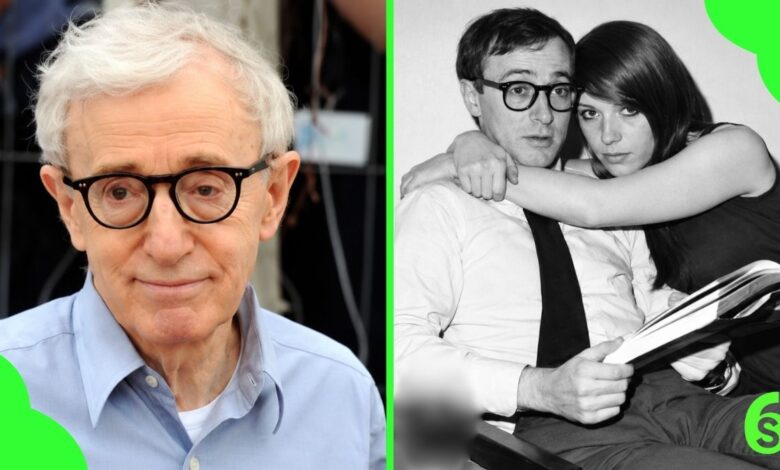
Harlene Rosen is best known as the first wife of American filmmaker and comedian Woody Allen, born Allan Stewart Konigsberg. They married in 1956, long before Allen’s Hollywood success, and divorced in 1962. What followed was an unusually public dispute over how the comedian treated his former wife in his performances. Rosen later pursued legal action over his remarks but largely stayed out of public life. In 2015, she offered a rare personal reflection for a biography of Allen, recalling both the difficulties and affection of their youth. Her story remains relevant because it reveals an often-overlooked side of celebrity history: the experience of someone whose private life becomes material for another person’s fame.
Quick Bio
| Detail | Information |
|---|---|
| Full Name | Harlene Susan Rosen |
| Nationality | American |
| Famous For | Woody Allen’s first wife |
| Education | Studied philosophy at Hunter College |
| Profession | Not publicly confirmed |
| Former Husband | Woody Allen |
| Marriage Date | March 15, 1956 |
| Divorce Year | 1962 |
| Children Together | None publicly documented |
| Known Interest | Piano and jazz music |
| Net Worth | Not publicly disclosed |
| Current Status | Maintains a private life; current circumstances unverified |
Before Woody Allen: The Young Woman Behind the Familiar Name
Much of Harlene Rosen’s early biography has been overshadowed by her husband’s career. Unlike Allen, whose childhood and professional development are well documented, Rosen left little accessible public material about her upbringing.
One established detail is her connection to New York’s intellectual and cultural environment during the 1950s. Film critic Tom Shone, writing in The Guardian in 2015, described Rosen as the daughter of a shoe-shop owner and a philosophy student at Hunter College.
Her academic interests distinguish her from the simplistic image sometimes attached to the former wives of famous entertainers. She pursued her education as Allen was developing his professional identity as a comedy writer.
Music was another part of her early life. Biographical accounts describe Rosen as a pianist and connect her introduction to Allen with a small jazz ensemble. The group reportedly included Allen on soprano saxophone and their acquaintance Elliot Mills on percussion.
Their shared interest in music preceded the fame Allen would later achieve as a filmmaker.
Details about Rosen’s exact birth date, childhood experiences, and wider family life are not consistently established in authoritative public records. Consequently, precise descriptions of those subjects should be treated with caution.
How Harlene Rosen Met Woody Allen
Their relationship began while Allen was still establishing himself in American entertainment.
In the mid-1950s, he was working as a comedy writer, producing jokes and material for established performers. His professional ambitions were considerable, but he had not yet developed the film career that would eventually define his reputation.
Rosen belonged to the world of his early personal and cultural interests.
Accounts of their first meetings connect them with local social activities and jazz. Their musical connection aligns with Allen’s longstanding enthusiasm for jazz, which continued throughout his later career.
They married on March 15, 1956, a date recorded in biographical reference material. Allen was 20 years old. Rosen was a teenager, though published accounts differ on whether she was 16 or 17.
Their marriage began under circumstances considerably different from those usually associated with established Hollywood couples. Neither had decades of adult experience, and Allen’s career was still taking shape.
The relationship became part of his artistic history, though Rosen’s perspective remained largely absent from it for many years.
Marriage, Education and Allen’s Early Career
After marrying, the couple lived in New York while pursuing different priorities.
Allen continued writing comedy and establishing professional relationships. Rosen concentrated on her education.
In her later recollection of the marriage, Rosen said that Allen established his career while she completed four years of college. That statement confirms a substantial period of study but does not, by itself, establish the award of a particular degree.
Their intellectual interests may have played a larger role in Allen’s development than the familiar story of his first marriage suggests.
In The Guardian, Tom Shone connected Allen’s growing interest in literature and philosophy with his marriage to Rosen. The article described how Allen arranged private academic guidance and began studying writers and thinkers including Plato, Aristotle, Dante and James Joyce.
That development has significance beyond their domestic history.
Allen’s later films became closely associated with philosophical arguments, literary references, intellectual insecurity and characters who approach romantic relationships through culture and education.
It would be inaccurate to credit Rosen with creating those artistic interests. However, the historical overlap suggests that their marriage helped shape the environment in which Allen’s intellectual ambitions developed.
Rosen was present during a key transitional period in Allen’s life, before his public identity as a sophisticated New York filmmaker had fully emerged.
Why Harlene Rosen and Woody Allen Divorced
Their relationship deteriorated within several years of the wedding.
Accounts generally place their separation around 1959, while the legal marriage ended in 1962.
The distinction matters. Descriptions that portray the couple as married for six years are referring to the formal marriage, not necessarily six uninterrupted years together.
Public explanations of the breakdown have often relied on Allen’s recollections and his early comedy.
That is a significant limitation.
A marriage involves two people, yet the most widely circulated version of this relationship was shaped largely by the partner who became famous.
In a 1991 Los Angeles Times review of Eric Lax’s biography of Allen, novelist and screenwriter Susan Isaacs criticized that imbalance. She questioned the absence of Rosen’s perspective and observed that the account of their relationship came almost entirely through Allen.
The criticism remains relevant because relatively few substantial first-person accounts from Rosen are publicly available.
There is no sufficient basis to assign the divorce to one particular incident or to reconstruct the couple’s private conversations. What is established is that the relationship ended and its aftermath became publicly contentious.
The Comedy Routines That Turned a Marriage Into a Public Dispute
As Allen became increasingly visible as a performer, his experiences of marriage and divorce supplied material for his comedy.
This practice fit his developing style. His routines often drew on personal insecurity, romantic failure, family relationships, and exaggerated versions of everyday conflict.
Rosen, however, became a recurring target.
Allen used unflattering descriptions of his former wife and incorporated jokes about their relationship into nightclub performances and television appearances.
One widely reported description was “the Dread Mrs. Allen.”
A 1972 TIME profile documented how Allen drew on his first marriage as comic material and acknowledged exaggerating elements of his personal experiences.
From the comedian’s perspective, intimate relationships could be transformed into jokes. From the person being described, those jokes carried another consequence: private history became a public narrative she had little opportunity to influence.
This distinction is central to understanding Rosen’s eventual legal response.
One can recognize Allen’s importance to American comedy while also examining how his performances affected a real person whose identity audiences associated with his jokes.
Harlene Rosen’s Defamation Lawsuit Against Woody Allen
Rosen eventually challenged Allen’s public treatment of her through legal proceedings.
Contemporary and established retrospective reporting confirms that she brought a $1 million defamation claim against Allen and NBC, the television network associated with some of the disputed remarks.
The lawsuit was not simply an extension of an unhappy marriage. It concerned public statements about Rosen after their relationship ended.
A 1995 article in The Independent referred to the lawsuit and a temporary restriction on Allen’s remarks.
The distinction between a claim and a legal finding is essential. The reported $1 million represented the amount sought in the lawsuit, not a verified award paid to Rosen.
Likewise, a temporary restriction does not independently establish that every allegation underlying the claim was proven in court.
Available accounts do not consistently document a final resolution or confirmed settlement terms. Assertions about precise compensation therefore require stronger evidence than is commonly available.
Nevertheless, the dispute illustrates an enduring question about autobiographical entertainment.
When a comedian transforms a private relationship into commercially valuable material, the person represented may experience the performance very differently from the audience.
Rosen’s legal challenge brought that conflict into the public record.
A Rare Public Statement in 2015
For decades after the dispute, Rosen offered little public commentary about her former husband.
That changed with David Evanier’s 2015 book Woody: The Biography.
In a November interview, Evanier said he spent more than a year trying to locate Rosen while researching Allen’s life. He eventually contacted her and received a personal birthday message intended for Allen as he approached his 80th birthday.
The contribution was especially significant because it let readers hear Rosen’s own recollection rather than another interpretation from Allen or his biographers.
Her message acknowledged his creativity and energy, recalled their shared enjoyment of movies and music, and recognized the difficulty of their marriage.
She also reflected upon their development from youth into adulthood.
Her recollection concluded with a striking combination of emotions:
There was sadness, tears, laughter and love.
Those words resist a simplistic interpretation of the marriage as either entirely happy or entirely painful.
Was It a Reconciliation?
Contemporary headlines described Rosen’s message as the end of a feud that had lasted more than half a century.
Her actual contribution supports a more careful interpretation.
She publicly expressed warmth toward Allen and acknowledged positive experiences from their relationship. That was a substantial shift from the public hostility surrounding their earlier legal dispute.
However, the message alone does not demonstrate that the former couple resumed a personal relationship, met privately, or reached a formal agreement about the past.
A reflective public statement is not necessarily evidence of a private reconciliation.
Rosen’s contribution matters because she described her experiences in her own words and allowed conflicting emotions to coexist.
The marriage had been difficult. It had also included affection, shared interests, and personal growth.
Neither observation cancels the other.
What Happened to Harlene Rosen After the Divorce?
Reliable public information becomes considerably more limited after the marriage and legal dispute.
Unlike Allen, who continued building an internationally recognized entertainment career, Rosen did not maintain a comparable public presence.
Major published sources do not comprehensively document her later employment, residence, relationships, and family circumstances.
Some online biographies provide confident claims about her profession, financial position and personal life. Without traceable primary evidence, those descriptions cannot responsibly be presented as verified facts.
The same caution applies to claims about remarriage, present-day activities and precise net worth.
No verified financial data has been publicly disclosed.
Nor does the absence of a widely reported death notice establish her current circumstances.
Her 2015 contribution remains among the clearest documented glimpses of her life after the marriage.
The limited public record should not be confused with evidence that she lived without achievements or meaningful relationships. It simply does not provide enough information to describe those aspects of her life accurately.
Why Her Story Matters Beyond Woody Allen
Harlene Rosen’s place in entertainment history raises questions about authorship, representation, and whose experiences make it into the public record.
For much of the twentieth century, the biographies of celebrated male entertainers often treated former partners as supporting characters. Their experiences appeared mainly when relevant to the central figure’s artistic development.
Rosen’s story demonstrates the limitations of that approach.
Her marriage coincided with an intellectually formative period in Allen’s life. His growing literary and philosophical interests, his developing comedy career, and their shared experiences existed before his international fame.
Yet the account that audiences came to know primarily reflected his perspective.
Eric Lax’s 1991 criticism exposed that problem. Rosen’s 2015 contribution offered something different: a rare account from someone whose life had been publicly discussed for decades.
The contrast between those two moments is revealing.
In the earlier biography, the main concern was her missing voice. In the later account, that voice finally appeared, although only briefly.
Her experiences also illustrate why artistic interpretation and historical evidence should not be mistaken for one another. A comedian’s description of a failed marriage may reveal something about his humor without supplying an accurate portrait of his former spouse.
That distinction matters most when the other person has not independently sought celebrity.
Conclusion
Harlene Rosen’s biography cannot be reduced to her marriage to Woody Allen, even though that relationship accounts for most of the surviving public record about her.
She was a young philosophy student and pianist who married an ambitious comedy writer in 1956. Their marriage ended in 1962, and her later defamation lawsuit challenged how Allen publicly turned their relationship into comedy.
More than five decades after their wedding, Rosen contributed a rare personal reflection to David Evanier’s biography. Her words acknowledged the pain of their marriage without denying its affection or importance during their formative years.
The available evidence does not establish every detail of her later life, and a responsible biography should leave those uncertainties intact.
What survives is a history of youthful partnership, public conflict, and a later recollection more complicated than either hostility or forgiveness alone. Rosen’s story is ultimately valuable because it restores some measure of perspective to a relationship long understood mainly through the words of its more famous participant.
Read this too:Teresa Rice: The Private Life and Lasting Influence of Declan Rice’s Mother
(FAQs)
Who is Harlene Rosen?
Harlene Rosen is an American woman best known as filmmaker and comedian Woody Allen‘s first wife. They married in 1956 and divorced in 1962. She later became involved in a defamation dispute concerning jokes Allen made about their relationship.
How old was Harlene Rosen when she married Woody Allen?
Rosen was a teenager when she married Allen in 1956. Published accounts vary between 16 and 17 years old. Allen was 20 at their March wedding.
Why did Harlene Rosen and Woody Allen get divorced?
Their marriage deteriorated during Allen’s early professional career. Although reports discuss their youth and marital difficulties, the precise private reasons for the separation cannot be established conclusively from the available evidence.
Did Harlene Rosen sue Woody Allen?
Yes. Rosen brought a defamation claim against Allen and NBC concerning his public remarks about her. Contemporary reporting and established biographical reviews describe the claim as seeking $1 million.
Did Harlene Rosen and Woody Allen have children?
No children are publicly documented from their marriage. Information about Rosen’s possible family relationships later in life remains private.
Did Harlene Rosen forgive Woody Allen?
Her 2015 birthday message expressed affection and acknowledged the positive aspects of their past. Although some media accounts characterized the message as reconciliation, it does not conclusively establish the nature of their private relationship afterward.
Where is Harlene Rosen now?
Her current residence and personal circumstances have not been reliably established in recent authoritative public reporting. She has maintained a largely private public profile.
What is Harlene Rosen’s net worth?
No trustworthy, publicly disclosed financial information establishes Rosen’s net worth. Figures circulated without documentary evidence are not reliable.