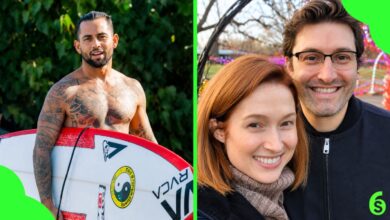

Benjy Russell is a former British karting champion and the older brother of Mercedes Formula 1 driver George Russell. Long before George became an established name in international motorsport, Benjy had already achieved considerable success, winning British and international karting titles in 2007. His influence is visible in George’s early introduction to racing and in the number 63 displayed on his Formula 1 car. Although Benjy never competed in Formula 1, his achievements deserve recognition on their own, independent of his brother’s fame. Unlike George, he has maintained a relatively private public profile, with his competitive results providing the clearest record of his sporting career.
This article examines Benjy Russell’s verified karting achievements, his influence on George Russell, the history of racing number 63, and what is publicly known about his life beyond competition.
Quick Bio
| Detail | Verified information |
|---|---|
| Full name | Benjy Russell |
| Nationality | British |
| Known for | Competitive karting and being George Russell’s older brother |
| Father | Steve Russell |
| Mother | Alison Russell |
| Siblings | George Russell and Cara Russell |
| Motorsport discipline | Karting |
| Notable national achievement | 2007 Super One Senior Rotax champion |
| Notable international achievement | 2007 Rotax Max Challenge Grand Finals Senior MAX winner |
| Historic racing number | 63 |
| Children | Three, according to George Russell in 2025 |
| Current occupation | Not reliably established in public sources |
| Net worth | Not publicly verified |
Who Is Benjy Russell?
Benjy Russell is a former competitive kart racer from the United Kingdom. He is the eldest son of Steve and Alison Russell and the older brother of George Russell, who was born in King’s Lynn, Norfolk, on February 15, 1998. The family also includes an older sister, Cara Russell.
The brothers grew up within a family closely involved in motorsport. Benjy began racing before George, establishing a connection with karting that would eventually influence the younger sibling’s sporting ambitions.
George has described Benjy as approximately 11 or 12 years older than himself in different interviews. In a first-person article published by The Players’ Tribune in October 2025, George gave the age difference as 12 years.
Public interest in Benjy largely arises from his relationship with George. However, describing him simply as a Formula 1 driver’s brother overlooks a competitive record that includes victories at national and international championship level.
His racing accomplishments are documented in historical motorsport records, particularly those associated with the British Super One Series and the Rotax Max Challenge Grand Finals.
Benjy Russell’s Early Life and Introduction to Karting
Benjy grew up in a family whose commitment to motorsport eventually became central to his childhood.
His father, Steve Russell, worked in the agricultural business sector, while his mother, Alison, contributed to the family’s involvement in racing. George has described a childhood shaped by frequent trips to karting circuits, competition weekends, and the practical demands of building a racing career.
The finer details of Benjy’s early education and personal upbringing have not been extensively documented in reliable public interviews.
What is clearer is that he began karting relatively late by professional driver-development standards.
In a discussion on The High Performance Podcast, George explained that his brother started karting at approximately 11 or 12 years old, as a young driver hoping eventually to progress through the professional motorsport ladder, which represented a comparatively late introduction.
Many successful racing drivers begin their competitive education considerably earlier, developing experience through several junior categories before reaching their teenage years.
Despite that disadvantage, Benjy became a successful competitor.
His progress would eventually demonstrate both his ability and the difficulty of translating karting achievements into a professional single-seater racing career.
Benjy Russell’s Karting Career and Championship Success
Benjy’s results provide substantial evidence of his racing ability.
Historical championship records list him as the 2001 Super One Junior TKM Intermediate champion, showing he achieved national-level success well before his best-documented victories.
His subsequent results in Rotax competition illustrate a developing record of consistency.
During 2006, Driver Database records show that Benjy finished fourth in the Super One Rotax Max standings. He also finished runner-up in the Senior Rotax category at the Kartmasters British Grand Prix.
Those results positioned him among the leading competitors in his category.
The following season brought his greatest documented achievements.
Winning the 2007 Super One National Championship
In 2007, Benjy won the Super One Series championship in the Senior Rotax category.
The Super One Series was an important fixture of British competitive karting, bringing together drivers competing at a high national level.
Historical standings identify Benjy as the championship winner, ahead of Chris Lock and Dan Holland.
Winning the title required more than a single successful race. Championship competition rewards performance across a season, making the result an important indicator of consistency.
For Benjy, it was a significant national achievement.
Yet his biggest international result came in the same year.
Becoming the 2007 Rotax Max Challenge Grand Finals Champion
Benjy’s most notable victory came at the 2007 Rotax Max Challenge Grand Finals, staged at Al Ain Raceway in the United Arab Emirates.
The event brought together more than 200 competitors representing over 50 countries, according to the official Rotax historical archive.
Benjy competed in the 125 Senior MAX category.
Official championship results record the leading finishers as:
- 1st: Benjy Russell — United Kingdom
- 2nd: Ricardo Romkema — Netherlands
- 3rd: Mike Simpson — United Kingdom
Gulf News reported a closely contested Senior MAX final in which Benjy moved into the lead late in the race to defeat defending champion Ricardo Romkema.
The performance was especially significant because it followed a less convincing showing in the pre-final stages.
The final was contested over 21 laps, and Benjy ultimately secured the category title.
This victory established him as a Rotax Max Challenge Grand Finals champion at international level.
The distinction matters: the Rotax Grand Finals and the FIA Karting World Championship are separate competitions. Benjy’s verified achievement was victory in the Senior MAX class at the Rotax Grand Finals, rather than an independently documented FIA Karting World Championship title.
Together with his British championship success, the international victory made 2007 the defining season of his documented karting career.
How Benjy Russell Inspired George Russell
Benjy’s influence on his younger brother began well before George was old enough to compete professionally.
George’s official Mercedes biography confirms that he started karting at seven after spending much of his childhood around racing circuits because of Benjy’s participation.
For George, motorsport was therefore not an unfamiliar activity discovered through television alone. He had direct experience of the racing environment through a family member competing.
An interview with KL Magazine offers a particularly clear explanation of the connection.
George acknowledged that his older brother’s involvement made karting a natural sporting choice for him, adding that he enjoyed racing immediately.
The importance of that early exposure becomes clearer when considering the brothers’ different career paths.
Benjy had already experienced the demands of karting competition before George began developing his own abilities. George encountered the sport through someone close to him rather than approaching it entirely independently.
That does not establish that Benjy formally coached his brother or managed his career. Reliable public documentation does not provide enough evidence to make those claims.
George himself explicitly acknowledges his influence.
George Russell Called Benjy His Childhood Hero
In a 2024 interview with The Times, George reflected on the sporting figures he admired as a child.
Rather than naming a Formula 1 world champion as his greatest early influence, he identified his brother.
“My hero, honestly, was my brother.”
— George Russell, speaking to The Times in 2024.
George explained that watching Benjy win karting races and championships made those achievements feel attainable.
The distinction is revealing.
Established Formula 1 drivers represented success at the highest level, but Benjy provided a more immediate example: someone within George’s family who was already winning races.
It was inspiration grounded in direct observation rather than distant celebrity.
Why George Russell Races With Number 63
One of the brothers’ most enduring connections is the number 63.
George has used 63 throughout his Formula 1 career, but the number predates his arrival in the championship.
Benjy wore the number during his early karting years.
Speaking in an explanation published by Formula 1, George confirmed:
“Sixty-three was my brother’s number.”
He explained that Benjy had started racing at a local indoor karting center where he regularly used 63.
The number subsequently became associated with the Russell family.
An interview in KL Magazine further identified its origins as the number displayed on the rental kart Benjy used before owning a kart himself.
George continued using the number as his own racing career developed, eventually carrying it into Formula 1.
The connection gives 63 a meaning beyond its function as a driver identifier.
Unlike numbers chosen for sporting idols or personal preferences, George’s number comes from his family’s racing history.
Benjy’s early karting experience therefore remains directly represented in the younger Russell’s professional career.
Why Didn’t Benjy Russell Become a Formula 1 Driver?
Benjy’s championship victories naturally raise a question: why did a successful British and international karter not progress into Formula 1?
George has addressed this issue publicly.
During his appearance on The High Performance Podcast, he explained that Benjy had entered karting at around 11 or 12 years old, several years later than was ideal for following the traditional professional racing pathway.
George described his brother as exceptionally talented but suggested that the late beginning limited his opportunity to progress into single-seater racing.
The explanation reflects a broader reality of professional motorsport.
Success in karting does not automatically produce an opportunity in Formula 4, Formula 3 or Formula 2. Each progression requires resources, preparation, suitable opportunities and the ability to compete against drivers who may have accumulated years of additional experience.
Early development can be particularly influential in a sport where drivers often enter organized competition during childhood.
Benjy’s achievements show that he could compete successfully against strong karting opposition. His failure to reach Formula 1 should not be interpreted as proof that he lacked racing ability.
At the same time, it would be inaccurate to claim that particular teams rejected him, that financial problems ended his career, or that a specific personal event prevented his progression. Those explanations are not supported by sufficiently reliable public evidence.
The clearest documented explanation is the timing of his entry into karting and the limited opportunity to progress to single-seaters, as George described.
The Russell Family’s Commitment to Motorsport
Benjy’s career significance becomes clearer within the wider Russell family story.
George has spoken extensively about the personal and financial commitment required to build his racing career.
In his October 2025 first-person essay for The Players’ Tribune, he described his father’s substantial investment and the demands of traveling to competitions throughout Britain.
He also acknowledged his mother and siblings’ contributions.
The family’s involvement extended beyond attending occasional race meetings. Motorsport became a significant part of their weekly routine, particularly as George progressed through junior competition.
Benjy’s previous experience provides important context for that family history.
By the time George was developing into a successful young karter, his older brother had already competed at a high level and achieved major results.
The family’s racing experience therefore began before George emerged as a Formula 1 prospect.
It began earlier, with Benjy as a central figure.
Benjy Russell’s Personal Life and Family Today
Unlike his younger brother, Benjy has not maintained an extensively documented public profile.
Established media coverage offers limited information about his current occupation, business activities, and daily life.
However, one significant family detail has been confirmed publicly.
In a 2025 interview with The Independent, George revealed that Benjy has three children.
George mentioned his brother while discussing what personal achievement means and the importance of happiness beyond professional success.
He described Benjy as exceptionally happy with his family life and presented that happiness as an example of success.
This provides a fuller picture of the brothers’ relationship.
Benjy’s racing career did not result in a Formula 1 seat, but George has not publicly reduced his brother’s life to an unrealized sporting ambition.
Instead, he has described him as both an important childhood influence and someone whose current family life represents fulfillment.
Other personal details, including Benjy’s current employment and financial circumstances, have not been established through sufficiently authoritative public reporting.
Verified financial data has not been publicly disclosed, and there is no sound basis for assigning him a particular net worth.
Benjy Russell and George Russell: Two Different Racing Careers
The brothers’ professional experiences demonstrate two different outcomes within the same motorsport family.
Benjy achieved British and international success in karting but did not establish a documented Formula 1 career.
George started competing at a younger age and progressed through the junior motorsport system.
His subsequent achievements included winning the GP3 Series championship in 2017 and the Formula 2 title in 2018.
He entered Formula 1 with Williams in 2019 before joining Mercedes as a full-time race driver in 2022.
The difference between their careers illustrates why karting ability alone cannot predict a driver’s eventual position in professional motorsport.
George benefited from starting younger, developing through successive junior categories, and securing the support needed to keep progressing.
Benjy’s record shows that an accomplished competitor can achieve significant championship success without completing that same journey.
Neither outcome erases the other’s sporting achievements.
For George, his brother’s results provided a practical example of competitive success. For Benjy, the official record preserves his own standing as a national and international karting champion.
Conclusion
Benjy Russell’s significance in motorsport goes beyond his family connection to George Russell.
His 2007 British Super One championship and Rotax Max Challenge Grand Finals victory establish him as an accomplished karting competitor in his own right.
His influence on George is equally well documented, from the younger brother’s introduction to karting to the continued use of racing number 63 in Formula 1.
Although the brothers followed different professional paths, George’s public comments show he still recognizes Benjy as an important figure in his life.
Benjy’s story offers a useful distinction between sporting achievement and Formula 1 visibility. He did not need to reach Formula 1 for his racing record to matter, and his contribution to the Russell family’s motorsport history remains both measurable and enduring.
Read this too:Sarah Frater: The Untold Professional Story of James May’s Long-Time Partner
(FAQs)
1. Who is Benjy Russell?
Benjy Russell is a former British karting champion and the older brother of Formula 1 driver George Russell. He is best known for his successful karting career and for influencing George’s introduction to motorsport.
2. How much older is Benjy Russell than George Russell?
Benjy Russell is approximately 11–12 years older than George Russell. George has described their age difference differently in public interviews, so an exact figure should not be treated as confirmed.
3. Was Benjy Russell a karting world champion?
Yes. Benjy won the 2007 Rotax Max Challenge Grand Finals in the Senior MAX category. He also secured the 2007 British Super One Senior Rotax championship.
4. Why does George Russell use number 63?
George Russell uses racing number 63 because it originally belonged to Benjy during his karting years. George adopted the number and carried it into Formula 1 to connect with his family’s racing history.
5. Why didn’t Benjy Russell become a Formula 1 driver?
According to George Russell, Benjy started karting relatively late, at approximately 11 or 12 years old. Despite his considerable talent, that late start limited his chances of progressing through the professional single-seater racing system.
6. What does Benjy Russell do now?
Benjy Russell maintains a largely private life. His current professional occupation has not been reliably established through authoritative public sources. George Russell confirmed in a 2025 interview that Benjy has three children.
7. Who are Benjy Russell’s parents?
Benjy Russell’s parents are Steve Russell and Alison Russell. The family played an important role in supporting the motorsport careers of both Benjy and George Russell.
8. What is Benjy Russell’s net worth?
Benjy Russell’s net worth has not been publicly verified. Reliable financial records confirming his personal wealth are unavailable, so treat estimates published without supporting evidence with caution.