

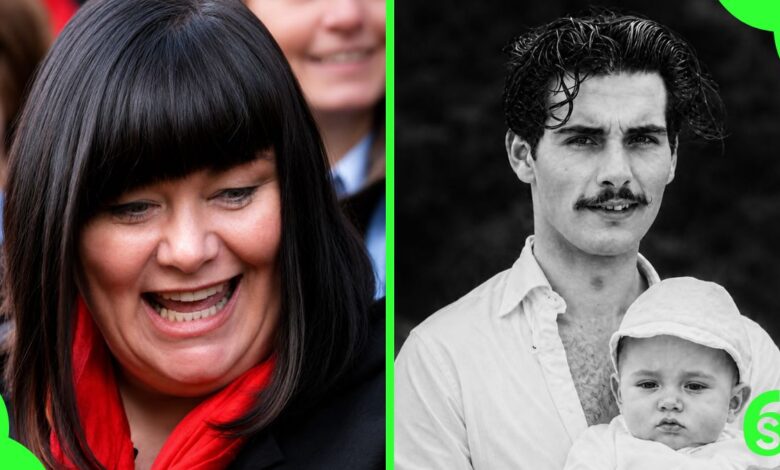
Denys Vernon French (1932–1977) was a Royal Air Force corporal technician, the husband of Felicity “Roma” French and the father of Gary and Dawn French, one of Britain’s most recognizable comedians, actors and writers. He was never a public figure in his own right. His significance comes from the unusually candid way his daughter has described both his loving presence and his death by suicide when she was 19. That story remains relevant because Dawn has continued to examine its consequences throughout her memoir, stage work, and fiction, including her 2026 novel Enough, which was partly inspired by his loss. The available evidence presents Denys not as a simple tragic footnote, but as a technically skilled serviceman, an affirming parent and a person living with serious psychological distress that his children did not fully understand at the time.
Quick Bio
| Field | Details |
|---|
| Full Name | Denys Vernon French |
| Known For | Father of British comedian and actress Dawn French |
| Year of Birth | 1932 |
| Year of Death | 1977 |
| Age at Death | 45 |
| Nationality | British |
| Profession | Royal Air Force corporal technician and engineer |
| Military Service | Royal Air Force |
| Wife | Felicity “Roma” French |
| Children | Dawn French and Gary French |
| Daughter’s Profession | Actress, comedian, writer and television personality |
| Notable Influence | Helped build Dawn French’s confidence and sense of self-worth |
| Cause of Death | Suicide |
| Public Profile | Private individual; known mainly through Dawn French’s recollections |
| Net Worth | No verified financial information has been publicly disclosed |
Who Was Denys Vernon French?
Publicly accessible information about Denys is limited, and most reliable accounts come from Dawn’s interviews and autobiographical work. He was born in approximately 1932 and served in the Royal Air Force, where reputable profiles have described him as a corporal technician or an RAF engineer. These descriptions are compatible rather than contradictory: both identify him as a technically trained member of the service, not an aircrew celebrity or a senior commander.e: Felicity French, widely known as Roma
- Children: Gary French and Dawn Roma French
- Public significance: Father of Dawn French and a central influence on her understanding of confidence, grief and mortality
No authoritative public source provides a comprehensive account of his birthplace, formal education, complete RAF service record, decorations or exact progression through the service. Claims that go beyond the established record should therefore be treated cautiously.
A Family Life Shaped by the Royal Air Force
Military service determined much of the French family’s early rhythm. Dawn was born in Holyhead, Wales, in October 1957 while her father was serving in the RAF. His work required the family to relocate regularly, giving Dawn and her older brother, Gary, an upbringing defined by bases, temporary homes and repeated changes of school. Later recollections describe moves around Britain, as well as periods in Germany and Cyprus. Dawn has said that she attended six or seven junior schools as the family moved. Later recollections describe moves around Britain, as well as periods in Germany and Cyprus.nse. Dawn has repeatedly characterized much of her childhood as secure and affectionate. The frequent relocations were part of service life rather than evidence of family breakdown. Dawn has repeatedly characterized much of her childhood as secure and affectionate. School fees were an opportunity their parents reportedly regarded as a substantial privilege.
That background later created an unexpected connection between Dawn French and Jennifer Saunders. When they met while training at the Central School of Speech and Drama, both recognised elements of an RAF childhood in the other: repeated moves, service communities and parentWhen they met while training at the Central School of Speech and Drama, both recognized elements of an RAF childhood in the other: repeated moves, service communities and parents whose professional lives shaped the geography of family life.A friendship developed.
Denys French as a Father
The most consistent element in Dawn’s descriptions of Denys is the confidence he gave her.
She has recalled that he deliberately told her she was beautiful, valuable, and deserving of respect. These assurances mattered because Dawn, particularly during adolescence, was conscious of her appearance and vulnerable to social judgment. Rather than reinforcing those insecurities, these assurances mattered because Dawn, particularly during adolescence, was conscious of her appearance and vulnerable to social judgment.
This is an important distinction in understanding his influence. Denys did not simply offer generic parental praise. According to Dawn, he established an internal standard by which she could measure how other people treated her. The self-possession later associated with her public image—particularly her refusal to apologize for her body or diminish herself to satisfy conventional expectations—has often been linked by Dawn herself to that early validation.
In 2018, marking the RAF’s centenary, Dawn publicly posted a photograph of her father and remembered him in direct, uncomplicated terms:
“My dad. Denys French. The best. Hero.”
That tribute matters because it resists the assumption that his death erased everything that came before it. Dawn’s public memory of Denys contains anger, confusion and grief, but it also preserves affection and gratitude.
The Private Depression His Children Did Not Understand
Behind the family’s outwardly happy life, Denys experienced serious depression. Dawn has said that she and Gary did not understand the nature or extent of his condition while they were young. What they sometimes saw were periods described as migraines: curtains would be closed, the house would become quiet, and their father would withdraw to bed. Only later did Dawn r What they sometimes saw were periods described as migraines: curtains would be closed, the house would become quiet, and their father would withdraw to bed. also been careful about the limits of her knowledge. In a major 2026 interview, Dawn said she believed her father had lived with depression and suicidal thoughts for much of his life. She referred to an earlier attempt from when he was a young RAF trainee at Halton, explicitly acknowledging that she did not have all the facts. That qualification is essential: this is her informed family recollection, not a complete clinical or military record.
Dawn has also said that Denys underwent a form of electroconvulsive treatment but did not receive the kind of sustained talking therapy she later believed he needed. It would be irresponsible to diagnose him retrospectively or judge his treatment without medical records. His daughter’s testimony nevertheless offers a picture of a man facing severe psychological illness during an era when treatment options, workplace support and public understanding were far more restricted than they are today.
The transition out of the RAF may also have been difficult. By the final period of his life, Denys and Roma were running a newsagent’s business. Dawn has wondered whether the move from a highly structured military environment into civilian life left him without adequate support, but there is no evidence that one occupational change alone explains his death.
His Death in 1977
Denys French died by suicide in September 1977, aged 45. Dawn was 19.
She had recently returned from a year in New York after receiving a debating scholarship and was preparing to begin her studies at the Central School of Speech and Drama. The timing placed her at a threshold between adolescence and independent adulthood, and within weeks of losing her father she was expected to leave home and begin professional training in London.
Roma reportedly insisted that her daughter take up the place rather than abandon the opportunity. Dawn later described going to drama school and initially behaving as though she were happy, until gradually elements of that performance became real. This should not be turned inDawn later described going to drama school and initially behaving as though she were happy, until gradually elements of that performance became real. From bereavement to fame. What can be said is that she entered the environment where she met Jennifer Saunders while carrying an exceptionally recent and largely private loss.
The death changed the family’s structure. Dawn has described the household of two parents and two children as a square that suddenly became a triangle. Roma, Gary, and Dawn continued speaking openly about Denys rather than excluding him from family conversations. After Roma’s death in 2012, Dawn and Gary reportedly maintained that dialogue and preserved a shared account of what happened.
Anger, Understanding and the Long Work of Grief
Dawn has never presented her response as emotionally tidy.
She has spoken about passing through bewilderment, sorrow and anger, including a period in which she experienced her father’s decision as an abandonment of the family. Over time, she tried to reconcile that anger with the father she knew: a loving man whose behaviour, in her understanding, arose from illness rather than a lack of love for his Over time, she tried to reconcile that anger with the father she knew: a loving man whose behavior, in her understanding, arose from illness rather than a lack of love for his wife or children. In his life. Her position has evolved toward compassion without pretending that compassion can undo the damage experienced by survivors.
The loss also shaped her awareness of mortality. Dawn has said that suicide occupies a place in her thinking that it might not for someone who had not encountered it so closely. In 2026, at 68, she revisited the subject in Enough, a novel that addresses aging, family relationships, autonomy, and thoughts of death. Penguin described the book as partly inspired by the loss of Denys when she was 19, while Dawn emphasized that the novel should not be read as an announcement of her own intentions.
Denys French in Dawn’s Memoir and Creative Work
Dawn’s 2008 memoir Dear Fatty is structured as a series of letters to people who shaped her life. Her father occupies a central emotional position in the book, with multiple passages addressed to or concerned with him. Contemporary coverage recognized that beneath the comedian’s familiar public persona was an extended attempt to communicate with someone whose death had left questions that could never be resolved directly.
Her autobiographical stage show 30 Million Minutes later brought aspects of her childhood and family history into live performance. Again, Denys was not used merely as a dramatic device. He appeared within a broader investigation of how identity is assembled from affection, humiliation, ambition, grief and memory.
By the time of Enough, Dawn was approaching the subject from a different stage of life. The 19-year-old who had experienced the immediate shock had become an older writer considering what suicide means not only to the person contemplating death but to the people required to live after it. That shift—from testimony about loss to fiction examining mortality—shows how Denys’s absence remained creatively and psychologically present almost five decades later.
What Remains Unknown About Denys Vernon French
A responsible biography must acknowledge the gaps.
There is no reliable, detailed public record of Denys’s childhood, parents, school years, marriage date or complete RAF career. His precise duties at each posting have not been comprehensively documented in reputable public sources. Nor is there verified information about his salary, property, personal finances or net worth.
Verified financial data has not been publicly disclosed.
Descriptions of his mental health are based mainly on Dawn’s later understanding of family events. Her account is valuable first-person testimony, but it is not a substitute for medical documentation. Claims assigning Denys a specific psychiatric diagnosis, beyond the depression described by his daughter, would go further than the evidence allows.
He should also not be treated as though he were a celebrity whose every personal detail is automatically public property. The surviving record exists primarily because Dawn chose to discuss how her father affected her, not because Denys pursued public attention during his lifetime.
A Legacy Larger Than a Tragic Ending
Denys Vernon French’s life is usually introduced through two facts: he was Dawn French’s father, and he died by suicide. Both are true, but neither is sufficient on its own.
He was a working RAF technician whose career required repeated moves for his family. He and Roma raised two children within the unusual social world of military service. He appears to have strengthened his daughter’s sense of worth. He was also a man living with severe distress that remained partly concealed from those closest to him.
The mature position Dawn has reached does not choose between those realities. She remembers a good father and acknowledges a devastating death. She can be grateful for the confidence he gave her while remaining honest about the lifelong consequences of losing him.
That complexity is Denys French’s real place in the public record. His legacy is not found in fame, wealth or professional celebrity. It survives in the emotional independence of his daughter, in the conversations his family continued after his death, and in Dawn French’s determination to approach grief without sentimentality, silence or shame.
Read this too:Meredith Schwarz: The Private Business Executive Behind Pete Hegseth’s First Marriage
(FAQs)
Who was Denys Vernon French?
Denys Vernon French was the father of British comedian, actor and writer Dawn French. He served in the Royal Air Force as a corporal technician and lived from 1932 until 1977.
What did Denys Vernon French do for a living?
He served in the Royal Air Force, reportedly in a technical or engineering role. Detailed public records of his complete RAF career have not been widely published.
Who was Denys Vernon French married to?
Denys was married to Felicity Roma French, commonly known as Roma. The couple had two children, Dawn French and her older brother, Gary French.
How did Denys Vernon French die?
Denys French died by suicide in September 1977 at the age of 45. Dawn French was 19 years old at the time. His death had a lasting emotional effect on the family.
How did Denys French’s death affect Dawn French?
Dawn has said that losing her father changed her understanding of grief, love and the fragility of life. She has also spoken about experiencing anger, sadness and confusion before gradually developing a more compassionate understanding of his mental-health struggles.
Did Denys Vernon French suffer from depression?
According to Dawn French’s public recollections, her father experienced serious depression and suicidal thoughts. However, complete medical records and a detailed clinical diagnosis have not been made public.
What influence did Denys French have on Dawn French?
Dawn has credited her father with giving her a strong sense of self-worth. She has recalled that he regularly told her she was beautiful and valuable, helping her develop the confidence that later became an important part of her public personality.
Has Dawn French written about her father?
Yes. Dawn has discussed Denys in interviews, autobiographical performances and her memoir Dear Fatty. His death also influenced themes of grief, mortality and family relationships in some of her later writing.
Was Denys Vernon French famous?
No. Denys was not a celebrity or public figure during his lifetime. Public interest in him comes primarily from his relationship with Dawn French and from her candid reflections about his influence on her life.
Are Denys Vernon French’s net worth and financial details public?
No reliable information about his income, assets, or net worth has been publicly disclosed. Any figures published without documentary evidence should be treated as speculation.