
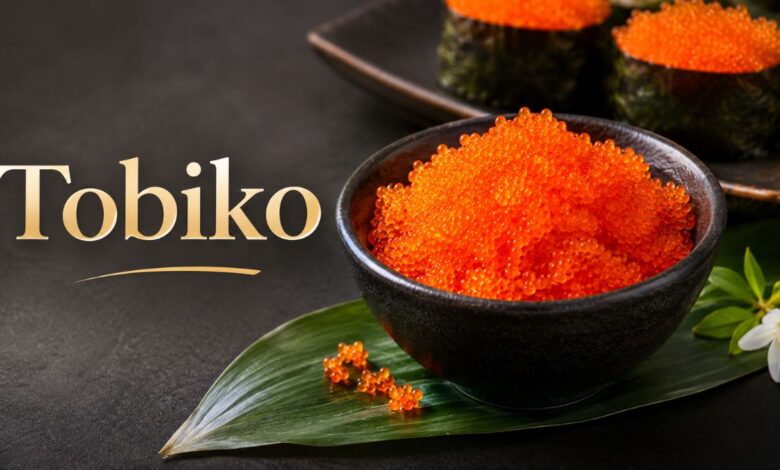
Tobiko is the Japanese name for flying fish roe, tiny eggs known for their vivid orange color, mild briny flavor, and distinctive popping texture. Best known as a topping for sushi rolls, tobiko is also used in gunkan-maki, seafood salads and contemporary Japanese-inspired dishes. Although it is often compared with caviar, its origins, texture, and culinary purpose differ.
Behind its colorful appearance lies a specialized seafood industry that connects Japanese food culture with fishing communities and processing facilities worldwide, particularly in Indonesia.
Understanding tobiko requires looking beyond its appearance. Its value comes from the combination of texture, seasoning, and visual contrast it contributes to food.
What Is Tobiko?
Tobiko consists of the eggs of flying fish, marine fish belonging to the family Exocoetidae. The word comes from Japanese terminology for flying fish eggs.
Individual eggs are generally about 1–2 millimeters in diameter, though their exact size varies by species and product. They are considerably smaller than salmon roe, known in Japanese cuisine as ikura.
The eggs have a resilient outer membrane that produces a characteristic popping sensation when bitten. This quality helps distinguish tobiko from softer varieties of fish roe.
Commercial tobiko is typically salted, seasoned, and sometimes colored before distribution to restaurants and retailers. Its distinctive character therefore reflects both the natural properties of flying fish eggs and the methods used to prepare them.
The Japanese Origins of Tobiko
Tobiko occupies an interesting position in Japanese culinary history. Unlike some traditional seafood delicacies associated with centuries-old prestige, its widespread recognition is closely connected with processed seafood production and the development of accessible sushi dining.
Japanese sushi establishments use fish roe in several forms. Larger salmon eggs, smaller capelin eggs, and flying fish roe each offer different textures and flavors.
Flying fish roe became particularly useful because it could introduce crunch and color without overpowering the surrounding ingredients.
It appeared in dishes such as chirashi sushi, where seafood and other ingredients are arranged over seasoned rice, and gunkan-maki, where a strip of seaweed holds loose toppings above a mound of rice.
As sushi developed a larger international audience, tobiko also became familiar as an exterior coating or garnish for rolled sushi.
Japan has an important naming distinction. Tobikko became associated with a registered seafood product trademark belonging to Kanetoku, a Japanese seafood company. The term has nevertheless become widely recognized in everyday discussions of flying fish roe.
How Tobiko Is Produced
The journey from flying fish eggs to a prepared sushi ingredient involves harvesting, preservation, processing, and distribution.
Flying fish inhabit tropical and subtropical marine environments. Their roe is collected in fisheries operating in different regions, including parts of Southeast Asia.
After harvesting, the eggs are separated and processed to preserve their quality. The precise techniques depend on the producer and intended final product.
Salt is central to many traditional preparations, while commercial products may contain sugar, soy sauce, vinegar, and other seasonings.
Producers can add coloring and flavoring during processing to create different varieties.
Temperature control is particularly important because fish roe is highly perishable. Products may be frozen for transport and subsequently thawed under controlled conditions before being served.
Not every product sold as tobiko uses the same processing method. Ingredient labels and supplier specifications provide a more reliable picture of an individual product than appearance alone.
Why Tobiko Has Such a Distinctive Taste
Tobiko’s appeal is partly unusual because its strongest characteristic is not an intense flavor.
It is the texture.
The eggs produce a delicate crunch followed by a subtle release of salty, mildly sweet liquid. Depending on the seasoning, the flavor may also carry gentle marine or savory notes.
In sushi, that texture contrasts with the softness of rice, the tenderness of seafood, and the smoothness of ingredients such as avocado.
The result is a small but noticeable change in the eating experience.
This explains why chefs often use tobiko sparingly. A relatively modest quantity can influence the texture and appearance of an entire sushi roll.
Seasoned varieties may taste substantially different from unflavoured roe, making the product’s preparation just as important as the underlying ingredient.
The Different Colors of Tobiko
<text></text>
One of tobiko’s most recognizable characteristics is its range of colors.
Fresh flying fish eggs may have a pale golden appearance, while commercially prepared varieties are frequently brilliant orange. Additional ingredients can create other striking shades.
Common varieties include:
- Orange tobiko: The familiar sushi topping, generally associated with a mild, salty flavor.
- Black tobiko: Often coloured or flavored using squid ink.
- Green tobiko: Frequently prepared with wasabi or other green coloring and seasonings.
- Yellow tobiko: Sometimes associated with citrus flavors, including yuzu.
- Red tobiko: May contain additional colorings or seasonings, depending on the manufacturer.
Color alone cannot determine which ingredients were used. Some products rely on naturally derived flavoring ingredients, while others contain approved food color additives.
Consumers should consult the packaging rather than assume every colorful variety is made the same way.
Tobiko vs Masago vs Ikura: Understanding the Difference
Tobiko is sometimes confused with masago because both appear as small, colorful eggs on sushi.
However, the terms describe different seafood products.
FeatureTobikoMasagoIkura
Source Flying fish Capelin Salmon
Egg size Small Very small Large
Texture Firm and crunchy Comparatively soft Juicy, bursting
Flavor Mild, briny Mild, often salty Richer marine flavor
Typical use Sushi topping and garnish Sushi rolls and sauces Nigiri and rice bowls
The difference has commercial significance.
Masago is often less expensive than tobiko and may serve as an alternative in restaurant kitchens. Coloring can make the two products look similar, especially when mixed into sauces or used as decorative toppings.
For diners seeking genuine flying fish roe, the ingredient description matters more than the color.
Ikura, meanwhile, provides a substantially different eating experience because its eggs are larger and contain more liquid.
Tobiko’s International Seafood Supply Chain
Although tobiko is strongly associated with Japanese cuisine, its commercial supply chain extends well beyond Japan.
Indonesia is an important participant in the international flying fish roe industry. Fishing communities in areas including South Sulawesi and West Papua have long been involved in collecting, processing, and selling flying fish eggs.
Seafood businesses in Indonesia supply roe to overseas markets, including Japan.
This international relationship reveals an often-overlooked aspect of sushi culture: a product presented as a Japanese specialty may depend on marine resources and labor from several countries.
A 2024 study published in Ocean & Coastal Management examined the flying fish roe fishery in West Papua, focusing on sustainable resource management and the fair distribution of economic benefits.
The researchers identified the importance of recognizing local fishing communities, strengthening their participation in decisions, and improving how benefits are distributed across the supply chain.
Separate research on Indonesian fisheries has also considered the economic incentives associated with intensive roe harvesting.
These findings do not establish that every tobiko fishery is unsustainable. They show that the seafood’s environmental and social consequences depend on harvesting practices, local governance, and supply-chain management.
For restaurants and suppliers, responsible sourcing involves more than confirming that a product is authentic.
Nutritional Value and Dietary Considerations
Fish roe contains protein and several nutrients, including vitamin B12 and certain unsaturated fatty acids.
Tobiko can therefore contribute nutritional value to a meal, although it is generally consumed in small quantities.
Its nutritional composition varies according to how it is processed.
Commercial preparations may contain considerable amounts of sodium because salt is used for flavoring and preservation. Additional sugar and seasoning ingredients can also influence the final nutritional profile.
For this reason, tobiko should not be marketed as a concentrated health treatment or an exceptional source of nutrients without reference to serving size and verified nutritional information.
People with fish allergies should avoid it. Some preparations may also contain wheat, soy, or other allergens through added seasonings.
Those with specific dietary requirements should review the full ingredient list, especially when a product includes sauces or flavorings.
Food safety is another important consideration. Uncooked seafood products require appropriate handling and refrigeration, and people at greater risk of foodborne illness should avoid raw or undercooked seafood.
How Chefs Use Tobiko in Modern Cuisine
While tobiko remains closely associated with sushi, its culinary uses have expanded.
In Japanese-inspired cooking, chefs may combine it with seafood, rice, mayonnaise-based sauces, or citrus dressings.
Its texture can improve dishes that might otherwise feel uniformly soft.
Examples include sushi rolls coated in roe, seafood tartare, chilled noodle preparations, rice bowls and decorative toppings for shellfish dishes.
However, tobiko is not simply a colorful decoration.
Its salty profile should complement the dish. Heavy seasoning or excessive quantities can unbalance the overall flavor.
The best applications treat it as a supporting ingredient, allowing its crunch and appearance to enhance rather than dominate the main components.
Why Authenticity Matters
The growing popularity of colorful sushi has also created opportunities for confusion between different varieties of processed roe.
Products marketed with similar appearances may contain different fish species.
A scientific study published in Foods in 2021 identified substitution involving flying fish roe and capelin roe among the seafood products examined.
This makes accurate labeling particularly relevant.
For consumers, authenticity is not necessarily a question of whether a cheaper product is inferior. Masago has its own legitimate place in Japanese cuisine.
The concern arises when one species is presented as another.
Clear ingredient information helps restaurants communicate what they are serving and enables customers to make informed choices.
Conclusion
Tobiko demonstrates how a small ingredient can carry substantial culinary and commercial significance.
Its popularity depends on a combination of natural texture, careful processing, creative presentation, and global seafood distribution.
The familiar orange garnish has become part of modern sushi culture, yet its origins involve fishing communities, production companies and international trade networks that remain largely invisible to restaurant diners.
Understanding those connections gives a fuller picture of what makes tobiko distinctive.
Its contribution to Japanese cuisine is not simply visual. It offers a contrast of texture and flavor that few substitutes reproduce in precisely the same way.
(FAQs)
1. What is tobiko made from?
Tobiko is made from flying fish eggs. The roe is generally salted and may be seasoned or coloured before being sold for culinary use.
2. Is tobiko the same as caviar?
Not in the strict traditional sense. Genuine caviar refers to sturgeon roe, while tobiko comes from flying fish. Both are fish-egg products, but their species, texture, and flavor differ.
3. Why is tobiko orange?
Commercial tobiko is commonly presented in bright orange, although the appearance of natural roe and the coloring methods used in processing vary. Some products contain additional coloring ingredients.
4. Is tobiko healthy to eat?
It contains protein and useful nutrients, but commercial preparations can be high in sodium. Its nutritional contribution depends on serving size and ingredients.
5. What is the difference between tobiko and masago?
Tobiko comes from flying fish and is generally recognized for its firm, crunchy texture. Masago comes from capelin and is usually smaller, softer, and less expensive. Both are used in sushi.