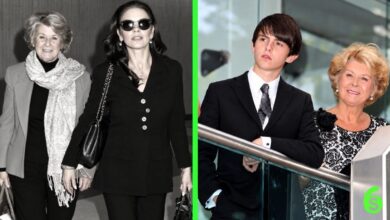


Willard Ford is an American entrepreneur, cycling enthusiast, and athletic coach, best known publicly as the second son of Hollywood actor Harrison Ford and his first wife, Mary Marquardt. Born on May 14, 1969, he is 57 years old as of October 2026. His career has spanned furniture design, fashion retail, international cycling tours, and restoring a historic Los Angeles theatre. Today, he remains professionally associated with Strong Sports Gym in Pasadena, California. Unlike his father, Willard has never established a prominent acting career. His public record is instead that of a businessman who has repeatedly adapted his interests into commercial ventures, some successful, others tested by economic pressures and changing circumstances.
The distinction matters. Celebrity family profiles often reduce Willard to a list of businesses and his relationship with a famous parent. Contemporary interviews reveal a more complicated professional history, including teaching, mechanical work, design sales, endurance sports, and difficult decisions about managing commercial property.
This article examines his upbringing, education, entrepreneurial decisions, relationship with Harrison Ford, and current work, separating documented achievements from assumptions about his wealth and private life.
Quick Bio
| Detail | Verified Information |
|---|---|
| Full name | Willard Ford |
| Date of birth | May 14, 1969 |
| Age | 57 (October 2026) |
| Nationality | American |
| Father | Harrison Ford |
| Mother | Mary Marquardt |
| Older brother | Benjamin Ford |
| Half-siblings | Malcolm Ford, Georgia Ford and Liam Flockhart |
| Education | B.A. in American Studies, University of California, Santa Cruz |
| Profession | Entrepreneur and athletic coach |
| Current business | Strong Sports Gym, Pasadena |
| Previous ventures | Kim Sing Theatre, FordBrady/Ford & Ching, Ludwig Clothing Company |
| Cycling ventures | VeloAsia, VeloPura, The Super Fred |
| Children | Eliel and Guiliana Ford |
| Net worth | Not publicly verified |
Growing Up Before Harrison Ford Became a Hollywood Legend
Willard was born into a family whose circumstances were about to change dramatically. His father, Harrison Ford, married Mary Marquardt in 1964, before establishing the international film career for which he is now recognized.
Their first son, Benjamin, arrived in September 1966. Willard followed nearly three years later.
Harrison was still building his career during his sons’ earliest years. He supported himself partly through carpentry before acquiring increasingly substantial acting roles. His appearance in George Lucas’s American Graffiti in 1973 helped establish his screen presence, but Star Wars’s 1977 release made him internationally famous.
Willard was eight when it was released.
His parents divorced in 1979, when he was approximately ten. Harrison subsequently married screenwriter Melissa Mathison, with whom he had two children, Malcolm and Georgia. Years later, he married actress Calista Flockhart and adopted her son, Liam.
These details establish the family chronology, but they do not reveal everything about Willard’s childhood. He has not provided an extensive public account of growing up during his father’s rise to fame. Assertions that he resented Hollywood attention, felt overshadowed by Harrison, or consciously rejected acting because of family pressures cannot be treated as facts.
What is documented is that he built his adult career primarily outside the film industry.
Education and the Early Jobs That Shaped His Career
Willard attended the University of California, Santa Cruz, graduating with a Bachelor of Arts degree in American Studies. The qualification is reported by People, and Willard independently discussed his undergraduate education in an interview published by The Hundreds.
He later enrolled in a graduate education program at San Francisco State University. In that interview, he explained that he left the program when family responsibilities required him to return home and care for his mother.
His employment history before establishing himself in design was unusually varied.
He worked as a bicycle mechanic and machinist, undertook silk-screen printing, taught in Oakland, and participated in an adventure travel business. He also worked for foundations reviewing grants and briefly participated in a real estate development project in Las Vegas.
Those experiences are more revealing than an unsupported claim that his education automatically prepared him for entrepreneurship. He developed professionally through a series of practical jobs involving machinery, customers, education, logistics, and business administration.
Rather than progressing directly from university into a prominent company, he accumulated experience across several unrelated industries.
That background later became relevant when he began operating multiple businesses from a single Los Angeles property.
The Kim Sing Theatre: His Most Ambitious Property Project
The most extensively documented chapter of Willard Ford’s business career concerns the Kim Sing Theatre in Los Angeles’s Chinatown neighborhood.
The building opened in 1926 as a vaudeville theatre and later operated as a cinema. It later fell into disrepair and eventually closed to the public.
Around 2000, Willard purchased the property for approximately $300,000, according to public records reported by the Los Angeles Times.
The investment was far from a straightforward renovation.
Willard worked with architects Austin Kelly and Monika Haefelfinger of XTEN Architecture to transform the deteriorating theatre into a combination of residential, commercial and creative spaces.
The redevelopment introduced an internal courtyard, a large kitchen, retail areas, showrooms and loft-style living accommodation. At the same time, architectural elements including the original neon marquee and bow-truss ceilings were preserved.
The completed complex contained approximately 9,000 square feet of commercial space and a residential loft of about 3,500 square feet.
Importantly, the transformation did not simply replace the theatre’s history with a new commercial identity. It retained enough of the building’s original character to make its past part of the appeal.
The venue became associated with furniture exhibitions, fashion businesses, private functions and corporate events. In a 2014 statement to The Hollywood Reporter, Willard described hosting activities for organizations including BMW, Nike, Pepsi, the Grammys and Star Wars.
His management of the theatre offers insight into his broader business approach. Instead of maintaining a property devoted to one industry, he created a location that could accommodate several forms of activity.
For a time, it was a place to live, a commercial investment, a design showroom, and an events destination.
The Financial Reality Behind the Project
The theatre has sometimes been presented as evidence of extraordinary investment success, but the available records support a more precise interpretation.
In May 2014, the property was listed for approximately $4.5 million. It ultimately sold in October 2016 to Indra & Co., a company headed by Ash Pathi, for $3.3 million.
The Los Angeles Times reported the sale on October 5, 2016.
The difference between the initial reported purchase price and the eventual sale price is substantial. Nevertheless, presenting that difference as Willard’s personal earnings would be misleading.
The publicly reported figures do not establish the total amount spent on restoration, financing, taxes, operations, or other obligations during more than a decade of ownership.
They establish the property’s purchase and sale values, not its owner’s final profit.
The sale also means Willard is no longer the Kim Sing Theatre’s current owner.
FordBrady and the Realities of the Furniture Business
Willard’s involvement in furniture design became especially visible in the mid-2000s.
In 2005, he established FordBrady with longtime associate John Brady. The business operated from the Kim Sing complex, showcasing contemporary furniture and products from emerging designers.
A January 2007 Los Angeles Times article documented their ambition to help establish downtown Los Angeles as a center for design businesses.
Willard explained the wider motivation:
We want to contribute to something happening downtown.
The statement captured an ambition extending beyond conventional furniture sales. His showroom aimed to connect designers, retailers, and other creative professionals.
The business nevertheless faced practical difficulties.
By 2009, John Brady had departed the partnership, and Andrea Ching joined the operation, which was renamed Ford & Ching.
In a June 2009 Los Angeles Times interview with journalist David Ng, Willard openly acknowledged earlier weaknesses in the company’s commercial organization.
We made mistakes, and surviving is a minor miracle.
That admission is significant because it complicates an overly polished account of his career.
FordBrady initially relied heavily on its showroom and inventory, but the company began representing designers and arranging business-to-business sales.
Willard described the difficulty of managing inventory during an economic downturn and the advantages of focusing on relationships between manufacturers, design companies, and retailers.
The change reduced some of the demands associated with traditional retail operations.
His experience offers a practical example of a business owner adapting his operating model when the original approach proved difficult to sustain.
It also shows why the Kim Sing complex mattered: different ventures could share a physical location and sometimes support one another through events, relationships, and commercial activity.
Ludwig Clothing Company and the Fashion Industry
Another notable venture was Ludwig Clothing Company, a fashion label developed with designer and business partner Mike Dytri.
California Apparel News covered their partnership well before the brand opened its dedicated Los Angeles shop.
Ludwig was positioned as a contemporary menswear label with an unconventional visual identity. It blended casual clothing and streetwear with references to the composer Ludwig van Beethoven and Stanley Kubrick’s 1971 film A Clockwork Orange.
The label’s aesthetic centered on the contrast between classical music imagery and modern fashion.
The collection included T-shirts, hoodies, woven shirts, outerwear, trousers and accessories. Contemporary reporting described a relatively restrained design approach compared with the bright graphics associated with parts of the streetwear market.
On June 4, 2009, Ludwig opened a dedicated store at 720 North Figueroa Street in Los Angeles’s Chinatown.
Its location within the Kim Sing complex was no coincidence. The building provided space for fashion retail alongside furniture and other businesses connected to Willard.
The project illustrates his recurring interest in combining commercial activity with design and culture.
However, an important distinction exists between the brand’s documented history and its present status. Historical reporting confirms Willard’s involvement as a co-owner, but recent financial or company disclosures have not independently established current ownership arrangements or the label’s operating status.
Strong Sports Gym: From Los Angeles to Pasadena
Fitness is one of the most enduring aspects of Willard Ford’s professional life.
According to the official Strong Sports Gym website, he founded the business in 2006 with longtime training partner Kengo Ura.
His interest in athletic training had developed much earlier.
In a first-hand interview with The Hundreds, Willard discussed studying martial arts as a young man and later expanding into Brazilian jiu-jitsu, kickboxing, and boxing. He also had a strong background in competitive cycling.
Strong Sports developed around disciplined athletic training rather than the entertainment-oriented facilities sometimes associated with conventional gyms.
Its programs included strength and conditioning, boxing, grappling, and other forms of physical preparation.
Willard’s activities were not confined to ownership. The business identifies him as an experienced coach with decades of athletic instruction.
What Happened During the COVID-19 Pandemic?
The original Los Angeles gym encountered a major setback in 2020.
Strong Sports announced a closure during the COVID-19 pandemic, when restrictions and financial pressures affected fitness businesses throughout California.
Coverage of the announcement included a June 2020 statement saying the business could no longer operate under the circumstances.
That closure remains an important part of Willard’s career history, but treating it as proof that Strong Sports permanently disappeared is inaccurate.
The business’s current website identifies Willard as its founder, owner, and head coach at a Pasadena, California, facility.
The Pasadena operation emphasizes individualized coaching and small-group instruction.
Its official information describes training in strength development, boxing, grappling and conditioning, with programs adapted to different athletic goals.
The site also notes that Kengo Ura continues to participate in the wider Strong Sports coaching network, including its Japanese operations.
For Willard, the gym represents the clearest publicly documented link between his earlier entrepreneurial activities and his 2026 professional work.
Cycling Was More Than a Personal Hobby
One aspect of Willard’s biography that often gets too little attention is his long involvement in competitive cycling and cycling tourism.
His professional background in the sport predates several businesses he later became known for.
According to the cycling company VeloPura, he began racing as a junior in Los Angeles and subsequently helped establish VeloAsia in the early 1990s.
The company organized cycling trips through Southeast Asia, including Vietnam, during a period when specialized adventure travel in the region was still developing.
The business later expanded, and Willard’s cycling experience included coaching competitive riders and helping organize teams.
His involvement eventually extended into cycling tours in Mexico.
VeloPura’s published company profiles also identify his work with The Super Fred, a business associated with vintage bicycle restoration and custom builds.
These activities give his career a continuity that might otherwise be missed. Bicycle mechanics, racing, travel, coaching and gym ownership were not entirely separate episodes. They emerged from overlapping knowledge of athletic performance, equipment and organized recreation.
VeloPura now states that its touring operation retired after about three decades, so its history should not be presented as evidence that all its former services remain available today.
The 2021 Baja California Cycling Trip
Willard’s cycling expertise also provides a documented connection to his father.
In March 2021, Harrison Ford participated in a long-distance cycling trip through Mexico’s Baja California Peninsula.
The journey attracted media attention after members of the public recognized the actor along the route.
A 2025 Mexico News Daily feature identified Willard as the person who organized his father’s trip.
This episode offers a clearer illustration of their shared interests than broad assumptions about how close they are.
Willard had experience organizing demanding cycling journeys. Harrison participated in one of those trips.
The available reporting establishes that collaboration without requiring speculation about their private conversations or family dynamics.
Willard Ford’s Relationship With Harrison Ford
To a general audience, being Harrison Ford’s son remains the most recognizable fact about Willard.
Yet the documentary record of his career suggests a more useful comparison between father and son: their respective involvement with practical craftsmanship.
Before becoming internationally famous, Harrison worked as a carpenter, acquiring experience with tools, construction and furniture-related work.
Willard later entered industries that require attention to physical spaces, materials, product design, and mechanical equipment.
In a June 2009 Los Angeles Times interview, Willard described his father’s exacting standards and linked that attitude to his own appreciation for careful design work.
This does not mean Harrison directed Willard’s career or financed his businesses. Neither conclusion can be established from the available reporting.
It does show that Willard publicly recognized an aspect of his father’s character that extended beyond acting.
Harrison himself has spoken with unusual candor about the demands his acting career placed on family life.
In a 2023 Esquire interview, he acknowledged that long periods away from home affected his experience of fatherhood.
Those comments provide broader family context. They should not be interpreted as a direct description of Willard’s private experiences, which have not been extensively documented.
His Mother, Siblings and Extended Family
Willard’s mother, Mary Marquardt, was Harrison Ford’s first wife and, according to established family reporting, an illustrator.
His older brother, Benjamin Ford, became a chef and restaurateur. Benjamin is known for Ford’s Filling Station and his cookbook Taming the Feast.
Although the two brothers chose different professions, both developed careers largely outside Hollywood acting.
Willard also has three younger half-siblings.
Malcolm Ford, Harrison’s son with screenwriter Melissa Mathison, has worked as a musician and was associated with the rock band The Dough Rollers.
Georgia Ford, Malcolm’s younger sister, has appeared in films and developed interests in the arts.
Liam Flockhart is Calista Flockhart’s son, whom Harrison adopted after they began dating.
Harrison Ford’s five children are at different stages in his personal and professional life. Public reporting confirms these family connections, but it offers comparatively little detail about the siblings’ everyday relationships.
Does Willard Ford Have a Wife and Children?
According to People’s September 2026 account of Harrison Ford’s family, Willard is the father of two children, Eliel and Guiliana Ford.
Beyond that, he has disclosed relatively little information about his domestic life in prominent interviews.
Reliable, recent documentation is insufficient to establish his current marital status or provide a comprehensive history of his romantic relationships.
Assigning him a wife or partner based on unverified online biography profiles would therefore risk publishing inaccurate information.
His decision not to share extensive details about his children and relationships publicly also deserves respect.
A credible biography can acknowledge those limits without treating privacy as a mystery requiring speculation.
Willard Ford’s Net Worth and Business Finances
Willard has managed or participated in several commercial enterprises, but his personal net worth has not been established through reliable public financial records.
No verified financial data has been publicly disclosed.
His reported business interests have included property, furniture sales, clothing, fitness coaching, and cycling-related services. However, involvement in a business does not automatically demonstrate a particular level of personal wealth.
The Kim Sing Theatre transaction is the clearest publicly documented financial event associated with his entrepreneurial career.
The property reportedly sold in 2016 for $3.3 million after being purchased for $300,000.
Those figures reflect a real estate transaction, not the seller’s full financial position.
They do not disclose renovation costs, loans, taxes, or business losses, or profits generated by the companies that operated from the property.
For that reason, the numerical net worth estimates repeated on celebrity websites should not be presented as verified.
It would also be misleading to infer his financial resources from Harrison Ford‘s substantial film earnings. A parent’s estimated wealth is not evidence of an adult child’s assets.
What Is Willard Ford Doing in 2026?
As of October 2026, the strongest publicly available evidence of Willard’s current professional activity comes from Strong Sports Gym.
The company’s official website identifies him as founder and owner of the Pasadena facility, where it focuses on structured athletic instruction.
His continued association with strength coaching aligns with decades of documented experience in martial arts, cycling, and conditioning.
The historical record establishes his involvement in other ventures, including fashion, furniture, and international bicycle tourism. It does not establish that every company associated with his name remains active under his ownership.
The distinction matters because business structures and ownership change over time.
The closure of the original Los Angeles gym in 2020 and the current Pasadena operation illustrate why older biographical accounts can become misleading when repeated without fresh verification.
There is also no substantial evidence that Willard has recently shifted his professional ambitions toward acting.
His public identity remains centered on entrepreneurship, sport, and the practical work that has characterized much of his adult life.
The Business Legacy Beyond a Famous Surname
Willard Ford’s career is difficult to summarize through one company or one professional title.
His documented work includes international travel businesses, furniture representation, fashion retail, athletic coaching, and the redevelopment of a historically significant property.
The connecting element is not simply entrepreneurship. Several ventures were built around communities of people with specialized interests: competitive cyclists, martial artists, furniture designers, architects and clothing enthusiasts.
The Kim Sing Theatre provided a particularly clear example. Its physical space brought together different creative and commercial activities, allowing them to operate alongside one another.
Strong Sports represents a different expression of the same preference for specialized work. Rather than pursuing a mass-market approach to fitness, its current model emphasizes serious coaching and an established training community.
None of this proves that every venture was financially successful. His own comments about business mistakes show that he made difficult adjustments.
The better-supported conclusion is that Willard gained experience across different industries and repeatedly applied it to new projects.
His career is therefore more substantial than the simple description of a Hollywood actor’s son, but also more nuanced than an uncomplicated story of independent commercial success.
Conclusion
Willard Ford is best understood through his work rather than the celebrity attached to his surname.
He grew up as Harrison Ford rose to international fame. Still, his adult professional life developed in directions ranging from cycling and education to commercial design, property redevelopment, and fitness.
His ownership and restoration of the Kim Sing Theatre remain a significant, well-documented achievement. At the same time, his continued involvement with Strong Sports Gym shows an enduring commitment to athletic coaching.
The available record also reveals uncertainties. His full financial records are private, some historical businesses have changed or closed, and he has shared only limited details of his family life.
Taken together, the evidence presents a businessman with varied interests, a history of adapting to commercial challenges, and a career that his father’s fame alone cannot explain.
Read this too:Jon Aitchison: Inside the Life of Charli XCX’s Father, His Career, and Family Legacy
(FAQs)
1. Who is Willard Ford, and why is he famous?
Willard Ford is an American entrepreneur and the second son of actor Harrison Ford and Mary Marquardt. He is known for his involvement in Strong Sports Gym, Ludwig Clothing Company, furniture design businesses, and the former Kim Sing Theatre in Los Angeles.
2. How old is Willard Ford in 2026?
Willard Ford was born on May 14, 1969. He turned 57 years old on May 14, 2026.
3. What does Willard Ford do for a living?
Willard Ford is a businessman and athletic coach. As of 2026, the official Strong Sports Gym website identifies him as the founder, owner, and head coach of its Pasadena fitness facility. He has also worked in cycling tourism, clothing, furniture, and commercial property.
4. Is Willard Ford married, and does he have children?
Willard Ford has two publicly identified children, Eliel and Guiliana Ford. However, his current marital status and detailed relationship history have not been reliably established through recent authoritative sources.
5. What is Willard Ford’s net worth?
Willard Ford’s exact net worth is unknown because verified personal financial records have not been publicly disclosed. Although he sold the historic Kim Sing Theatre for a reported $3.3 million in 2016, that transaction does not establish his total wealth or personal profit.