
Patricia Fair: The Remarkable Woman Behind Catherine Zeta-Jones’s Early Success

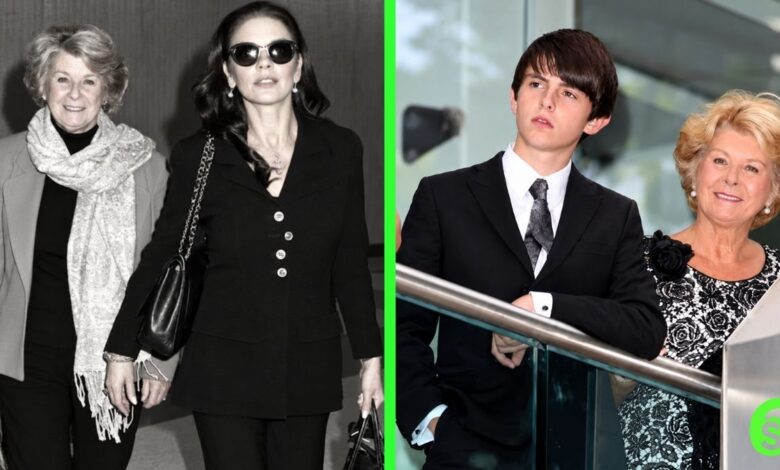
Patricia Fair, also known as Patricia Jones or Pat Jones, is a former seamstress and dressmaker best known as the mother of Welsh actress Catherine Zeta-Jones. Married to businessman David James Jones, Patricia helped raise three children in Swansea, Wales, long before her daughter became an internationally celebrated performer. Although she has never pursued a public entertainment career, her influence is unusually well documented through Catherine’s own interviews. The actress credits her mother with encouraging her childhood dancing, introducing her to fabrics and dressmaking, and helping shape her appreciation for home and design.
Patricia’s public identity remains closely connected to her family, but her professional background offers a more substantial story than the familiar description of a celebrity mother.
Quick Bio
| Details | Information |
|---|---|
| Full Name | Patricia Fair |
| Also Known As | Patricia Jones, Pat Jones |
| Known For | Mother of Catherine Zeta-Jones |
| Profession | Seamstress and dressmaker |
| Nationality | British |
| Family Background | Welsh, with Irish ancestry |
| Date of Birth | Not publicly confirmed |
| Age | Not publicly verified |
| Associated With | Swansea, Wales |
| Husband | David James Jones |
| Marriage Year | 1966 |
| Children | David Jones, Catherine Zeta-Jones, Lyndon Jones |
| Famous Daughter | Catherine Zeta-Jones, actress |
| Grandchildren | Dylan Michael Douglas, Carys Zeta Douglas |
| Mother | Catherine Fair |
| Net Worth | Not publicly disclosed |
| Public Profile | Primarily known through family interviews and tributes |
Patricia Fair’s Early Life and Background
Patricia Fair’s personal history has never been documented as extensively as her daughter’s. She is associated with Swansea, the Welsh coastal city where she raised her family, and biographical accounts identify Irish ancestry in her maternal family.
Her mother was Catherine Fair, whose name became part of the naming history of Patricia’s famous daughter. The family connection matters because Catherine Zeta-Jones‘s distinctive professional name includes elements associated with both sides of her family.
Verified public information about Patricia’s own childhood, education and early professional training remains limited. No sufficiently documented accounts establish the schools she attended, the qualifications she obtained, or the precise circumstances in which she learned dressmaking.
Her occupation, however, is well established.
In a 2021 interview with The New Yorker, Catherine described her mother as an experienced cutter and seamstress who had worked throughout her adult life. That description establishes Patricia as a skilled professional rather than someone known solely through her husband’s business.
Marriage to David James Jones and Family Life in Swansea
Patricia married David James Jones, commonly known as Dai Jones, in 1966. Decades later, their marriage became a recurring subject of Catherine’s public family tributes.
David was involved in Swansea’s confectionery business. Accounts of his career describe him as a sweet-factory owner, while a 1993 archival television interview with Catherine identified him as the owner of a vending-machine business.
Those descriptions are not necessarily contradictory; they reflect different reporting periods and aspects of his commercial background. The available evidence does not establish a complete chronology of his business interests.
Patricia and David raised three children:
- David Jones, Catherine’s older brother.
- Catherine Zeta-Jones, born on September 25, 1969.
- Lyndon Jones, Catherine’s younger brother.
The family lived in Swansea, with Catherine growing up in the city and its surrounding communities, including Mumbles.
Although Catherine eventually became associated with expensive properties, major film productions and international celebrity culture, she has consistently described her childhood as rooted in an ordinary working household.
In archival footage from the Irish television program Kenny Live, broadcast on March 27, 1993, Catherine spoke of growing up outside a theatrical family. She also explained that her parents supported her decision to pursue acting despite their understandable concerns about an uncertain profession.
The distinction matters. Patricia and David were not entertainment-industry insiders arranging opportunities through established professional connections. They were parents whose daughter developed an early ambition, and whose practical support made it possible.
How Patricia Fair Encouraged Catherine Zeta-Jones’s Dancing
One of Patricia’s clearest contributions to Catherine’s career occurred when the future actress was only four years old.
Catherine has recalled that a local dance teacher named Hazel Johnson taught tap and modern dancing in a hall near the family home.
Recognizing her daughter’s enthusiasm for performance, Patricia bought her a pair of tap shoes.
In her April 2021 interview with The New Yorker, Catherine recalled:
“At four years old, my mother bought me tap shoes.”
The story did not end with the purchase.
Catherine described her mother taking her to the nearby hall and approaching Johnson about lessons. The teacher initially considered the child too young, but Patricia returned the following year, and Johnson became an important figure in Catherine’s musical education.
This is one of the most revealing episodes in Patricia’s documented life.
She did not create her daughter’s interest in performing. Catherine has explained that the desire to dance came naturally to her. Patricia’s contribution was recognizing that interest and finding an opportunity for it to develop.
That early encouragement preceded Catherine’s appearances in stage musicals, her work in London’s West End and her eventual transition into film.
Years later, Catherine’s musical-theatre experience proved central to her performance as Velma Kelly in the 2002 film Chicago, for which she won the Academy Award for Best Supporting Actress in 2003.
It would be excessive to attribute that achievement entirely to Patricia. Nevertheless, the first tap shoes and introduction to local dance lessons document a connection between the family’s everyday life in Swansea and Catherine’s later professional accomplishments.
A Skilled Seamstress Whose Creativity Reached Beyond Clothing
Patricia’s work went beyond ordinary household sewing.
Catherine described her as a professional cutter and seamstress who understood garment construction. An archival RTÉ account also records that Patricia designed and drew dresses to sell.
These details highlight the difference between recreational sewing and professional dressmaking.
A skilled cutter needs to understand measurements, fabric behavior, construction techniques, and how a design changes when translated into a finished garment. Dressmaking demands patience and technical judgment, particularly when working with different materials and individual fittings.
While the exact scale of Patricia’s business activities has not been independently established, her daughter’s descriptions consistently identify her work as a serious occupation.
That environment left an impression on Catherine.
Speaking to The New Yorker in 2021, the actress discussed sewing, textiles, and the domestic objects she had made herself. She also recalled that her mother didn’t let her use her sewing machine as a child.
The memory illustrates how Patricia’s equipment belonged to a working craft rather than simply functioning as a child’s creative plaything.
Catherine later developed an interest in collecting vintage clothing, studying textiles, and creating home products.
Her mother’s profession provides a clear link between those interests and her childhood surroundings.
The Influence on Catherine’s Love of Interior Design
Patricia’s influence extended from clothing into domestic design.
In a June 2021 interview with Homes & Gardens, Catherine described her childhood home in Wales as a place filled with family members, attractive fabrics and carefully selected furnishings.
She linked her mother’s interest in soft furnishings to her own enthusiasm for interior decorating.
The actress also recalled seeing pins that her mother had dropped into the thick carpet while sewing.
It is an unusually concrete childhood memory: fabrics, furnishings and professional sewing tools forming part of the same domestic environment.
Catherine’s later interest in design wasn’t limited to selecting expensive furniture. As a young performer touring Britain, she remembered taking fabrics from her mother’s collection to improve the appearance of temporary accommodation.
That habit shows how early influences endured long after she left Swansea.
In her adult career, Catherine launched Casa Zeta-Jones, a lifestyle brand associated with fashion, footwear and home products.
During interviews about the business, she has repeatedly referred to her mother’s seamstress background and her own interest in sewing.
The connection should be interpreted carefully. No public evidence shows that Patricia founded, managed, or financially controlled Casa Zeta-Jones.
Her influence was creative, not part of an established business partnership.
What can be said with confidence is that Catherine herself has acknowledged a relationship between growing up around professional dressmaking and her later interest in interiors and textiles.
The Family History Behind Catherine Zeta-Jones’s Name
Patricia’s family is also represented in one of her daughter’s most recognizable public features: her name.
Catherine’s maternal grandmother was Catherine Fair, while her paternal grandmother was Zeta Jones.
Biographical reporting has connected the actress’s name with both women.
An additional detail is sometimes overlooked. Reporting in The Guardian indicates that the actress was originally known professionally as Catherine Jones before adopting Zeta to distinguish herself from another performer with the same name.
Consequently, the family-name tradition and her subsequent professional naming decision should not be treated as the same event.
The maternal family connection nevertheless remains clear: the name Catherine honors Patricia’s side of the family.
For an actress whose professional identity has been recognized internationally for decades, that link gives an otherwise familiar name a particular family significance.
Patricia Fair’s Relationship With Catherine Zeta-Jones
Public accounts consistently describe a close relationship between Patricia and her daughter.
Unlike many celebrity-family narratives, Catherine’s own repeated statements support this assessment.
In an interview with The Sydney Morning Herald, widely cited in subsequent coverage, Catherine said she returned to Wales whenever possible and kept in regular telephone contact with her mother.
She said she spoke with Patricia every day, sometimes several times.
Those statements offer a more useful measure of their relationship than occasional photographs taken at formal events.
Although Catherine established her career internationally and has lived in several countries, she has continued to identify Wales as home.
Family connections have remained central to that identity.
In July 2021, after pandemic restrictions had disrupted travel and family gatherings, Catherine shared photographs marking a reunion with her parents.
Her message thanked them for finally spending time together again.
The reunion attracted attention because it offered a glimpse of family life largely separate from the actress’s professional commitments.
Patricia has also appeared in photographs connected with Catherine’s children, Dylan and Carys Douglas, illustrating the visible relationship between three generations of the family.
These public appearances show continued contact, though they don’t reveal the full details of Patricia’s private life.
Wedding Anniversaries and Public Family Tributes
Patricia and David’s long marriage has repeatedly featured in Catherine’s social-media celebrations.
On October 22, 2020, Catherine marked her parents’ 54th wedding anniversary with an archival wedding photograph.
The tribute confirmed their 1966 marriage and gave followers a rare look at Patricia as a young bride.
Three years later, Catherine publicly celebrated their 57th anniversary.
The actress has also used Mother’s Day and birthday messages to acknowledge Patricia.
In March 2023, she shared a Mother’s Day tribute, describing her mother as an ongoing source of inspiration and affection.
The accompanying photographs included family moments with Dylan and Carys.
More recently, on April 2, 2025, Catherine shared more photographs of Patricia for her birthday, including images from different periods of family life.
These celebrations matter because Patricia has not built a public career around celebrity appearances or personal publicity.
Most available information about her family relationships comes from statements her daughter voluntarily shared.
In September 2026, Catherine also publicly celebrated David Jones’s 80th birthday, reinforcing her parents’ continued prominence in her family life.
The Difference Between Patricia’s Private Life and Her Public Image
Celebrity coverage frequently describes Patricia in terms of her physical resemblance to Catherine.
Entertainment publications have published photographs of the two women, with commentators comparing their facial features and personal style.
Such observations are understandable, but they provide only a narrow account of Patricia’s identity.
The better-documented elements of her story concern her professional work, marriage, children, and creative influence.
Several personal details remain outside reliable public reporting.
Her precise date of birth has not been independently established through sufficiently authoritative published documentation. Reports about her wider ancestry also vary in specificity, so constructing an elaborate family history without stronger evidence is inappropriate.
Likewise, no verified public accounting exists for her personal finances.
No verified financial data on Patricia Fair’s net worth has been publicly disclosed.
Her daughter’s international success should not be used to calculate or assume Patricia’s personal wealth.
There is also insufficient evidence to present her as a professional actress, producer, or Hollywood business executive.
She is best understood through her documented occupation and family history rather than through titles attributed to her by speculative celebrity-profile websites.
Why Patricia Fair’s Story Matters
Patricia’s place in Catherine Zeta-Jones’s life illustrates two forms of influence that conventional celebrity biographies often overlook.
The first is practical encouragement.
A child interested in performing needed access to lessons, equipment, and opportunities. Patricia’s purchase of tap shoes and her introduction of Catherine to a local teacher were specific actions that supported a developing talent.
The second is the transmission of creative knowledge through everyday surroundings.
Catherine grew up watching a skilled professional work with fabrics, designs and construction techniques. Her later involvement with fashion, sewing and interiors is documented through interviews in which she explicitly connects those interests to her mother’s work.
These influences are distinct, but they complement each other.
One helped establish the beginnings of a performing career. The other shaped aesthetic interests that remained relevant after Catherine had become an established actress.
Neither requires Patricia to have sought a public role for herself.
Her importance is supported by the experiences her daughter has chosen to describe.
Conclusion
Patricia Fair’s life is not a conventional Hollywood story. Her public biography begins with professional dressmaking and a family home in Swansea rather than film studios, awards ceremonies or entertainment contracts.
Yet the available evidence establishes meaningful connections between her work and Catherine Zeta-Jones’s development.
Patricia encouraged her daughter’s interest in dancing, helped make early lessons possible, and created a household where fabrics, sewing, and design were part of daily life. Catherine has since acknowledged those influences in interviews about both her acting career and her creative business interests.
Beyond those details, Patricia has maintained a comparatively private identity, and the gaps in her public biography deserve to remain acknowledged rather than filled with speculation.
Her story is significant precisely because its most reliable details are ordinary: skilled work, support for a child’s ambitions, and family relationships maintained across decades.
Those details provide a fuller understanding of the woman Catherine Zeta-Jones calls her mother.
Read this too:Dakota Rain Burton: The Untold Story of Dolores O’Riordan’s Youngest Daughter
(FAQs)
1. Who is Patricia Fair?
Patricia Fair, also known as Patricia Jones, is a Welsh dressmaker best known as the mother of Academy Award-winning actress Catherine Zeta-Jones. She raised her family in Swansea, Wales, and supported her daughter’s early interest in performing arts.
2. What did Patricia Fair do for a living?
Patricia Fair worked as a professional seamstress and dressmaker. Her experience with fabrics, clothing construction, and design shaped Catherine Zeta-Jones’s appreciation for fashion and interior decoration.
3. Who is Patricia Fair’s husband?
Patricia Fair is married to David James Jones, a Welsh businessman associated with the confectionery industry. The couple married in 1966 and raised three children together.
4. How many children does Patricia Fair have?
Patricia Fair and David James Jones have three children: David Jones, Catherine Zeta-Jones and Lyndon Jones. Catherine, born on September 25, 1969, became an internationally recognized actress.
5. How did Patricia Fair influence Catherine Zeta-Jones’s career?
Patricia encouraged Catherine’s passion for dancing from an early age. She bought her daughter tap shoes when she was four and helped introduce her to local dance lessons. Her professional dressmaking background also influenced Catherine’s later interests in fashion and home design.


