CDX Learning: The Complete Guide to Automotive Education, Training Technology, and Industry Skills

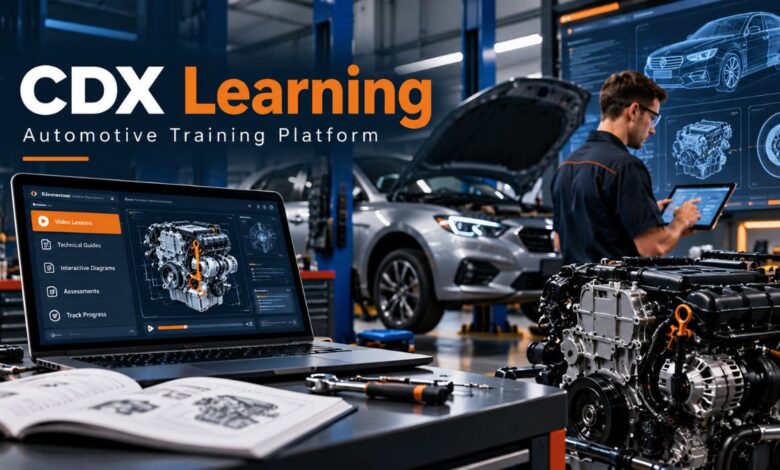
CDX Learning, formerly known as CDX Learning Systems, is an educational publishing and training provider specializing in automotive technology, diesel engines, commercial vehicles, and heavy equipment maintenance. Established in Australia in 1994, the organization is now part of Jones & Bartlett Learning and provides technical curricula used by educational institutions and vocational training programs.
Its significance lies in an approach to technical education that combines textbooks, instructional videos, interactive animations, practical assignments, and online assessments.
Unlike a general-purpose learning website, CDX is designed primarily around the requirements of structured technician education. Its resources support practical competency development, though online instruction alone cannot replace supervised workshop experience.
The company’s history also illustrates a broader transition in vocational education: from physical instructional media to integrated digital learning environments.
What Is CDX Learning?
CDX Learning Systems develops instructional materials that help students understand, diagnose, maintain, and repair modern vehicles and mechanical equipment.
Its primary audience includes automotive educators, vocational institutions, community colleges, secondary schools, and students preparing for technical careers.
The organization provides printed textbooks and digital resources, allowing institutions to connect theory with hands-on workshop training.
Its major educational areas include:
- Automotive maintenance and light repair
- Advanced automotive service technology
- Diesel engine diagnosis and repair
- Medium- and heavy-duty commercial vehicles
- Mobile heavy equipment
- Hybrid and electric vehicle technology
These subjects address different stages of technical education, from introductory maintenance procedures to more specialized diagnostic work.
The system’s instructional structure sets it apart. Students are expected to understand mechanical principles, observe how components operate, and demonstrate their knowledge through assessments and practical tasks.
The History and Origins of CDX Learning
CDX originated in Brisbane, Australia, in 1994, operating as CDX Global.
The business initially concentrated on providing automotive training videos. This was an important period in technical education because digital instructional tools were becoming increasingly practical, even though online learning had not yet developed into its modern form.
Early CDX resources were distributed through CD-ROM collections. According to the company’s published history, its name came from a disc-navigation interface designed to resemble the letter X.
As educational technology developed, CDX expanded beyond instructional videos into more comprehensive technical training materials.
A significant corporate milestone occurred in 2009, when Jones & Bartlett Learning acquired CDX Global.
The acquisition brought the training system into an established educational publishing business, supporting the development of textbooks, digital courses, assessments, and instructor resources.
Important Historical Milestones
- 1994: CDX Global was established in Brisbane, Australia.
- 2009: The company was acquired by Jones & Bartlett Learning.
- 2011: Its Australian-produced instructional videos were adapted for American English terminology.
- 2017: The second edition of Fundamentals of Automotive Technology was published.
- 2023: The third edition of Fundamentals of Automotive Technology, authored by Kirk VanGelder, carried a 2023 copyright date.
- 2026: CDX continues to offer automotive, diesel, and heavy-equipment educational resources through its established training portfolio.
This progression shows how an initially video-focused educational business developed into a broader curriculum provider.
How CDX Learning Works
CDX is built around the relationship between technical knowledge and practical performance.
An automotive student might understand how an electrical circuit works in theory but still struggle to diagnose a fault in a real vehicle.
A successful training program must develop both.
CDX attempts to connect these learning requirements through instructional resources that can be used before, during, and after practical workshop sessions.
Textbooks and Technical Reading
The textbooks introduce mechanical systems, servicing procedures, diagnostic principles, and workplace safety practices.
They are arranged to support structured instruction rather than isolated reading.
For example, the third edition of Fundamentals of Automotive Technology organizes its curriculum into 75 chapters, including two online-only chapters addressing electric, hybrid, fuel-cell, and alternative-fuel vehicle technology.
Videos and Interactive Animations
Technical systems can be difficult to understand through written descriptions alone.
Animations let students see relationships between components, while instructional videos show procedures and operating principles.
These resources are particularly useful for explaining subjects such as engine operation, electrical systems, transmission components, and diagnostic processes.
Practical Tasks and Assessments
CDX incorporates task sheets intended to document practical learning activities.
Depending on the course, students may complete written assessments, submit task documentation, and demonstrate practical abilities under instructor supervision.
This is a key distinction: completing an online quiz does not prove a student can safely perform the corresponding mechanical task.
Instructor Management Tools
Educators can use supported digital tools to organize assignments, monitor progress, review assessments, and manage grades.
The platform also includes reporting functions to help instructors identify unfinished work and areas that need additional attention.
Major Courses and Educational Programs
The CDX portfolio addresses several areas of vehicle servicing and technical education.
Although the courses share a common educational approach, their technical objectives differ.
Fundamentals of Automotive Technology
Fundamentals of Automotive Technology is one of the company’s principal educational products.
It provides a broad introduction to vehicle systems and service procedures, including engine operation, electrical systems, braking, steering, suspension, transmissions, and diagnostics.
The third edition was authored by Kirk VanGelder, an automotive educator and ASE Master Certified Automotive Technician.
Its accompanying online resources include instructional videos, animations, assessments, and interactive learning activities.
This program is particularly relevant to institutions seeking a comprehensive automotive curriculum rather than a narrow course covering one component or system.
Automotive Maintenance and Light Repair
The Maintenance and Light Repair program focuses on the foundational skills required for entry-level automotive service work.
Students encounter common maintenance procedures alongside fundamental technical concepts.
Subjects include safety practices, basic electrical testing, vehicle inspection, and service operations.
CDX also incorporates diagnostic instruction and material addressing contemporary vehicle systems, including advanced driver assistance systems.
The program supports preparation for relevant industry assessments, including the ASE G1 Automobile Maintenance and Light Repair examination.
However, completing a CDX course does not qualify you for ASE certification.
Formal certification has separate eligibility and examination requirements.
Master Automobile Service Technician Series
The Master Automobile Service Technician series provides more advanced instruction.
Its materials address technical subjects associated with ASE automotive certification areas, including engine repair, automatic transmissions, electrical systems, and engine performance.
The curriculum emphasizes systematic diagnosis rather than simply memorizing repair procedures.
This distinction matters because automotive troubleshooting requires technicians to interpret evidence, test possible causes, and confirm repairs.
An effective technician must understand why a component failed, not just how to replace it.
Diesel Engines and Commercial Vehicle Training
CDX also provides educational resources addressing medium- and heavy-duty vehicles.
These courses are relevant to students preparing for work involving trucks, buses, and commercial transport equipment.
They cover systems that may differ substantially from those encountered in passenger vehicles.
Diesel technology, heavy-duty drivetrains, vehicle electrical systems, and specialized maintenance procedures require dedicated instruction.
The resources help institutions teach these subjects within structured technical programs.
Mobile Heavy Equipment Training
Mobile heavy equipment represents another important area of the company’s curriculum.
This field includes machinery used in construction, agriculture, forestry, and mining.
The instructional materials address topics such as:
- Hydraulic systems
- Braking and suspension
- Electrical systems
- Power transmission
- Undercarriage and track-drive components
- Steering systems
- Equipment inspection and maintenance
CDX states that its mobile heavy equipment resources are aligned with relevant AED Foundation technical standards.
This alignment is intended to help educational programs organize instruction around recognized industry competencies.
Hybrid and Electric Vehicle Education
The increasing complexity of automotive technology has changed what technicians are expected to know.
Traditional mechanical expertise remains important, but modern vehicles also require understanding of battery systems, electronic controls, high-voltage safety, and power conversion.
CDX offers Light Duty Hybrid and Electric Vehicles, authored by Mark L. Quarto and Nicholas Goodnight.
The first edition, copyrighted in 2023, covers battery chemistry, hybrid and electric powertrains, electrical safety, and modern vehicle technology.
Its instructional materials are designed to support preparation for the ASE L3 Light Duty Hybrid/Electric Vehicle Specialist examination.
High-voltage automotive work involves serious hazards.
Digital learning can introduce safety principles, but it cannot replace appropriate equipment, professional supervision, and verified hands-on competence.
CDX Online Learning Platform
CDX Online extends the company’s instructional materials beyond printed publications.
It allows eligible students and instructors to access supported course content digitally.
Depending on the purchased package and institutional arrangements, resources may include:
- Electronic textbooks and audio features
- Instructional videos and animations
- Interactive assessments
- Practical task sheets
- Assignment and progress tracking
- Instructor reporting tools
Some materials also offer adjustable text size and text-to-speech functionality, which can help accommodate different learning requirements.
For educational institutions, these digital resources can reduce the administrative burden associated with distributing and grading certain assignments.
However, they do not eliminate the need for well-equipped workshops or qualified instructors.
How to Access CDX Learning
Access to CDX Online normally involves purchasing or receiving the appropriate course materials and registering through the company’s established account system.
For many instructor-led courses, students must complete the following process:
- Obtain the appropriate CDX course package or access code.
- Visit the official CDX Learning website.
- Redeem the access code and create an account, or sign in to an existing account.
- Select the relevant course from the account dashboard.
- Enter the course identification code provided by the instructor or institution.
- Launch the available learning materials.
Individual access requirements vary by product.
Students should confirm the correct course, edition, and access period with their institution before purchasing materials.
Some products are specifically designed for instructor-led programs rather than independent, self-paced enrollment.
The Importance of Industry Standards
Technical education must provide more than an organized collection of lessons.
It also needs a defensible way to establish whether students have developed the knowledge and abilities required for professional work.
CDX aligns various automotive resources with ASE Education Foundation standards and relevant certification objectives.
Its heavy-equipment resources reference AED Foundation technical standards.
These frameworks can help institutions establish curriculum objectives and assess practical skills.
However, three different concepts should not be confused:
Curriculum alignment means educational content is designed around specific industry requirements.
Program accreditation involves an independent review of an educational institution or program.
Professional certification requires an individual to satisfy the specific requirements of a certifying body.
Using CDX materials does not automatically grant accreditation to a school or professional certification to a student.
Why CDX Learning Matters in Technical Education
Modern automotive education faces a difficult instructional problem.
Vehicles increasingly depend on software, sensors, electronic control systems, and integrated mechanical components.
At the same time, learners still need a sound understanding of essential workshop procedures.
CDX addresses this challenge by connecting established technical subjects with digital instructional resources.
The practical value becomes clearer when examining how an automotive lesson might work.
A student could first read a written explanation of a braking system, then watch an animation of it in action.
An instructional video might demonstrate a relevant inspection procedure.
Finally, the instructor could supervise a practical activity and assess the student’s performance.
Each stage serves a different educational purpose.
The textbook provides technical context. The animation supports visual understanding. The workshop exercise tests practical application.
None of these stages is sufficient on its own.
This integrated structure is arguably the organization’s most important contribution to contemporary technical instruction.
Benefits for Students and Instructors
Students using a well-organized training system may find it easier to connect theoretical information with workshop activities.
Digital resources also let them revisit difficult topics outside scheduled class time.
For instructors, the main benefits concern curriculum organization, teaching resources, and assessment management.
Instead of developing every lesson and supporting document independently, educators can adapt materials within an established instructional framework.
Potential advantages include better consistency across classes, more accessible technical explanations, and clearer records of student activity.
Nevertheless, educational results depend on how it is implemented.
An extensive curriculum does not guarantee effective teaching, and a student’s ability to complete digital assignments does not necessarily demonstrate readiness for employment.
Instructor experience, workshop facilities, available equipment, and the quality of practical supervision remain decisive.
Limitations and Considerations
CDX Learning offers a substantial collection of technical resources, but prospective users should consider its practical limitations.
The system is principally intended for technical education, so it may not suit someone seeking a short introductory course for personal interest.
Access is also frequently linked to institutional enrollment or purchased educational materials.
Course packages can differ in content, format, and duration.
Another consideration is the continuing development of vehicle technology.
Even a recently revised textbook may require supplementary instruction as diagnostic equipment, manufacturer procedures, and safety requirements change.
Finally, CDX’s published product descriptions establish what resources are offered, but they do not independently prove that every institution using the system achieves better employment or examination outcomes.
Those claims would require reliable comparative evidence.
Is CDX Learning Suitable for Beginners?
CDX provides several resources intended for people entering automotive education.
Its Maintenance and Light Repair curriculum is particularly relevant to introductory training.
However, suitability depends on the student’s objectives and the course selected.
Someone seeking broad automotive knowledge may benefit from an introductory program.
A learner with industry experience may need more advanced instruction in specialist diagnostics or vehicle systems.
Students should therefore consider the technical level, required equipment, institutional support, and expected qualifications before choosing a program.
CDX Learning and the Future of Automotive Training
The automotive industry continues to develop technologies that require increasingly specialized technical knowledge.
Electrified powertrains, electronic diagnostics, integrated vehicle networks, and advanced safety systems are already changing technicians’ educational requirements.
For curriculum publishers, this creates an ongoing responsibility to revise instructional materials.
CDX’s inclusion of hybrid and electric vehicle subjects reflects that shift.
Its long-term relevance will depend on keeping technical information current while preserving the practical training principles on which vocational education depends.
The central challenge is not simply making more educational content available online.
The challenge is ensuring students can apply what they learn safely, accurately, and consistently in professional environments.
Conclusion
CDX Learning has developed from an Australian automotive video-training initiative into a technical education provider associated with Jones & Bartlett Learning.
Its curriculum combines textbooks, online instruction, visual demonstrations, assessments, and practical learning documentation across automotive and heavy-equipment subjects.
The organization’s principal strength is the connection it attempts to establish between technical understanding and observable skills.
For institutions, that offers a structured foundation for developing automotive training programs. For students, it provides access to educational materials designed around real vehicle systems and service procedures.
Its ultimate effectiveness, however, depends on qualified instruction, current technical content, and meaningful hands-on experience.
(FAQs)
1. What is CDX Learning used for?
CDX Learning supports automotive and technical vocational education. Its materials help instructors teach subjects such as vehicle maintenance, diagnostics, diesel engines, hybrid and electric vehicles, and heavy-equipment repair.
2. Who owns CDX Learning Systems?
CDX Learning Systems is part of Jones & Bartlett Learning, which acquired the original CDX Global business in 2009.
3. Is CDX Learning suitable for beginners?
Yes. Certain programs, particularly Maintenance and Light Repair, are designed for entry-level automotive education. More advanced courses offer specialized technical instruction.
4. Does CDX Learning provide ASE certification?
No. CDX provides instructional resources aligned with relevant industry standards and certification objectives. ASE certification is awarded separately to individuals who satisfy the certifying organization’s requirements.
5. Can students access CDX Learning online?
Yes. Eligible students can access digital materials through CDX Online using the appropriate account credentials, access code, and, where required, an instructor-provided course ID. Availability depends on the purchased program and institutional arrangements.