
Joseph Melville See Jr.: The Life and Legacy of Linda McCartney’s First Husband

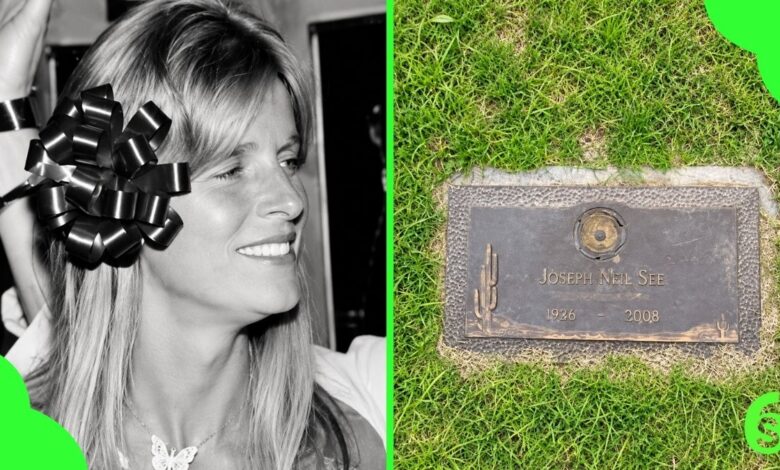
Joseph Melville See Jr. was an American geologist, cultural anthropologist, and documentary filmmaker best known as Linda McCartney’s first husband, the photographer, musician, and later wife of Beatles legend Paul McCartney. Although his marriage to Linda brought his name into popular biographies, See had an independent professional identity rooted in scientific research, cultural documentation, and the study of Indigenous communities. The couple married in 1962, welcomed a daughter named Heather, and divorced in 1965. He continued his professional life in Arizona and died in Tucson on March 19, 2000. His story is often reduced to his relationship with Linda, but surviving academic records and contemporary newspaper accounts reveal a more complicated life.
Quick Bio
| Detail | Information |
|---|---|
| Full Name | Joseph Melville See Jr. |
| Also Known As | Mel See |
| Birth Year | 1938 |
| Birthplace | Albany, New York, United States |
| Nationality | American |
| Profession | Geologist, cultural anthropologist, ethnographer, documentary filmmaker |
| Education | Princeton University and University of Arizona |
| Famous For | First husband of Linda McCartney |
| Former Wife | Linda Louise Eastman |
| Marriage | 1962–1965 |
| Daughter | Heather Louise See (Heather McCartney) |
| Death Date | March 19, 2000 |
| Place of Death | Tucson, Arizona |
| Age at Death | 61 based on the reported 1938 birth dates; some obituaries stated 62 |
Early Life and Family Background
Joseph Melville See Jr. was born in Albany, New York, in 1938 and grew up in Scarsdale. His parents were identified in contemporary obituary records as Joseph Melville See Sr. and Matilda Pilger See. Although much of his childhood remains outside the public record, his later educational achievements indicate that he pursued demanding scientific and academic interests.
His upbringing predates his association with Linda Eastman, and reliable information about his early personal life is limited. Unlike celebrities whose childhoods are reconstructed through interviews and memoirs, See left relatively few publicly accessible accounts of his formative years.
That absence of personal detail should not obscure the professional record he established as a young adult.
Education at Princeton University
He attended Princeton University, where he studied geology and graduated in 1960. His university years combined academic study with athletic interests.
According to Princeton’s alum memorial, he ran cross-country and played on the university’s 150-pound football team. He also belonged to Tiger Inn, one of Princeton’s eating clubs.
Geology provided the scientific foundation for his subsequent career. The discipline involves examining Earth’s structure, natural processes, and geological history through observation and field research.
After completing his undergraduate education, See moved to Arizona and continued his studies at the University of Arizona. His interests broadened to include cultural anthropology, linking scientific exploration to human communities and their histories.
Contemporary obituary material records that he completed a master’s degree at the University of Arizona in 1965.
Joseph Melville See’s Professional Career
Geological Research and International Fieldwork
See’s early professional work involved geological research and field investigations. Contemporary accounts associate his career with assignments in Africa, South America, Mexico, and the American Southwest.
Field geology often requires long periods in remote locations, where researchers examine physical environments and collect data on geological formations.
See’s professional interests gradually expanded beyond geology into cultural anthropology and ethnography.
This development became a defining feature of his later career. Rather than focusing exclusively on geological analysis, he turned his attention to cultural traditions, documentary photography, and the study of Indigenous communities.
Work in Anthropology and Documentary Filmmaking
See became involved in ethnographic filmmaking, a form of documentary practice focused on recording human societies, customs, material culture, and cultural activities.
His obituary credited him with work associated with films including Sahara Fantasia and The Huichol. It also linked him to documentation of the Seri people and materials associated with the Arizona State Museum.
These projects show that his interest in cultural research extended beyond academia.
His work included visual documentation, photography, and preserving information about communities and artistic traditions.
Princeton’s alum memorial described him as a respected ethnographer who photographed, filmed, and wrote about Indigenous cultures.
Contributions to Art and Museum Collections
He also developed an interest in pre-Columbian art, particularly the material and artistic traditions of the Americas before European colonization.
Contemporary obituary material credited him with helping catalog and design a pre-Columbian art collection at the Tucson Museum of Art.
His museum work suggests an interest in cultural preservation and documentation.
Although comprehensive independent assessments of his films and museum projects are not easily accessible, surviving institutional references show that his professional activities extended well beyond his connection to the McCartney family.
How Joseph Melville See Met Linda McCartney
Joseph Melville See met Linda Louise Eastman while both were associated with the University of Arizona.
Linda was born on September 24, 1941, in New York City and had also grown up in Scarsdale. She developed an interest in art and photography before becoming internationally known for photographing musicians and cultural figures.
Their relationship developed in the early 1960s, before Linda’s professional photography career had achieved widespread recognition.
See was involved in scientific and academic work, while Linda was pursuing her own artistic interests.
They married in June 1962.
That same year, Linda experienced a major family tragedy when her mother, Louise Eastman, died in an airplane crash. This event is part of the documented chronology of Linda’s life, but there is insufficient firsthand evidence to determine its precise influence on her marriage.
Marriage, Parenthood, and Divorce
Joseph Melville See and Linda Eastman were married for approximately three years.
On December 31, 1962, the couple welcomed their daughter, Heather Louise See.
They divorced in 1965.
Various retrospective accounts have offered explanations for their separation, sometimes citing differences in interests or expectations. However, the complete private circumstances of their relationship have not been established through reliable public testimony from both individuals.
Following the separation, Linda moved to New York with Heather and began developing her photography career.
She worked at Town & Country magazine before establishing herself as a professional photographer in the music industry.
Her assignments eventually brought her into contact with major musicians, including members of the Beatles.
See, meanwhile, continued his academic and professional interests in Arizona.
Heather McCartney: Their Daughter
Heather Louise See represents the most enduring family connection between Joseph and Linda.
After her parents separated, Heather grew up primarily with her mother.
Linda subsequently developed a relationship with Paul McCartney, whom she married on March 12, 1969.
Paul adopted Heather, and she became known as Heather McCartney.
She grew up alongside Paul and Linda’s three children: Mary, Stella, and James McCartney.
Although her family became internationally famous, Heather generally kept a lower profile than some of her siblings. She developed her own creative interests, including pottery and design.
Joseph See remained her biological father.
The extent of his involvement in Heather’s life after the divorce has not been comprehensively documented through reliable firsthand sources. For that reason, claims about the emotional closeness or distance of their relationship should be treated cautiously.
Joseph Melville See and the Beatles’ Song “Get Back”
One of the most frequently repeated stories about See concerns the Beatles’ 1969 song Get Back.
The song includes a character named Jojo who leaves Tucson, Arizona.
Because See had lived in Tucson and was Linda McCartney‘s former husband, some writers and fans suggested that the fictional character might have been inspired by him.
The interpretation attracted attention because of the geographical connection.
However, no conclusive evidence shows that Joseph Melville See was the intended subject.
Paul McCartney has described Jojo as a fictional character, and the surviving recording-session footage documents how the song developed.
The Tucson reference may explain why listeners made the association, but it does not prove that the lyrics describe See.
Presenting the speculation as confirmed Beatles history would therefore be misleading.
Paul McCartney’s “Dear Boy” and Its Connection to See
A stronger musical connection appears in Paul and Linda McCartney’s 1971 album Ram.
The album includes the song Dear Boy, which Paul later discussed in commentary accompanying its reissue.
McCartney explained that the song concerned Linda’s former husband, whom he called Mel.
He described See as a nice man but said Linda’s former husband hadn’t fully appreciated her qualities.
Unlike the speculation surrounding Get Back, the songwriter provided this explanation directly.
The distinction is significant.
Dear Boy provides a documented example of Joseph Melville See entering McCartney’s creative work, whereas the interpretation of Get Back remains unconfirmed.
It also shows that See’s relationship with Linda continued to occupy a place in the broader history of the McCartney family after the marriage had ended.
Personal Life After His Divorce
Following his separation from Linda, See remained associated with Tucson and continued his involvement in research, photography, cultural documentation, and art.
Much of his later private life stayed out of the public spotlight.
Princeton’s alum memorial identified Beverly Wilk as a companion and friend during his later years. It also recognized the friendships and family connections that formed part of his personal community.
These details show a social life and professional identity distinct from his former marriage.
Publicly verified financial records establishing his income, accumulated wealth, or estate value have not been disclosed.
Reliable information is also insufficient to construct a comprehensive account of his later personal relationships.
Joseph Melville See’s Death in 2000
Joseph Melville See Jr. died on March 19, 2000, in the Tucson area of Arizona.
Contemporary newspaper reporting, including coverage from the Los Angeles Times and other established publications, described his death as resulting from a self-inflicted gunshot wound.
Some reporting discussed questions surrounding the circumstances, but the published obituary record described his death as suicide.
He died less than two years after Linda McCartney’s death from breast cancer on April 17, 1998.
Although the proximity of these dates has attracted attention in retrospective accounts, there is no sufficient reliable evidence to establish that Linda’s death caused or directly influenced his own.
Conflicting Reports About His Age
The surviving biographical record contains discrepancies concerning See’s precise date of birth and age at death.
A contemporary Arizona death notice recorded April 19, 1938, while some biographical summaries have given April 30, 1938.
Several newspaper obituaries also reported his age as 62.
Because See died before either April birthday in 2000, both reported 1938 birth dates would make him 61 at the time of his death.
The precise birthday therefore remains disputed in the available accounts, while March 19, 2000, is consistently reported as his death date.
Why Joseph Melville See’s Story Matters
Joseph Melville See occupied an unusual position in popular cultural history.
His marriage to Linda Eastman connected him to a family that would later attract worldwide attention, but that relationship was only one period of his adult life.
His professional background shows sustained engagement with geology, anthropology, documentary filmmaking, and cultural art.
The contrast between his independent career and his public reputation raises a broader question about how individuals connected to celebrities are remembered.
Most published references to See concentrate on Linda, Heather, and the Beatles. Far fewer examine his academic education, museum-related work, or documentary projects.
The historical record does not support elevating him into a major public figure on the scale of the musicians with whom his name became associated.
It does, however, justify recognizing him as a professionally active researcher and filmmaker whose achievements should not be erased by celebrity biography.
Understanding the distinction offers a more complete and proportionate account of his life.
Conclusion
Joseph Melville See Jr. was an American geologist, ethnographer, and documentary filmmaker whose life became intertwined with music history through his marriage to Linda McCartney.
Their relationship produced one daughter, Heather, who later became part of the McCartney family after Linda married Paul McCartney.
Although speculation about the Beatles’ Get Back continues to attract interest, Paul McCartney’s explanation of Dear Boy provides a more firmly documented musical connection.
See’s education at Princeton, postgraduate studies in Arizona, interest in Indigenous cultures, documentary projects, and work with cultural collections show that his life extended well beyond his marriage.
A balanced biography should preserve both sides of that history: his connection to a celebrated musical family and his separate professional identity.
Read this too:Nancy Shevell: The Private Life, Business Career and 15-Year Marriage to Paul McCartney
(FAQs)
1. Who was Joseph Melville See Jr.?
Joseph Melville See Jr. was an American geologist, cultural anthropologist, and documentary filmmaker. He is widely known as Linda McCartney’s first husband, though he also worked in scientific research, ethnographic filmmaking, and cultural documentation.
2. When did Joseph Melville See marry Linda McCartney?
Joseph Melville See married Linda Louise Eastman in June 1962. Their marriage lasted about three years and ended in divorce in 1965.
3. Why did Joseph Melville See and Linda McCartney divorce?
Their divorce took place in 1965, but the complete reasons have not been firmly established through reliable firsthand public records. Reports cite differences in their lifestyles and interests, but those accounts should not be treated as definitive explanations.
4. Did Joseph Melville See have children?
Yes. He and Linda McCartney had one daughter, Heather Louise See, born on December 31, 1962. Paul McCartney later adopted Heather after marrying Linda.
5. Was Joseph Melville See mentioned in a Beatles song?
Joseph Melville See has been speculatively associated with the character Jojo in Get Back, but the connection has not been confirmed. Paul McCartney did explicitly connect Linda’s former husband to his 1971 song Dear Boy.
6. What was Joseph Melville See’s profession?
He worked as a geologist, cultural anthropologist, ethnographer, and documentary filmmaker. His professional interests included geological fieldwork, Indigenous cultures, documentary photography, and pre-Columbian art.
7. How old was Joseph Melville See when he died?
Joseph Melville See died on March 19, 2000. Reported birth dates of April 1938 indicate he was 61, although some contemporary newspaper reports said he was 62.
8. What happened to Joseph Melville See?
Joseph Melville See died in the Tucson area of Arizona on March 19, 2000. Contemporary reports identified his death as suicide. He was remembered by Princeton University for his work in ethnography, cultural research, and documentary filmmaking.