
Richard Skelton Jr.: The Heartbreaking True Story of Red Skelton’s Son, His Battle With Leukemia, and His Lasting Legacy

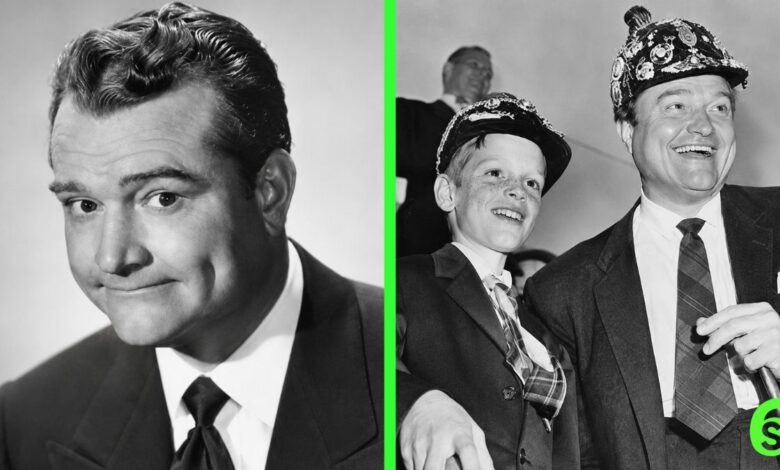
ZRichard Skelton Jr., born Richard Freeman Skelton on May 20, 1948, was the beloved son of legendary American comedian Red Skelton and his second wife, Georgia Davis. Although his father brought laughter to millions of Americans through television and comedy, Richard’s childhood was marked by a heartbreaking battle with leukemia. Diagnosed in 1957, he became the center of national attention as his family searched for treatment and created unforgettable memories through a remarkable journey around the world. Tragically, Richard passed away on May 10, 1958, just ten days before his tenth birthday. His death deeply affected the Skelton family and became one of the most painful chapters in Red Skelton’s personal life. Richard’s story remains a moving part of Hollywood history, highlighting a father’s love, the challenges of childhood illness, and a legacy that extended beyond entertainment.
Quick Bio
| Field | Details |
|---|---|
| Full Name | Richard Freeman Skelton |
| Known As | Richard Skelton Jr. |
| Date of Birth | May 20, 1948 |
| Birthplace | Los Angeles, California, USA |
| Father | Red Skelton |
| Mother | Georgia Davis |
| Sister | Valentina Marie Skelton |
| Nationality | American |
| Known For | Being Red Skelton’s son |
| Medical Condition | Leukemia |
| Date of Death | May 10, 1958 |
| Age at Death | 9 years |
| Place of Death | UCLA Medical Center, Los Angeles |
| Burial Location | Forest Lawn Memorial Park, Glendale, California |
Who Was Richard Skelton Jr.?
Richard Skelton Jr., whose full name was Richard Freeman Skelton, was the son of famous American comedian Red Skelton and his second wife, Georgia Davis. Born on May 20, 1948, in Los Angeles, California, Richard died from leukemia on May 10, 1958, just ten days before his tenth birthday. Although he never lived long enough to establish an independent public career, his illness became a national story during the final years of his life.
His biography continues to attract attention because it reveals a deeply personal chapter in the life of a performer whose professional identity was built around making people laugh. Behind the familiar television characters and comic performances, Red Skelton was a father confronting a medical crisis that neither celebrity nor wealth could resolve.
This article explores Richard Skelton Jr.’s childhood, family background, leukemia diagnosis, final months, and lasting legacy, distinguishing documented historical facts from later assumptions.
Early Life and Family Background
Richard Freeman Skelton was born into a household already closely connected to American entertainment. His father, Richard Bernard Skelton, had risen from modest beginnings in Vincennes, Indiana, to become one of the country’s most recognizable comedians.
Better known professionally as Red Skelton, he developed his career through vaudeville, radio, motion pictures, and television. His comic characters, including Freddie the Freeloader and Clem Kadiddlehopper, helped establish a style of family entertainment built around physical humor, recognizable personalities, and sentiment.
Richard’s mother, Georgia Davis, married Red in 1945. Their daughter, Valentina Marie Skelton, was born in 1947, followed by Richard the next year.
The children grew up as their father’s television career expanded. The Red Skelton Show, which premiered in 1951, became an established part of American entertainment during the decade.
However, relatively little independently verified information exists about Richard’s ordinary childhood. His education, friendships, and personal ambitions were not documented as consistently as his father’s professional activities.
Richard was a child whose name became familiar largely because of his father’s celebrity. He should not be presented as though he had established a conventional Hollywood career.
The Leukemia Diagnosis That Changed His Life
In January 1957, physicians at the University of California, Los Angeles, identified Richard’s illness as leukemia.
Contemporary reporting described how Red and Georgia had sought medical attention after Richard developed an unexplained fever. Physicians eventually determined that the boy had leukemia, a serious blood cancer for which effective long-term treatment options were extremely limited during the 1950s.
According to reports published at the time, doctors gave the family a prognosis measured in months rather than years.
The diagnosis carried particularly grave implications. Childhood leukemia treatment had not yet reached the level of effectiveness associated with modern pediatric oncology. Although researchers were beginning to develop therapies that could produce temporary remissions, long-term survival remained difficult for many patients.
The Skeltons nevertheless continued seeking medical advice and treatment.
Contemporary newspaper reports described letters arriving from around the world. Members of the public offered sympathy, prayers, medical suggestions, and information about possible treatments.
The correspondence demonstrated the unusually public nature of the family’s experience. Richard’s diagnosis was no longer simply a private medical matter; it had become news followed by people who knew his father through television.
For Red, the demands of public entertainment and his responsibilities at home became increasingly difficult to balance.
Reports from 1957 indicate that he temporarily missed a television appearance following the diagnosis. A recording of an earlier program was broadcast instead.
He subsequently resumed performing while remaining involved in Richard’s medical care.
Red Skelton’s Extraordinary Trip With His Son
One of the best-documented episodes in Richard’s life was the family journey organized during the summer of 1957.
Red wanted his son to experience places he had previously encountered through books, stories, and photographs. Contemporary reporting presented the journey as an effort to give Richard meaningful experiences while his health still permitted travel.
The family visited prominent American cities and historical landmarks.
In June 1957, newspapers reported that they had already visited New York, Philadelphia, and Boston before traveling to Washington, D.C.
Their activities included visits to important national monuments and historical locations. Richard was particularly interested in seeing the Washington Monument.
The travel plans also included major European destinations.
These visits gave the family time together away from their ordinary Hollywood routine, although the press continued to follow them.
Richard Skelton Jr.’s Meeting With Pope Pius XII
An especially well-known event occurred during the family’s visit to Rome.
In July 1957, Richard and his family received an audience with Pope Pius XII at the Vatican.
The encounter attracted considerable public interest because of Richard’s illness and the widespread attention surrounding the journey.
Later accounts describe the meeting as especially meaningful to the family, and photographs from the period document Richard’s appearance at the Vatican.
Religious details associated with the visit have also appeared in subsequent retellings, including stories concerning a crucifix connected with the Pope.
However, some of the more elaborate accounts depend on later recollections rather than independently available contemporary documentation. They should therefore be distinguished from the fact that the meeting took place.
For Richard, the Vatican audience became one of several extraordinary experiences during a childhood increasingly dominated by medical treatment.
The Controversy Surrounding Richard’s Publicity
The European journey also drew criticism.
Some British newspapers questioned whether Richard’s illness was receiving inappropriate publicity. Their objections focused on the child’s appearance before reporters and the extent to which his medical condition had become part of an international news story.
Red rejected the suggestion that the trip had been organized for publicity.
When he returned to the United States in August 1957, he defended his intentions and explained that he wanted Richard to experience as much of the world as possible.
The controversy reveals an important tension in the historical record.
On one hand, the family’s travels gave Richard access to places, experiences, and encounters that would otherwise have been unavailable to him. On the other, the attention surrounding those journeys sometimes placed a seriously ill child at the center of public scrutiny.
Contemporary evidence supports a balanced conclusion: Red publicly explained the journey as an effort to fulfill his son’s interests, while some journalists objected to the way the story was being presented.
Richard Skelton Jr.’s Final Months
By early 1958, Richard’s illness remained serious.
Reports from the period indicate that he had undergone treatment at UCLA Medical Center and experienced repeated hospital admissions.
Details of his precise treatment regimen are not comprehensively established in the publicly accessible reports. It would therefore be misleading to assign him a particular combination of medications, describe undocumented procedures, or suggest that one specific treatment determined the outcome.
The available evidence establishes that Richard continued receiving medical care while his parents remained closely involved.
During this period, Red also experienced significant health difficulties of his own. In December 1957, the comedian suffered a serious medical episode that required hospitalization.
Although the family was facing overlapping difficulties, there is insufficient evidence to attribute Red’s illness directly to the emotional strain of Richard’s condition.
The final weeks of Richard’s life unfolded as his tenth birthday approached.
Later historical accounts describe the family discussing birthday arrangements and gifts. These recollections offer a more personal picture of a child whose interests had not disappeared despite his illness.
Richard was not merely a patient or a symbol of suffering. He remained a young boy with ordinary interests, family relationships, and expectations.
How Did Richard Skelton Jr. Die?
Richard Freeman Skelton died on Saturday, May 10, 1958, at UCLA Medical Center in Los Angeles, California.
He was nine years old.
A contemporary report published on May 11, 1958, stated that a UCLA Medical Center spokesperson confirmed his death the previous evening.
His death was attributed to leukemia, the disease for which he had been receiving treatment since the diagnosis became public in early 1957.
The timing was especially painful for his family. Richard’s tenth birthday would have fallen on May 20, only ten days later.
News of his death was widely reported because the American public had followed his condition for more than a year.
However, the significance of that publicity should not obscure the essential personal fact: Red and Georgia had lost their youngest child.
Richard’s death brought to an end the family’s prolonged search for treatment and the hope that medical progress might provide a more favorable outcome.
Funeral, Burial, and Public Response
Richard’s funeral arrangements were held at Forest Lawn Memorial Park in Glendale, California.
Contemporary reports identified actor William Lundigan, a friend of Red Skelton, as the person selected to deliver the eulogy.
The arrangements reflected the family’s public prominence, but the message following Richard’s death was directed toward something more substantial than celebrity remembrance.
Red encouraged people to contribute to leukemia research rather than send flowers.
He also publicly committed to supporting the fight against cancer.
His determination to connect the loss of his son with efforts that might benefit other families facing similar diagnoses became an important part of Richard’s legacy.
Red’s professional colleagues also helped accommodate his absence from television.
The Red Skelton Museum’s historical timeline records that Milton Berle hosted the May 13 broadcast in Red’s place, allowing the comedian to remain away from his regular television responsibilities.
These arrangements demonstrated the support available within the entertainment community, although they could not diminish the personal magnitude of the loss.
The Richard Skelton Memorial Fund
The family’s efforts to support medical research continued after the funeral.
According to the Red Skelton Museum’s chronology, a Richard Skelton Memorial Fund initiative was associated with events in May 1958 and with leukemia research and treatment efforts at City of Hope in California.
The museum records a May 26, 1958, entry involving entertainer George Jessel and the memorial initiative.
This is an important part of Richard’s legacy because it identifies a tangible response to his death rather than relying solely on descriptions of his father’s grief.
At the same time, publicly accessible sources do not establish a complete financial history of the fund.
Verified financial data concerning the memorial initiative’s total donations, expenditures, and long-term operations has not been comprehensively disclosed in the sources reviewed.
Therefore, it would be inappropriate to assign an invented fundraising total or claim it directly financed specific medical discoveries without further documentation.
The historical significance is clear: Richard’s death helped motivate charitable attention toward leukemia research during a period when treatment options were severely limited.
How Richard’s Death Affected Red Skelton
Red Skelton’s career continued after 1958, but contemporary and retrospective accounts indicate that his son’s death remained an enduring part of his personal life.
A substantial obituary published by the Los Angeles Times in September 1997 identified Richard’s death as a significant turning point in the comedian’s life.
The newspaper described Red’s continuing grief and reported that Richard’s room remained undisturbed for a prolonged period after his death.
These details provide a clearer picture of the family’s mourning than unsupported claims that Red permanently abandoned comedy or withdrew entirely from public life.
He did neither.
Skelton remained active in entertainment for years afterward, continuing his television work, stage appearances, and painting.
His professional activity and personal grief were not mutually exclusive.
Red Skelton’s Reflections on Personal Loss
In June 1987, the Los Angeles Times reported remarks Skelton made about death and remembrance.
Reflecting on his late son and former wife, he said:
Their memories are always here.
The comment was part of a broader reflection on mortality and the lessons he believed could emerge from painful experiences.
It offers a documented expression of how Red approached the memory of people he had lost.
Rather than claiming that Richard’s death directly created a particular comedy character or artistic style, the evidence supports a more careful interpretation: the loss remained personally important to Red. At the same time, he continued practicing the profession that had made him famous.
Georgia Davis and the Family’s Later Tragedy
Richard’s death was not the last major loss in the Skelton family’s history.
Red and Georgia’s marriage eventually ended in divorce. Surviving published accounts vary slightly on the precise chronology of their separation and divorce.
On May 10, 1976, eighteen years after Richard’s death, Georgia died by suicide.
The coincidence of the dates has attracted considerable attention in later biographies of Red Skelton.
It is a documented and significant part of the family’s history, but it must be discussed responsibly.
The fact that Georgia died on the anniversary of her son’s death does not, by itself, establish that Richard’s death was the sole cause of her suicide.
Personal loss, mental health, relationship difficulties, and other circumstances cannot be reduced to a single explanation without sufficient evidence.
The Los Angeles Times later discussed the family’s losses in its reporting on Red’s life, placing Georgia’s death within a broader account of the comedian’s personal difficulties.
Presenting the anniversary accurately while avoiding unsupported psychological conclusions is essential to treating both Richard and his mother with dignity.
What Is Known About Richard Skelton Jr.’s Personal Life?
The documented facts about Richard are concentrated primarily in his immediate family, medical treatment, and the public events of 1957 and 1958.
This creates an important limitation for modern biographies.
There is no reliable basis for constructing elaborate accounts of his education, private friendships, financial circumstances, or imagined plans for adulthood.
Richard was a minor whose life ended before he could develop an independent professional identity.
Specific school records and academic achievements have not been sufficiently established by the available sources.
He did not have an established adult professional career. Any childhood television appearances should not be exaggerated into a substantial entertainment career.
His documented family relationships are with his parents, Red Skelton and Georgia Davis, and his sister, Valentina.
There is also no credible basis for attributing an independently documented personal fortune to him.
These limitations do not make his biography less important. They clarify what can responsibly be said about a child whose final years drew extraordinary public attention.
Richard Skelton Jr.’s Historical Legacy
Richard’s story occupies a distinctive position in American entertainment history.
He was not a major performer, a celebrated artist, or someone whose own achievements generated national recognition.
Instead, his life became intertwined with his father’s public identity at a time when television was transforming the relationship between celebrities and their audiences.
The response to his illness revealed how strongly viewers identified with performers they knew primarily through weekly broadcasts.
People who had never met Richard sent prayers, offered medical suggestions, and followed news of the family’s travels.
The publicity also demonstrated the limits of celebrity influence. Red Skelton could arrange unusual experiences for his son and reach leading medical institutions, but he could not guarantee a successful treatment.
That reality gave the story a significance beyond the entertainment industry.
It connected a famous family with the experience of many other American households confronting childhood cancer during the 1950s.
Richard’s historical legacy therefore rests on three documented elements: his family’s efforts to care for him, the public response to his illness, and the charitable initiatives associated with his memory.
You do not need to invent accomplishments or embellish personal details to recognize those contributions.
Conclusion
Richard Skelton Jr. lived from May 20, 1948, to May 10, 1958, a childhood shortened by leukemia at a time when medicine offered limited prospects for recovery.
He was the younger child of Red Skelton and Georgia Davis, the brother of Valentina Skelton, and the subject of extensive national reporting during the final sixteen months of his life.
His father’s decision to organize a family journey, the meeting with Pope Pius XII, and the medical and public events surrounding his illness are supported by historical reporting.
So, too, are the funeral, Red’s commitment to leukemia research, and the lasting place Richard occupied in his father’s recollections.
The most accurate account of Richard’s life does not require turning him into a fictionalized figure of exceptional courage or assigning meaning to every private moment.
He was a child whose parents sought opportunities to give him more time and more experiences.
His story remains significant because it illustrates the private vulnerability that can exist behind an immensely successful public career and because his family’s response helped direct attention toward children who have leukemia.
Read this too:Chris Cosgrove: The Remarkable Story of Miranda Cosgrove’s Mother and the Family Behind Her Hollywood Success
(FAQs)
Who was Richard Skelton Jr.?
Richard Skelton Jr., born Richard Freeman Skelton, was the son of American comedian Red Skelton and Georgia Davis. He became widely known through news coverage of his leukemia diagnosis and died in 1958 at the age of nine.
When was Richard Skelton Jr. born?
Richard Freeman Skelton was born on May 20, 1948, in Los Angeles, California, United States.
What happened to Red Skelton’s son?
Red Skelton’s son Richard was diagnosed with leukemia in 1957. Despite receiving medical care and traveling with his family, he died from the disease on May 10, 1958, shortly before his tenth birthday.
Did Richard Skelton Jr. meet Pope Pius XII?
Yes. Richard and his family met Pope Pius XII during a visit to the Vatican in July 1957. The meeting was part of a family journey organized following his leukemia diagnosis.
How old was Richard Skelton Jr. when he died?
Richard Skelton Jr. was nine years old when he died on May 10, 1958. He would have turned ten ten days later.