Universal Technology Corporation: The Untold Story of a 65-Year Aerospace and Defense Legacy

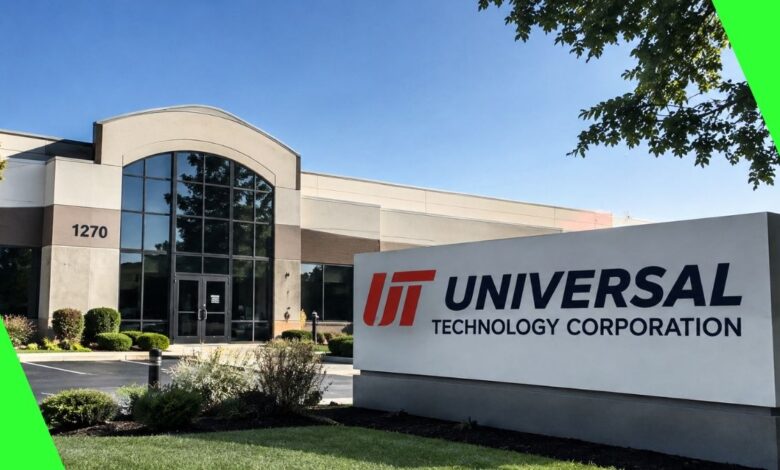
Universal Technology Corporation (UTC) was an American engineering and scientific research company established in 1961 and historically based in the Dayton, Ohio, area. Its principal work involved aerospace technology, advanced materials, manufacturing research, and technical services for government and industrial customers.
Although its name suggests a broad consumer technology business, UTC built its reputation in specialist research supporting organizations such as the US Air Force Research Laboratory and NASA.
The company no longer operates under its original corporate identity. Following a 2019 merger and a 2020 rebranding, its business became part of ARCTOS. In March 2026, DCS Corporation acquired ARCTOS, marking another significant transition in UTC’s corporate history.
The Origins of a Specialist Engineering Company
Universal Technology Corporation began operations in 1961, as American aerospace research expanded rapidly.
Its location in southwestern Ohio placed it near Wright-Patterson Air Force Base, one of the country’s major centers for military aviation research, engineering, and technology development.
The company’s historical importance cannot be measured simply by the number of products it sold. Its business model centered on supplying technical expertise, supporting experimental research, and helping government customers develop and assess specialized technologies.
Unlike a conventional technology manufacturer, UTC worked across research programs that required knowledge of materials, engineering processes, aerospace systems, and technical program management.
Its long association with the Air Force Research Laboratory became particularly important.
The public record clearly establishes UTC’s founding year and subsequent contracting activities. However, sufficiently authoritative historical documentation identifying the company’s founder and complete early ownership structure is not readily available. Those details should not be presented as facts.
What Did Universal Technology Corporation Actually Do?
UTC worked in several technically demanding fields. These activities were connected by a common objective: turning engineering research into practical solutions for aerospace, defense, and industrial applications.
Aerospace Systems and Engineering Research
The company supported research related to aircraft systems, manufacturing processes, and the evaluation of new technologies.
This type of work differs from mass production. Research contractors often investigate whether a technology can be developed, tested, improved, or safely introduced into an operational environment.
UTC’s expertise was particularly relevant to government organizations managing aircraft systems with demanding performance and reliability requirements.
Advanced Materials and Manufacturing
Materials research became one of the company’s most identifiable technical strengths.
Its work involved manufacturing techniques that produce complex components and improve understanding of how those components perform.
Among the most significant areas was additive manufacturing, commonly associated with industrial 3D printing.
For aerospace applications, additive manufacturing offers potential advantages in component geometry, production flexibility, and replacement-part availability. However, ensuring consistent material properties and meeting rigorous qualification requirements remain substantial technical challenges.
UTC worked on research intended to address some of these challenges.
Space Systems and Directed Energy
The company’s publicly described capabilities also included space-related engineering and directed-energy research.
An important example appeared in November 2015, when Universal Technology Corporation received a reported $37.6 million indefinite-delivery/indefinite-quantity contract for scientific management advice supporting research and technology activities.
The work concerned the Air Force Research Laboratory’s Space Vehicles and Directed Energy directorates at Kirtland Air Force Base, New Mexico.
The announced contract value represented the contracting vehicle’s value, not proof that the company immediately received that entire amount as revenue.
This distinction matters when evaluating government-contracting businesses: award ceilings, obligated funding, and actual payments are different financial measures.
The 2015 Collaboration That Connected Research With Education
A particularly revealing chapter in UTC’s history occurred in November 2015.
The Air Force Research Laboratory, Central State University, and Universal Technology Corporation participated in the opening of an additive manufacturing laboratory at Central State University in Ohio.
According to the Air Force’s published account, the facility gave the university metal additive manufacturing capabilities and created opportunities for collaboration with researchers at Wright-Patterson Air Force Base.
The laboratory included direct metal laser sintering technology, allowing researchers and students to investigate manufacturing methods involving metal components.
Joe Sciabica, then UTC’s president, participated in the event.
This collaboration illustrates an aspect of the company’s activities that can be overlooked in descriptions focused exclusively on defense contracts.
UTC was not only involved in technical development. It also participated in initiatives connecting research institutions, university students, and government laboratories.
Such partnerships can contribute to both experimental research and the development of future engineering talent, although their long-term outcomes require separate evidence to assess.
The 3D Innovation Laboratory and NASA Research
UTC expanded its additive manufacturing activities in 2017 by establishing its 3D Innovation Laboratory, commonly called the 3DI Lab.
The laboratory was intended to support research and development involving metal and multi-material additive manufacturing.
A notable development followed in August 2018.
UTC announced that it had received a NASA Small Business Innovation Research contract involving collaboration with Materials Resources, LLC, and the University of North Carolina at Charlotte.
The project concerned improvements to selective laser melting, a manufacturing technique in which laser energy is used to process powder material into three-dimensional components.
The proposed research combined several technologies:
- Sensors capable of examining manufacturing conditions.
- Computational models for understanding material behavior.
- Artificial intelligence methods for analyzing process information.
- Feedback and control techniques intended to improve manufacturing consistency.
The objective was to develop more effective ways to monitor and correct manufacturing defects.
The announcement documented a funded research effort rather than a verified commercial deployment. Publicly described project objectives should therefore not be mistaken for independently demonstrated final results.
Why This Research Mattered
High-performance aerospace components must meet demanding engineering standards.
Manufacturers cannot rely only on whether a printed component looks correct. They also need evidence concerning its internal structure, mechanical properties, repeatability, and reliability.
UTC’s research addressed this wider challenge: making additive manufacturing processes easier to investigate, monitor, and control.
Its significance lay in combining engineering experimentation, sensor technology, and process modeling rather than in any single widely marketed consumer product.
An Unusual 2019 Research Project
One of UTC’s more distinctive projects was announced in January 2019.
The company received a Small Business Innovation Research contract to investigate producing simulated runway-surface tiles using additive manufacturing.
The proposed tiles were intended for aircraft tire-wear testing at the Air Force’s landing gear test facility at Wright-Patterson Air Force Base.
Accurate testing requires surfaces that replicate the characteristics of real runways. Conventional methods for creating these surfaces can be expensive and difficult to adapt.
UTC’s proposed approach involved scanning runway surfaces and using the resulting digital information to manufacture representative testing materials.
The project was led by Dr. Olga Ivanova at the company’s 3D Innovation Laboratory in Beavercreek, Ohio.
This work demonstrates the breadth of engineering problems that could fall within UTC’s research activities.
Not every aerospace innovation concerns engines, aircraft structures, or spacecraft. Even the interaction between a tire and a runway surface can require sophisticated materials research.
The company’s announcement established the research objective and proposed technical approach, but did not independently prove the final performance of the resulting materials.
The 2019 Merger: A Major Corporate Turning Point
On September 12, 2019, Universal Technology Corporation announced an agreement to merge with Advanced Core Concepts, LLC, a Georgia-based business providing engineering and technical services.
Advanced Core Concepts brought capabilities involving aviation lifecycle management, cybersecurity, and space-related systems.
The proposed combination would broaden the range of services available to government and industrial customers.
UTC’s established engineering and scientific research capabilities complemented Advanced Core Concepts’ experience in operational support, technology services, and systems management.
The announcement also described a change in UTC’s legal structure.
Universal Technology Corporation would become Universal Technology Company, LLC.
The Leadership Transition
At the time of the announcement, Joe Sciabica was identified as UTC’s chief executive officer.
The planned leadership arrangement named Trase Travers as chief executive of the combined organization, while Sciabica would take the chief technology officer role.
These publicly documented appointments are important because they show how the merger was intended to integrate both corporate management and technical expertise.
The transaction was more than a name change. It represented a wider effort to combine complementary engineering and defense-services operations.
How Universal Technology Corporation Became ARCTOS
The corporate transition continued in 2020.
On July 8, 2020, Advanced Core Concepts announced that the combined enterprise would operate under the ARCTOS name.
The business brought together three organizations:
- Universal Technology Company.
- Advanced Core Concepts.
- ARMA Aviation.
The rebranding created a common identity for operations covering aerospace engineering, cybersecurity, software development, logistics, and technical support.
UTC’s heritage became part of a larger organization rather than continuing as a separate, prominent brand.
This distinction is essential when interpreting references to Universal Technology Corporation in older contracts, company directories, or historical research reports.
A record carrying the UTC name may refer to work performed before the corporate combination. It does not necessarily describe an independent business operating under that identity today.
The 2026 Acquisition by DCS Corporation
The most important recent development in the company’s corporate lineage occurred on March 5, 2026.
DCS Corporation announced that it had acquired ARCTOS, LLC.
The acquisition combined engineering and technical services capabilities in aerospace research, advanced manufacturing, propulsion, materials, and flight safety.
The announcement emphasized their shared history of serving the Air Force Research Laboratory and related customers near Wright-Patterson Air Force Base.
DCS also described a combined regional presence of more than 350 personnel supporting customers in the Dayton area.
That figure concerned the combined local footprint and should not be interpreted as UTC’s historical headcount.
What the Acquisition Means
The transaction placed UTC’s continuing organizational legacy within another established defense engineering company.
For DCS, the acquisition expanded expertise in specialist aerospace research and technology development.
For ARCTOS, the transaction created opportunities to operate within a larger technical services organization.
However, the acquisition announcement alone does not establish the future structure of individual programs, staffing arrangements, or research teams.
The purchase price was not publicly disclosed in the principal announcement and contemporary industry reporting.
Verified financial data concerning the acquisition consideration has not been publicly disclosed.
Leadership, Ownership and Financial Information
UTC’s historical record shows several different corporate structures and executive teams.
Joe Sciabica was a prominent executive before the 2019 merger, while Trase Travers became chief executive of the combined enterprise.
By the time of the 2026 acquisition, Chris Greamo was identified as ARCTOS’ chief executive officer.
DCS Corporation’s acquisition announcement named Jim Benbow as its chairman and chief executive officer.
These individuals held leadership positions at different stages of the organizations’ development. Their titles should not be treated as interchangeable or assumed to apply to UTC throughout its entire history.
Revenue and Company Valuation
Reliable historical financial information about the original Universal Technology Corporation is limited.
Because UTC was privately held, it did not publish the same level of public financial disclosure required of listed corporations.
In March 2026, industry publication Washington Technology reported approximately $22.8 million in unclassified prime-contract revenue for ARCTOS over the preceding twelve months, based on USAspending.gov data.
That figure refers to ARCTOS’ reported federal contracting activity during the specified period. It is not a verified annual revenue figure for the original UTC, nor does it capture every possible source of corporate income.
No reliable public evidence establishes a standalone current market valuation for the historical Universal Technology Corporation business.
The Company’s Place in American Aerospace Research
UTC’s history reflects the role smaller, specialist engineering firms play in supporting large government research programs.
Major aerospace projects involve far more than the organizations whose names appear on finished aircraft or spacecraft.
They also depend on researchers who develop materials, assess manufacturing processes, investigate technical risks, and support experimental programs.
Universal Technology Corporation participated in this research environment for decades.
Its documented activities reveal several recurring characteristics: close relationships with government laboratories, collaboration with academic institutions, and interest in technologies that improve manufacturing processes.
The company’s subsequent mergers also illustrate consolidation within the aerospace and defense services industry.
Specialized companies may possess technical knowledge that becomes valuable when combined with the resources, customer relationships, and operating capabilities of larger organizations.
Whether these combinations ultimately produce better technical results must be judged through independently documented program performance, not corporate announcements alone.
Universal Technology Corporation Today
As of November 2026, Universal Technology Corporation is primarily a historical corporate identity associated with the ARCTOS business lineage.
Its recognized transition can be summarised through several confirmed milestones:
- 1961: Universal Technology Corporation’s documented founding year.
- 2015: Participation in a Central State University additive manufacturing laboratory collaboration.
- 2017: Establishment of the 3D Innovation Laboratory.
- 2018: Announcement of NASA-funded additive manufacturing research.
- 2019: Merger with Advanced Core Concepts and transition toward Universal Technology Company, LLC.
- 2020: Adoption of the ARCTOS corporate brand.
- 2026: Acquisition of ARCTOS by DCS Corporation.
The original company name should not be confused with United Technologies Corporation, a separate and much larger aerospace and industrial business.
Although both used the abbreviation UTC, they had different corporate histories.
Final Perspective
Universal Technology Corporation’s legacy is best understood through its engineering work rather than its former corporate name.
For decades, the company operated within the specialized research community supporting American aerospace and defense programs. Its documented activities included manufacturing research, technical services, academic partnerships, and experimental approaches to complex engineering problems.
The transition from UTC to ARCTOS, followed by the 2026 DCS acquisition, changed the company’s corporate identity.
What remains historically significant is the technical experience developed across more than six decades—and the role that experience continues to play within a larger aerospace and defense engineering organization.
(FAQs)
What is Universal Technology Corporation?
Universal Technology Corporation was an American engineering and scientific research company established in 1961. It specialized in aerospace technology, advanced materials, manufacturing research, and technical services.
Is Universal Technology Corporation still operating?
The original company no longer operates as a prominent independent brand. Its corporate lineage became part of ARCTOS, which was acquired by DCS Corporation in March 2026.
Where was Universal Technology Corporation located?
The company was historically based in the Dayton, Ohio, area, near Wright-Patterson Air Force Base.
Who was the CEO of Universal Technology Corporation?
Joe Sciabica was identified as UTC’s chief executive officer in its September 2019 merger announcement. The subsequent combined organization had different leadership arrangements.
How much was Universal Technology Corporation worth?
A reliable standalone valuation has not been publicly established. The financial terms of DCS Corporation’s 2026 acquisition of ARCTOS were not disclosed in the principal public announcement.